When the FIA announced the sweeping, revolutionary regulations for the 2026 Formula 1 season, the overarching narrative within the paddock was one of a complete competitive reset. The assumption was that introducing highly complex hybrid systems, radically altering the aerodynamic philosophy, and shifting the fundamental way a Formula 1 car generates power would level the playing field.
Many pundits boldly predicted that this massive technological leap would favor the younger, hyper-reactive generation of drivers who grew up adapting quickly to unpredictable machinery in the junior categories. However, the second week of preseason testing at the Bahrain International Circuit completely shattered that narrative. Instead of a grid turned upside down, we witnessed the ominous reawakening of a sleeping giant.
Former world champion Nico Rosberg, a man who knows the inner workings of Lewis Hamilton’s mind and driving style better than anyone else on the planet, recently dropped a massive bombshell regarding the upcoming season. According to Rosberg, what we witnessed during those crucial testing days in the Middle East was not just Ferrari finding some extra pace.
It was the terrifying realization that the incredibly complex 2026 regulations might have inadvertently been designed to perfectly suit the natural, deeply ingrained driving style of Lewis Hamilton. Rosberg has outlined three specific, highly technical reasons why this new era of Formula 1 could set the stage for Hamilton to thoroughly dominate the sport once again.
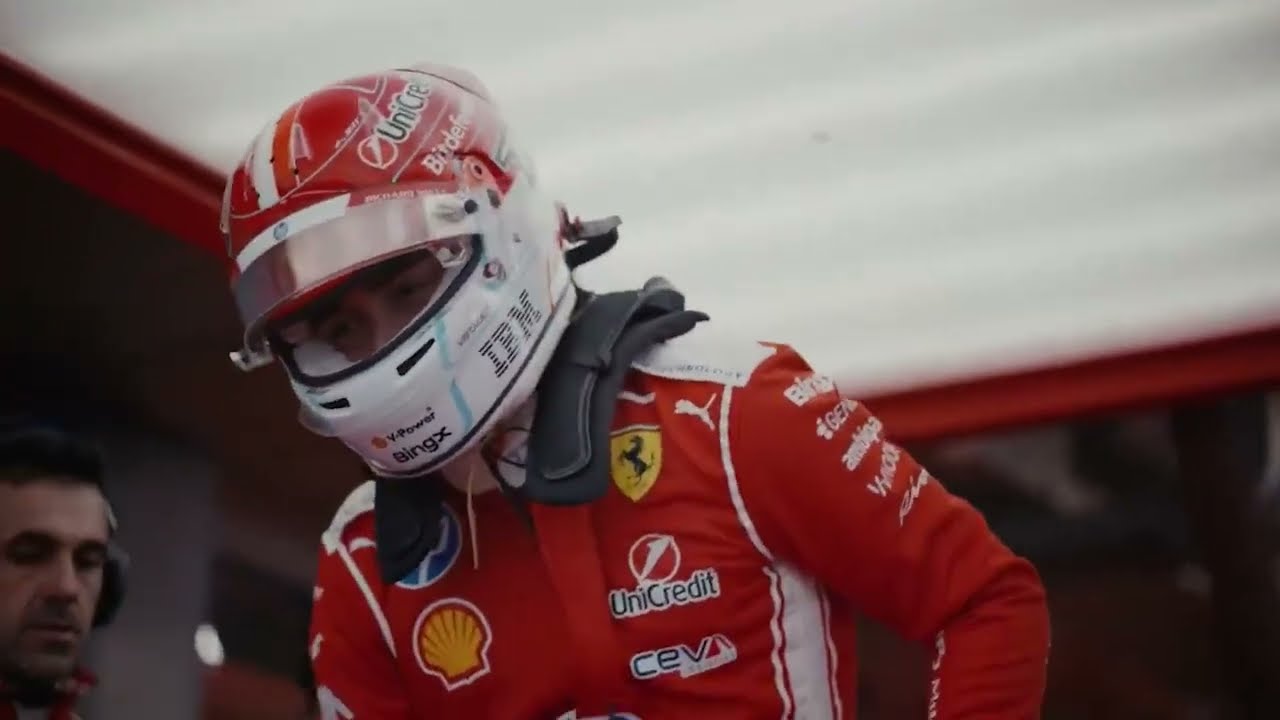
To fully grasp Rosberg’s central thesis, one must first understand the monumental paradigm shift that the 2026 regulations have forced upon the drivers. The cars rolling out of the garages this year do not behave like the ground-effect monsters of 2024 or 2025. The engineering framework has been completely rewritten. The sport has moved to a fifty-fifty power distribution split between the traditional internal combustion engine and the heavily expanded electrical hybrid system. Furthermore, the complex Motor Generator Unit-Heat (MGU-H) has been entirely eliminated, placing an absolute premium on energy recovery purely through the braking phase. Throw in the unprecedented introduction of active aerodynamics—where the car’s downforce levels shift dynamically on the straights and in the braking zones—and you have a vehicle that requires immense cognitive capacity to operate.
Operating a 2026 Formula 1 car is no longer just about raw bravery, late braking, and incredibly fast reflexes. It is a highly demanding mathematical equation unfolding at two hundred miles per hour. It requires constant, calculated anticipation, millimeter-perfect energy management, and extreme sensitivity on the brake pedal. In this highly specific environment, Lewis Hamilton began to exhibit an adaptation process that looked almost frighteningly effortless.
This brings us to Rosberg’s first major point: the absolute necessity for anticipatory precision over reactive aggression. During the early days of testing in Bahrain, onboard cameras painted a vivid picture of the grid’s struggles. Many highly regarded drivers were visibly fighting their machines. You could see constant, frantic micro-corrections in their steering inputs when entering slow-speed corners. There were sudden, violent losses of rear grip during mid-corner transitions, and overly aggressive, desperate reactions when the car’s aerodynamic balance radically shifted under heavy, prolonged braking. The active aero and the new hybrid mapping were heavily punishing anyone who tried to hustle the car purely on instinct and reaction.
Hamilton, conversely, presented a masterclass in surgical cleanliness. The onboard footage from his Ferrari SF26 revealed a steering wheel that barely moved off its intended axis. There were no sudden whippings of the steering column, no desperate mid-corner saves, and absolutely zero overdriving. The car simply followed the driver’s calm, calculated intentions. This is the crux of Rosberg’s first argument: the 2026 energy architecture violently forces a driver to think two, or even three, corners ahead. You cannot simply attack a braking zone with maximum aggression and expect to correct the slide on the exit. You must modulate the brake pressure perfectly beforehand, actively prepare the kinetic energy recovery system, calculate the exact amount of electrical deployment needed for the next straight, and somehow maintain the car’s delicate aerodynamic balance while the active aero systems do their work.
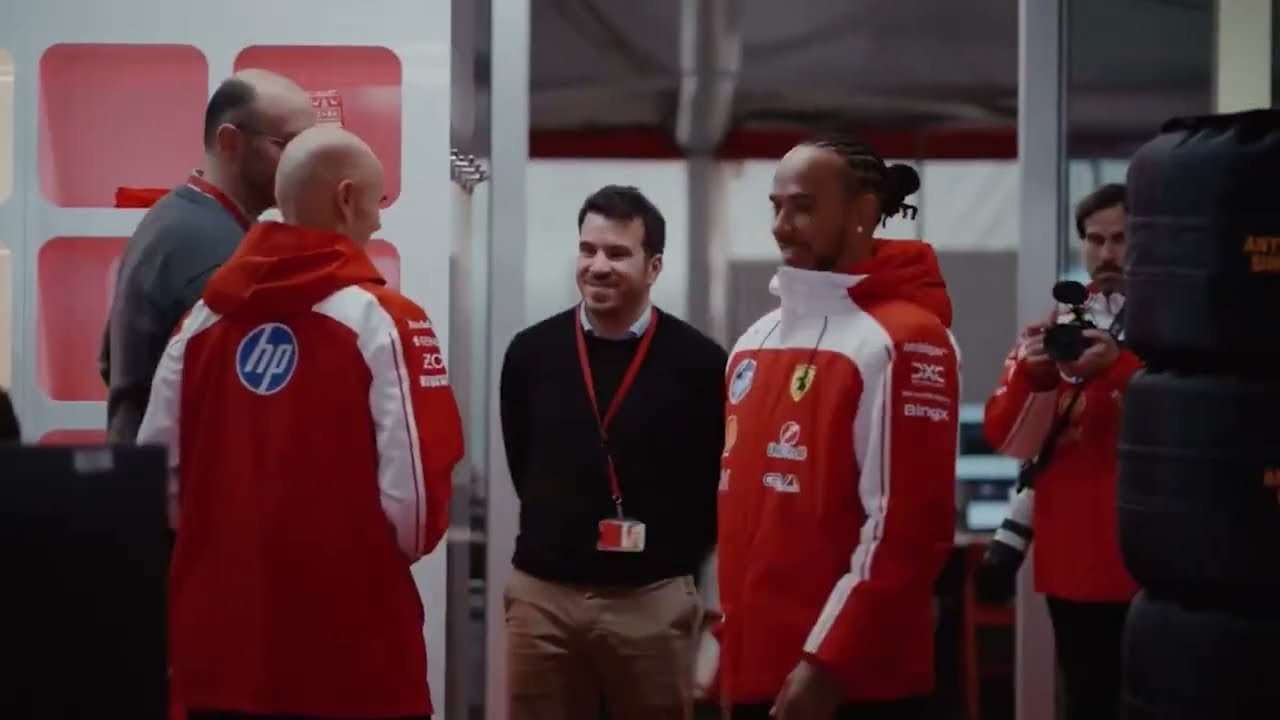
Hamilton’s natural driving style has always leaned heavily heavily toward the anticipatory rather than the reactive. When provided with a car that communicates its limits clearly, he naturally flows with the machinery rather than fighting against it. During the second week in Bahrain, as the Ferrari transitioned from an unpredictable, green prototype into a linear, stable racing car, Hamilton stopped looking like a veteran adapting to strange new rules. He was simply using his deeply ingrained instincts. He wasn’t furiously reprogramming his brain; he was operating within his absolute comfort zone, exploiting a technical ecosystem that actively rewards his famously smooth steering inputs.
The second critical factor Rosberg highlights is the mastery of the new hybrid energy concept. The mandated fifty-fifty split between thermal and electric power has not merely changed the engineering manuals; it has fundamentally altered the art of piloting a Grand Prix car. Electrical energy deployment is now heavily dependent on the exact fraction of a second you hit the brakes, precisely how much kinetic energy you manage to harvest during that specific deceleration phase, and how flawlessly you synchronize the subsequent corner exit with the violent delivery of battery power. It is an incredibly delicate juggling act that has left many drivers completely flustered.
One of the most difficult techniques for any racing driver to perfect is “lift and coast”—the act of lifting off the throttle well before the braking zone to save fuel and harvest electrical energy. Usually, this technique severely disrupts a driver’s natural rhythm, plunging their tire temperatures and dramatically costing them lap time. However, in Bahrain, Hamilton was observed seamlessly integrating heavy lift and coast procedures without ever breaking the underlying rhythm of his stint. To the untrained eye, it did not even look like he was intentionally sacrificing his pace. His lap times remained impressively stable, and his tire degradation was wonderfully progressive, entirely avoiding the massive, abrupt drops in performance that plagued his rivals.
This indicates something absolutely crucial for the upcoming season. Hamilton was simultaneously managing his battery power limits and his fragile Pirelli tires without allowing one to negatively compromise the other. In an era where mismanaging the battery can leave a driver entirely defenseless on a long straight, Hamilton’s innate ability to naturally synchronize his driving inputs with the car’s complex electrical demands gives him a massive, almost unfair advantage.
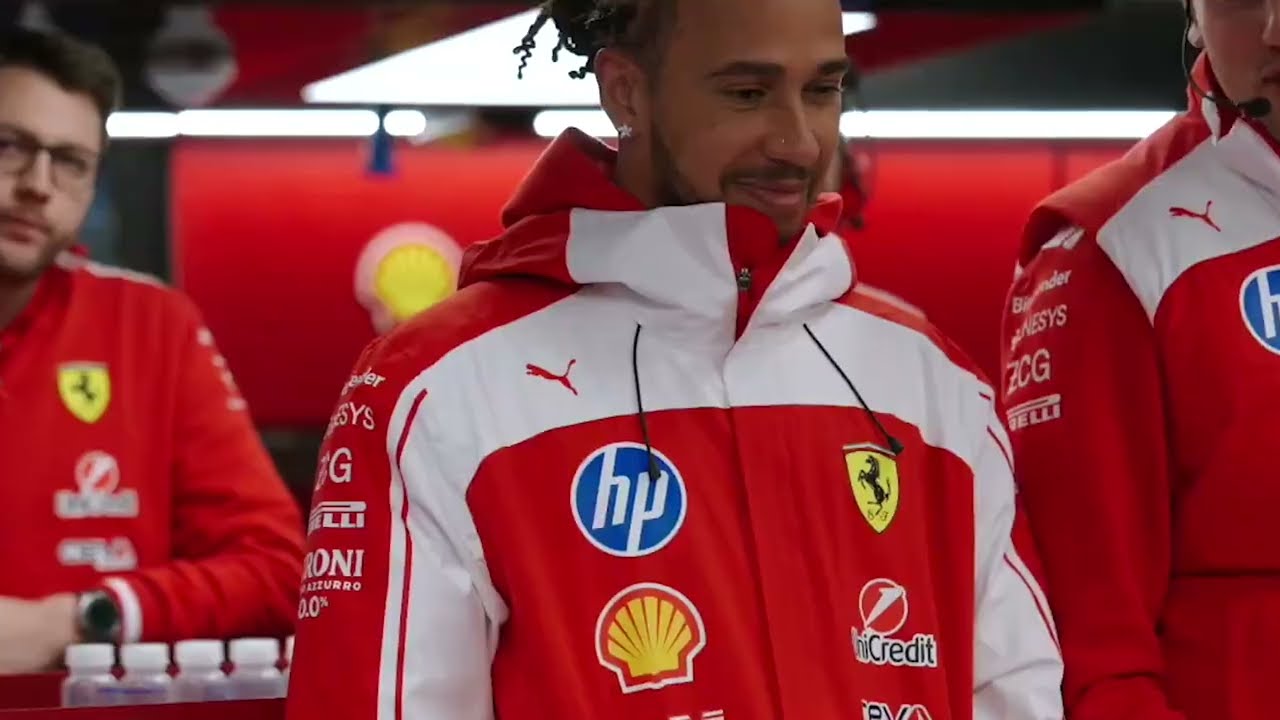
The third and perhaps most vital piece of the 2026 puzzle, according to Rosberg, is the supreme importance of consistency over the long stint. Over the past decade, fans have grown accustomed to a Formula 1 where championships could largely be dictated by single-lap qualifying pace. If you secured pole position and survived the first corner, you could generally manage the race from the front in clean air. The 2026 regulations actively seek to destroy that paradigm. Because the available hybrid energy strictly determines the potential of every single phase of a lap, races will absolutely not be won by a singular, magic qualifying effort on a Saturday afternoon. They will be won by the rare driver who possesses the mental and physical capacity to maintain an exceptionally high, tightly controlled pace for fifteen to twenty consecutive laps on a Sunday.
Hamilton’s long-run simulations during the Bahrain tests were nothing short of a revelation. The Ferrari showed no unexpected spikes in tire degradation. The lap times did not suddenly fall off a cliff. Everything was incredibly progressive and managed with surgical precision. Rosberg keenly pointed out a highly revealing technical detail from the final sector of the Bahrain circuit. As the track temperatures plummeted in the late afternoon, the combination of long, heavy braking zones and delicate traction demands routinely exposed the inherent imbalances of the new cars. Many drivers suffered from severe rear-axle instability and highly unpredictable power delivery when transitioning from the brake pedal to the accelerator.
In Hamilton’s car, however, that erratic behavior practically vanished. His corner entries remained incredibly clean, his exits were wonderfully progressive, and the sudden surge of hybrid energy response was perfectly integrated into his smooth steering inputs. He was never pushing the SF26 to the absolute structural limits of its hybrid system; he intentionally left a tiny margin. In actual race conditions, that tiny margin translates directly into race-winning consistency.
Rosberg is heavily suggesting that the 2026 rules actively punish excess. The regulations brutally penalize the driver who brakes too late, turns in too aggressively, and relies heavily on an ultra-planted rear end to save their lap. Instead, the rules amplify the enormous difference between drivers who fundamentally understand balance through raw feeling and those who only understand it through panicked reaction. Lewis Hamilton has always been the undisputed king of feeling the available grip.
By deeply internalizing this incredibly complex regulation set so quickly, Hamilton has achieved something profoundly dangerous for his rivals: he has freed up his mental capacity. While younger, less experienced drivers are desperately burning mental energy calculating braking points, aero shifts, and battery percentages, Hamilton has already made those processes entirely automatic. This allows him to focus his immense intellect on what truly decides world championships—reading the overarching flow of the race, predicting competitor strategies, and ruthlessly detecting his opponents’ weakest attack windows.
Nico Rosberg is not guaranteeing that Lewis Hamilton will automatically waltz to an unprecedented eighth World Championship in 2026. The technical development race will be fierce, and Formula 1 is famously unpredictable. However, Rosberg is sending a loud, unmistakable warning to the entire paddock. If the future of Formula 1 truly demands extreme energy management, flawless braking sensitivity, and the strategic, intellectual construction of a race over fifty laps, then the regulations have not hindered Lewis Hamilton. They have accidentally delivered him right back to his absolute natural terrain.
