The engines have cooled, the garage doors are down, and the silence returning to the Circuit de Barcelona-Catalunya is heavy with a singular, undeniable truth: The Prancing Horse is not just galloping; it is charging with a fury we haven’t seen in two decades.
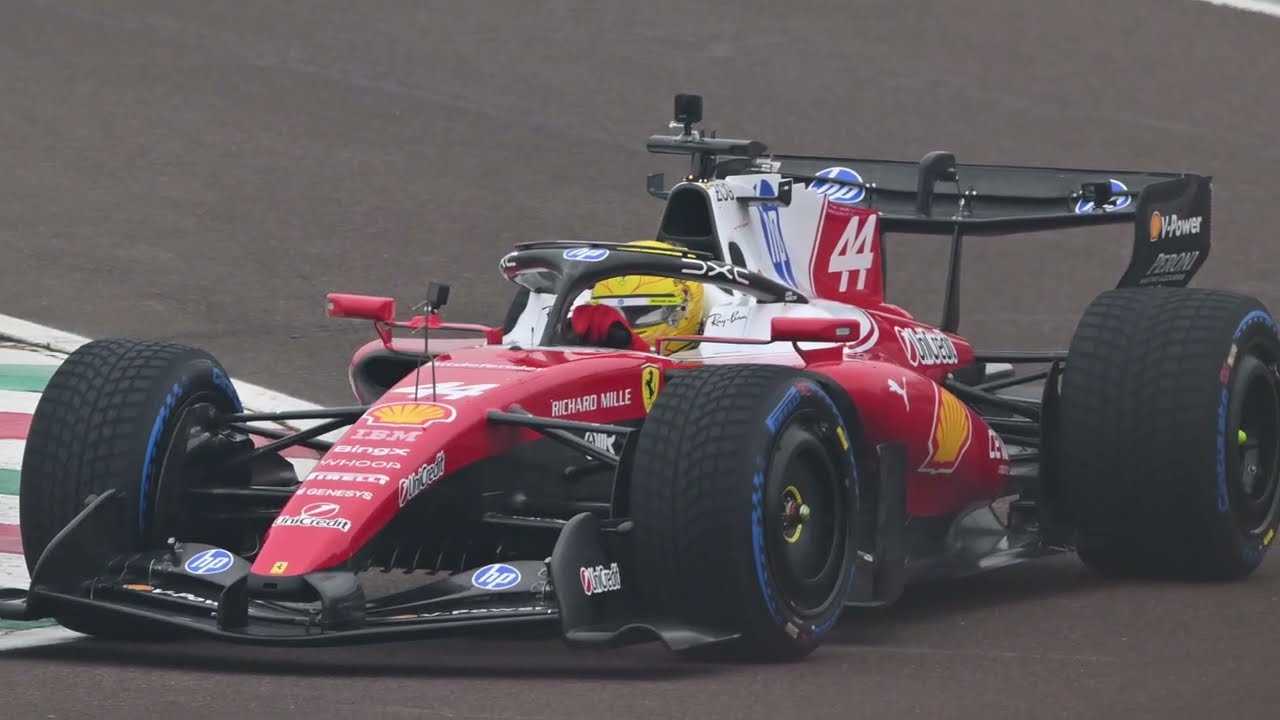
The fifth and final day of the 2026 Formula 1 pre-season testing concluded not with a whimper, but with a deafening statement from Maranello, as Charles Leclerc unleashed the full potential of the Ferrari SF-26.
For five days, the paddock has been a chessboard of bluffs, sandbagging, and hidden agendas. But as the sun dipped low over the Spanish asphalt, Ferrari swept the pieces off the board.
Leclerc’s blistering lap of 1:16.653 wasn’t just a time on a screen; it was a psychological hammer blow to Mercedes and Red Bull. It was, as insiders are calling it, the most “aesthetic and forceful” response to the benchmark pace set earlier in the week, signaling that the 2026 technical regulations may have found their first true master.

The Unleashing of the SF-26: A Technical Masterpiece
The headline figure is the lap time, but the real story lies in the terrifying competence of the machine that produced it. Throughout the week, Ferrari Team Principal Fred Vasseur wore a stoic smile that many mistook for caution. We now know it was confidence. The team spent days running heavy fuel loads (70-80kg), masking the true performance of their challenger. But when the soft compounds went on for the final glory run, the SF-26 transformed.
Leaked telemetry from the final session paints a picture of an engineering fortress. The most striking detail was the performance of the 067-6 Power Unit. In the new era of 2026 regulations, where electrical power is king, energy management is the primary battleground. During Leclerc’s flyer, the MGUK unit delivered its full 350 kW of power all the way to the end of the main straight without a hint of “derating”—the dreaded clipping of power that occurs when a battery runs dry.
This is the clearest signal yet that Ferrari has not just matched its rivals but potentially surpassed them in battery management software and thermal efficiency. While others are managing temperatures and harvesting aggressively, Ferrari’s system appears to be an endless well of energy. Leclerc’s post-lap radio message—“The car reacts exactly where I want it, we still have pace in our pocket”—was less of a feedback report and more of a warning shot to the rest of the grid. Maranello hasn’t even turned the engine up to 100% yet.
The Weight of Perfection: How Ferrari Hit the Magic Number
Perhaps the most critical victory for the SF-26 is one you can’t see on a stopwatch: its weight. The 2026 regulations introduced a strict and challenging weight limit of 768 kg. For months, rumors swirled that teams were struggling desperately to get down to this figure, stripping paint and sacrificing cooling ducts to shed grams.
Ferrari, however, seems to have achieved the impossible. Sources from the pit lane indicate the SF-26 hits the 768 kg limit exactly, and they didn’t do it by cutting corners. The secret lies in a revolutionary “thin wall casting technology” used for the engine block. By utilizing specialized steel alloys that are both more durable and volumetrically smaller than traditional aluminum blocks, Ferrari’s engine department, led by Enrico Gualtieri, has created a compact powerhouse.
This engineering marvel gives Ferrari a massive strategic advantage. While Mercedes and Red Bull are reportedly still fighting to shed excess weight—sacrificing aerodynamic parts to do so—Ferrari has the luxury of “performance headroom.” They can add ballast where they want it to optimize handling, or introduce updates in Melbourne without worrying about going overweight. In a sport of marginal gains, this weight advantage is a sledgehammer.
Mastering the Invisible War: Active Aero and the “Aerosync” Algorithm
The 2026 rules also introduced active aerodynamics—moveable wings that switch between low-drag “X-mode” for straights and high-downforce “Z-mode” for corners. This system has been a nightmare for many teams, leading to “snap oversteer” and instability as the balance of the car shifts violently under braking.
Not for Ferrari. The SF-26 features a proprietary “Aerosync” algorithm that synchronizes the front and rear wing flaps with a smoothness that rivals describe as “art.” The telemetry shows the wings returning to corner mode the very millisecond the driver touches the brake pedal. This transition is so seamless, so jolt-free, that it eliminates the instability plaguing other teams.
Furthermore, Ferrari has positioned electromechanical actuators directly in the center of the chassis, cutting response times in half compared to traditional hydraulic systems. This allows Leclerc to carry 5 to 10 km/h more speed into corner entry than his rivals. The 2026 title might well be won by software, and Ferrari’s code is currently compiling without a single error.
The Rivals: A Wounded Lion and a Silent Mercedes
While Ferrari grabbed the glory, the story down the pit lane was one of recovery and quiet menace. Red Bull Racing, the dominant force of the previous era, looked like a team on the ropes for the first four days, plagued by sensor issues and engine mapping errors. However, the final day saw the “wounded lion” roar back.
Max Verstappen completed a marathon 69 laps in the morning session, dragging the RB22 to third place with a 1:18.285. While the time doesn’t threaten Ferrari’s one-lap pace, Verstappen’s consistency was ominous. New floor and diffuser parts arrived from Milton Keynes overnight, seemingly curing the stability issues in high-speed corners. Verstappen’s assessment was typically blunt: “Our roadmap is clear. We know what we need to do.” It is an admission that they are behind, but also a promise that they will not stay there.
Mercedes, meanwhile, remains the enigma. George Russell’s 1:16.4 benchmark set earlier in the week still stands as the fastest time of the test, though track conditions and fuel loads make a direct comparison to Leclerc’s Friday lap difficult. What is clear is that the Silver Arrows have reliability in spades. Yet, the consensus in the paddock is that Ferrari has won the “psychological war.” Mercedes is fast, but Ferrari is innovative.
The Midfield Battle: Audi’s Rise and Aston’s Sandbagging
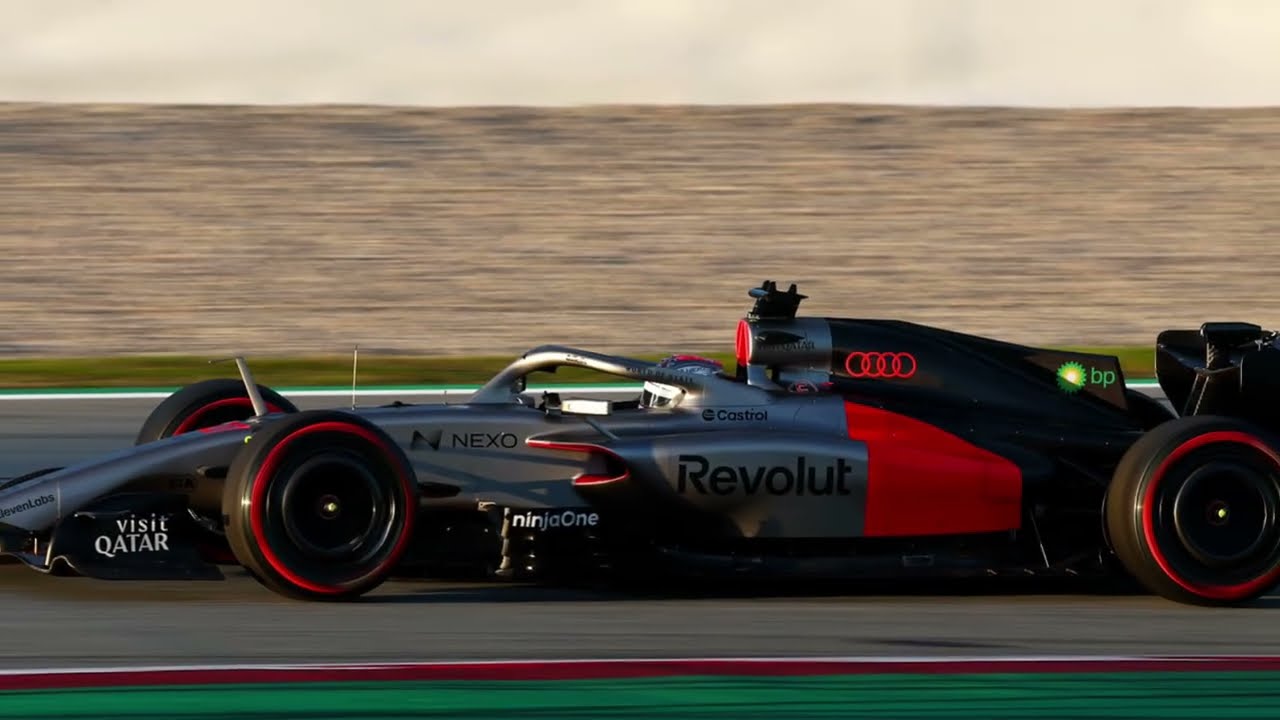
Further back, the new kids on the block, Audi, finally found their footing. After a week of “teething pains,” rookie sensation Gabriel Bortoleto (referred to in reports as Gabrielle) enjoyed a productive morning, logging 66 laps. The German manufacturer seems to have solved its thermal management crisis, proving they can at least fight in the midfield reliability-wise.
Aston Martin, with the legendary Fernando Alonso at the wheel of the Adrian Newey-designed AMR26, played a game of shadows. Alonso logged 49 laps but seemed completely uninterested in lap times, focusing instead on validating systems. His car’s movement on track was suspicious in its smoothness—a classic sign of a “Newey car” that is being deliberately held back. Alonso’s warning to “temper expectations” sounded to many experts like a trap designed to lull rivals into complacency.
Conclusion: The Drought Ends Here?
As the teams pack their freight for Bahrain, the narrative of the 2026 season has shifted dramatically. The era of uncertainty is over; the “Red Storm” has arrived. Ferrari leaves Barcelona not just as the leader of the final day, but as a team that has fundamentally understood the DNA of the new regulations better than anyone else.
Fred Vasseur spoke of “integration over speed,” and his team has delivered both. The correlation between the wind tunnel and the track is 100%. The engine is a beast. The chassis is a scalpel. For the Tifosi, who have waited since 2008 for a constructors’ title and 2007 for a driver’s crown, the message from Barcelona is loud and clear: The wait is over. The SF-26 is real, it is fast, and it is coming for the crown.
Bahrain will provide the official confirmation, but if Barcelona was the dress rehearsal, Ferrari just brought the house down.