Lewis Hamilton is a name synonymous with Formula 1 immortality. His records—seven World Championships, 105 wins, a benchmark of unrelenting, precision-guided dominance—once stood as an unshakable monument to motor racing greatness. When he announced his move to Scuderia Ferrari for the 2025 season, it was heralded not just as a transfer, but as the culmination of a star-crossed romance, the greatest driver of his generation joining the sport’s most storied and passionate team. It was supposed to be a storybook ending; instead, as the curtains closed on his debut season in Abu Dhabi, it became a disaster movie.
The final weekend at Yas Marina was not a triumphant finale, but a cruel, concentrated distillation of everything that went wrong. It climaxed with Hamilton being eliminated in Q1, qualifying a humiliating 16th—his fourth consecutive first-round exit. To put this into perspective, a seven-time World Champion, arguably the greatest driver ever to sit in a cockpit, failed to make it to Q2 four times in eight days, spanning the Qatar sprint, the Qatar Grand Prix, Las Vegas, and now the season finale.
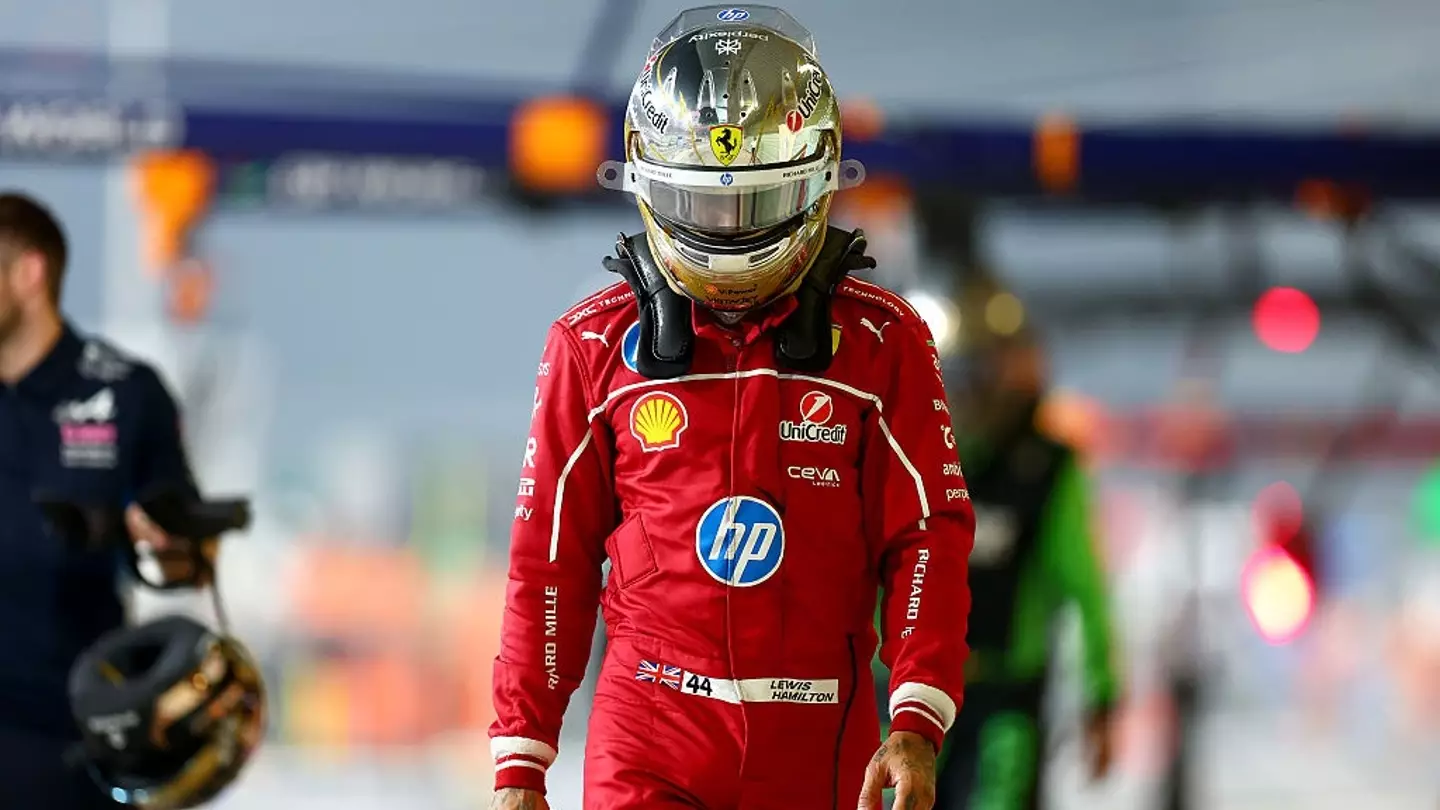
But even before the qualifying embarrassment, the emotional nadir had already arrived. During the final practice session, Free Practice Three (FP3), Hamilton entered the medium-speed right-hander of Turn 9, a corner that should be routine for a driver of his caliber. What followed was a snap, a catastrophic loss of control as the Ferrari SF25’s rear suspension compressed and the car bottomed violently, sending him spinning into the barrier.
The radio message that followed was flat, resigned, and utterly heartbreaking: “Something buckled at the front and snapped the rear… Are you okay? Yeah, sorry.” It was the sound of a champion who had fought this battle against his own machine too many times, a man who no longer trusted the very tool he depended on.

The Voice That Shook the Paddock
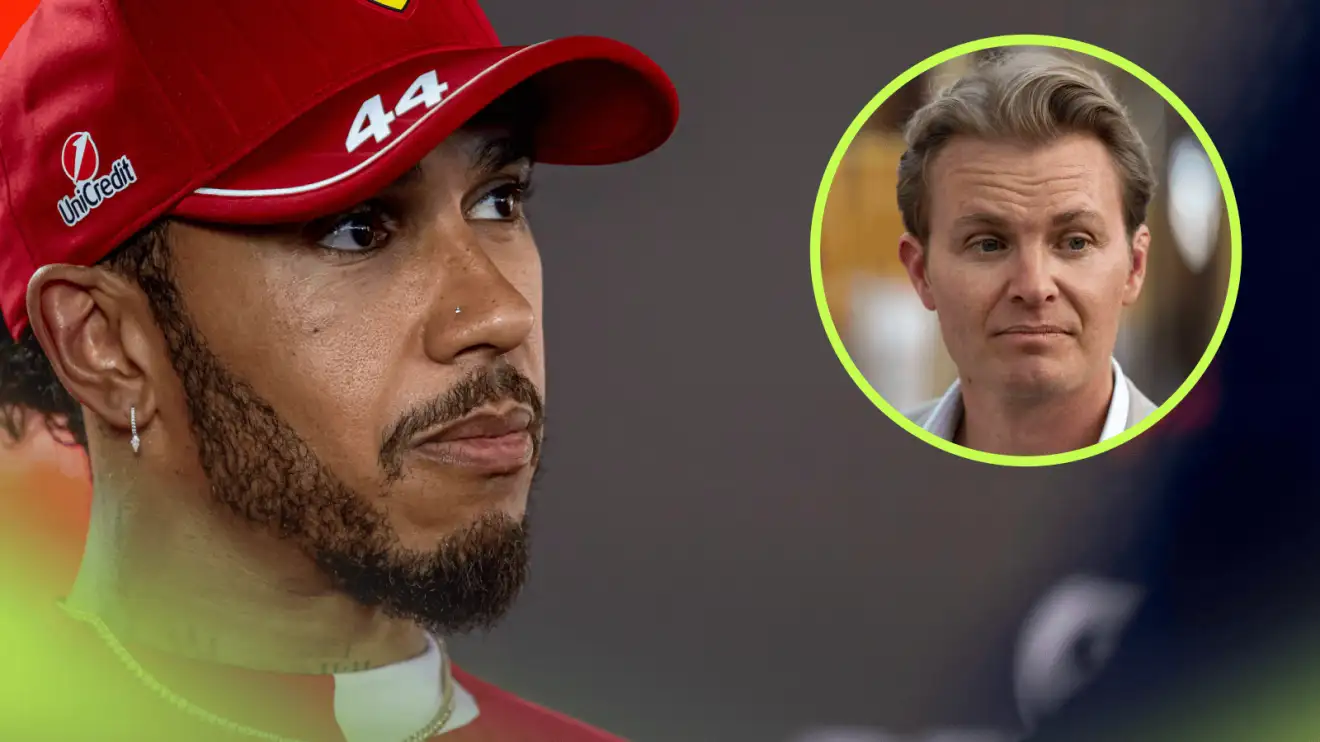
In the aftermath of this shocking collapse, the world stopped analyzing lap times and started listening to a voice that carried unparalleled weight: Nico Rosberg. The former World Champion and Hamilton’s fiercest rival, the only man to beat him to the title in the Mercedes era, broke his silence with a brutal, career-defining assessment. Rosberg called Hamilton’s situation exactly what it is: a “nightmare end of career scenario.”
Coming from Rosberg, those words are not punditry; they are a direct, clinical observation from someone who intimately knows Hamilton’s peak performance. He knows the milliseconds of hesitation, the microcorrections on the onboard footage, the delayed steering inputs that speak volumes about a driver fighting an illogical car. Rosberg observed a Lewis Hamilton he had “never seen look this uncomfortable,” neither at McLaren nor during their intense, wheel-to-wheel battles at Mercedes.
The core of the issue, Rosberg argued, is that the SF25 is not just slow—it is unpredictable. Its behavior changes corner to corner, lap to lap, making it impossible for a precision driver like Hamilton to extract consistent performance. The car, in essence, punishes his two decades of perfected technique. This is the crucial, emotionally devastating point: the nightmare is not that Hamilton has lost his talent; it is that Ferrari has handed him a machine that actively makes him look vulnerable, providing the outside world with a false narrative of a fading champion.
Rosberg’s words cut deep because they dared to state the unspeakable truth: “This season is scratching Hamilton’s legacy in real time.” It’s a tragedy playing out in the twilight of a legendary career, where the greatest-of-all-time is fighting not for victories, but simply to make it to Q2.
The Great Debate: Failure to Deliver or Failure to Build?
The immediate post-qualifying reaction saw Hamilton, in a moment of utter dejection, take the blame. “I have no words for how sorry I am,” he told the media. “Ferrari did an outstanding job preparing the car. I failed to deliver.” This apology, heavy with frustration, seemed to confirm the fears of a champion buckling under pressure.
However, Rosberg, and a growing number of observers, fundamentally disagreed with the self-flagellation. They see it as a case of Ferrari failing Hamilton, not the other way around. While Hamilton’s teammate, Charles Leclerc, managed a composed P5 in the same car, the key difference lies in the SF25’s narrow, unforgiving operational window. The car is fundamentally unstable, a trait that disproportionately punishes a driver whose entire career has been built on precision, consistency, and absolute trust in his machine.
Leclerc, younger and potentially more accustomed to wrestling with less-than-perfect machinery, might have adapted his style to manage the car’s inherent instability. Hamilton, however, built his dominance on finding the absolute limit and dancing on it. When the limit moves without warning, when the rear snaps violently due to bottoming, that foundation of trust dissolves, and with it, the margin for error. The 0.789 seconds off pole, and the mere two-tenths separating Hamilton from Leclerc, highlights the ruthless margins of modern F1. Two-tenths is the razor’s edge between fighting for P5 and drowning in a P16 graveyard.
An Impossible Task for the Finale
Starting P16 in the Abu Dhabi Grand Prix means Hamilton faces an almost impossible task. Yas Marina is notoriously difficult for overtaking; track position dictates everything. Strategy, typically a lifeline for a struggling star, offers little hope, with most teams opting for a conservative one-stop approach. Hamilton, surrounded by the chaos of the midfield, will be swallowed up by traffic from the moment the lights go out. He will be fighting to salvage a single point against cars—Haas, Williams, Sauber—that a seven-time World Champion should never be racing.
This final race of 2025 carries no championship stakes for Ferrari, who have already locked up P4 in the constructors’. The pressure is technically off, yet the emotional weight on Hamilton is immense. He is tasked not with proving his greatness, but with avoiding further damage to his already wounded prestige.
The possible outcomes for the race itself illustrate the scale of the tragedy:
Scenario One: The Miracle Recovery. Hamilton, leveraging a late safety car or a perfect storm of strategy, storms through the field to salvage a P8 finish, claiming a few points and offering a tiny sliver of redemption. The world remembers that even in chaos, greatness finds a way. This is the fading hope.
Scenario Two: The Invisible Finish. Hamilton finishes P14 or lower, lost in the midfield, forgotten by the cameras focusing on the battle at the front. His season ends silently, frustratingly, and utterly unremarkable. A debut without a single podium, remembered only for the wrong reasons.
The Question That Haunts 2026
Ultimately, the nightmare of 2025 is less about the current year and more about what it portends for the future. The only thing preventing this disaster from becoming a permanent stain is the looming 2026 regulation reset. New regulations mean a blank slate, a chance for Ferrari to build a car around Hamilton’s specific feedback, instead of forcing him into a machine designed for another driving style. The dream, perhaps, is not dead, but merely deferred by one painful year.
Yet, the central, haunting question remains—the one Rosberg left hanging in the air like smoke: Is Ferrari capable of building a car stable enough for Hamilton’s style, or will they waste the greatest driver of his generation on machinery that punishes precision?
If 2026 fails to deliver, if the new regulations do not usher in a more compliant, predictable Ferrari chassis, then this “nightmare end of career scenario” will become more than a passing phase. It will be the defining final chapter. The world will not remember the 105 wins; it will remember the four consecutive Q1 exits and the sound of a champion’s voice, flat and defeated, apologizing for a car that buckled beneath him. The Abu Dhabi disaster of 2025 has forced a painful, public debate: Does Ferrari deserve Lewis Hamilton, or is F1 history’s biggest icon being tragically wasted by a team that cannot give him the tools he needs to fulfill his final, legendary promise? For now, the world can only wait for the final, merciful lights to go out, ending a season everyone—including the champion himself—wants desperately to forget.
