Something deeply unusual is unfolding in the world of Formula 1, and it demands our immediate attention. Think about it for a moment: when was the last time you saw Max Verstappen and Lewis Hamilton genuinely agree on a fundamental issue? We are not talking about a polite nod during a mandatory press conference or a carefully crafted PR statement.
We are talking about a true, unfiltered alignment regarding the core identity of the sport they both love. It is a rare phenomenon, yet after just a few days of testing the highly anticipated 2026 cars in Bahrain, the two fiercest rivals of this generation are echoing the exact same alarming sentiments. That alone should make any motorsport fan pause and listen.
For half a decade, the FIA has been diligently crafting these new regulations. The governing body promised the world a thrilling vision of the future: faster cars, closer racing, and a greener, more sustainable footprint that would attract automotive giants. Manufacturers enthusiastically bought into this grand vision.
Audi committed to joining the grid, and Cadillac fought its way in through General Motors. Billions of dollars were invested globally under the absolute belief that 2026 would elevate Formula 1 to unprecedented heights. Instead, the moment the cars finally hit the tarmac in Bahrain, the atmosphere in the paddock violently shifted from eager optimism to undeniable alarm.
The Death of Bravery and the Rise of Coasting
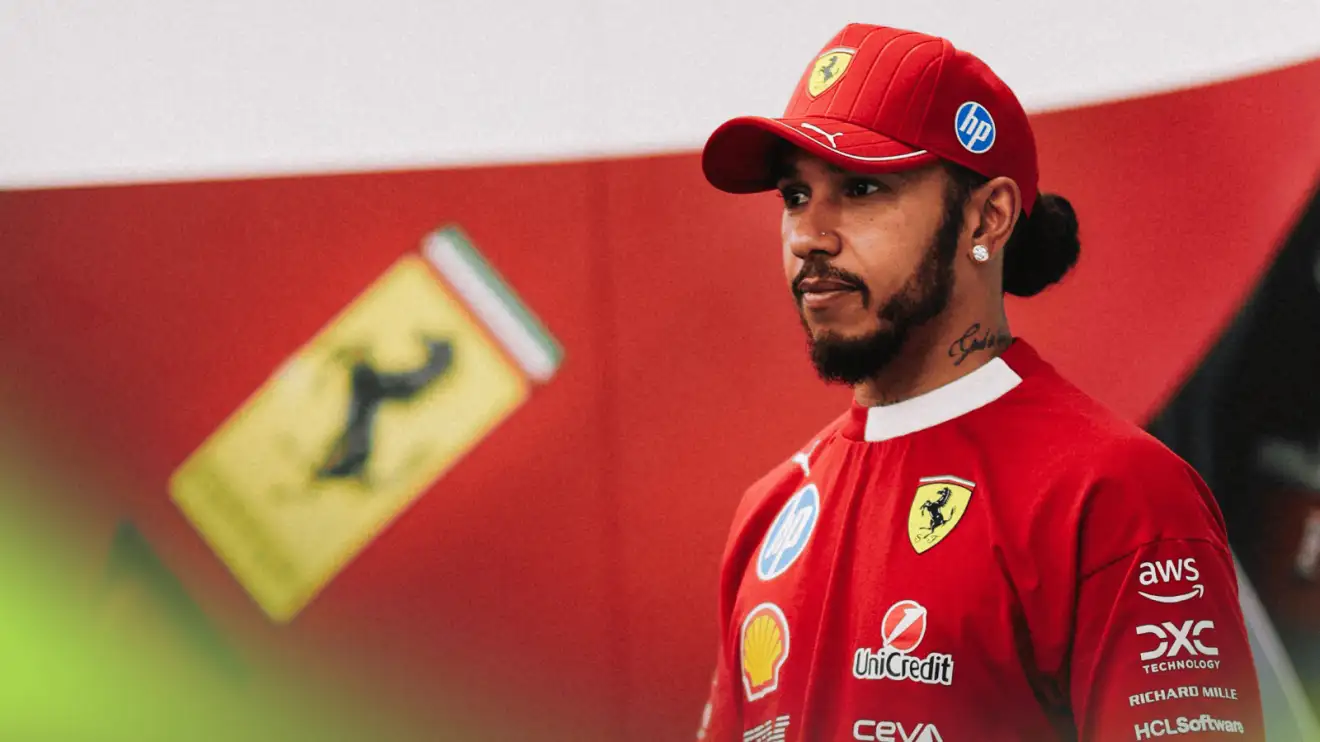
The first red flag was waved by none other than seven-time world champion Lewis Hamilton. Climbing out of his Ferrari, Hamilton did not mince his words, comparing the driving experience of the 2026 car to a GP2 machine. For the uninitiated, GP2 (now Formula 2) is a feeder series. It is the training ground where young, inexperienced drivers prove they have what it takes to reach the pinnacle of motorsport. When one of the greatest drivers in history states that the fastest cars on the planet feel like a significant step backward, it is no longer just driver frustration; it is a blaring warning siren.
Hamilton expanded on his critique, revealing a shocking reality about qualifying simulations. During a qualifying lap—the one moment in a race weekend where a driver is supposed to be absolutely flat out, relying purely on instinct, grip, and sheer bravery—drivers were lifting off the throttle for hundreds of meters on the straights. The reason? The battery deployment on these new power units only lasts for about eleven seconds at full output. Suddenly, the fastest way around a Grand Prix circuit is no longer about pushing the car to its absolute physical limits. Instead, it is about strategic coasting, managing energy reserves, and waiting for the battery system to recharge. Hamilton described the experience as ridiculously complex, joking that one almost needs an advanced engineering degree just to extract a competitive lap time.
If Hamilton’s assessment was a warning shot, Max Verstappen’s reaction was a heavy artillery strike. Stepping out of his Red Bull, Verstappen went even further, labeling the new machines “Formula E on steroids.” He lamented that the driving experience was dominated by micro-management rather than raw, visceral racing. But Verstappen’s most chilling statement struck at the very commercial heart of Formula 1. He openly admitted that winning alone is no longer enough to satisfy him if the car itself is devoid of joy. Here is a driver who has utterly dominated the current era, explicitly stating that he is exploring other career options outside of Formula 1 because the sport is simply no longer fun. When your biggest competitive star publicly questions the entire philosophical direction of the sport, it is a seismic event.
Other veteran voices quickly joined the chorus. Fernando Alonso explained that high-speed corners, which previously demanded total, unwavering commitment, are now taken at significantly slower speeds. It is not that the chassis cannot handle the G-force; it is because pushing through the corner unnecessarily drains energy needed for the straights. The new mathematical reality of Formula 1 actively punishes bravery. Charles Leclerc echoed these exact concerns, noting that overtaking will soon rely entirely on battery deployment timing rather than braking precision or race craft. Even young rising star Oliver Bearman simply described the driving experience as “sad.” While Lando Norris notably stood out by claiming he enjoys the complex puzzle the new cars present, the divide between world champions is impossible to ignore. They see the rapid erosion of Formula 1’s racing DNA.
The Hidden Danger: When Engineering Compromises Safety
However, the agonizing debate over the “feel” of the cars is merely the surface layer of this rapidly escalating crisis. Beneath the philosophical arguments lies a much darker, far more terrifying issue: driver safety. While driving pleasure is subjective, safety is non-negotiable. Multiple key figures inside the paddock are now raising urgent red flags, signaling that the 2026 regulations have inadvertently introduced catastrophic risks that nobody fully modeled or anticipated.
Andrea Stella, the methodical and highly analytical team principal of McLaren, is not a man prone to dramatic exaggeration. When Stella publicly uses the word “imperative” to describe the need for immediate fixes before the season opener in Melbourne, the entire motorsport community must listen. Stella highlighted three specific, terrifying scenarios that could unfold in the coming weeks.
The first major hazard stems from the removal of the MGU-H (Motor Generator Unit – Heat). Without this crucial component, the turbocharger does not stay spooled between throttle applications. Consequently, drivers must maintain abnormally high engine revs to build enough boost for a proper launch off the starting grid. During practice starts in Bahrain, the results were chaotic. Anti-stall systems aggressively kicked in, cars bogged down unexpectedly, and drivers reported wildly inconsistent getaways. Imagine twenty-two cars tightly packed on the starting grid. When the lights go out, half the field launches cleanly while the other half stalls or stutters. This is a recipe for a devastating rear-end collision before the pack even reaches turn one.
The second safety concern is even more unsettling. Because the battery energy depletes rapidly in the middle of a long straightaway, the subsequent drop in power is not a gradual, manageable decline. It is a violent, dramatic reduction. One second, a car is deploying massive hybrid power; the next, it is heavily relying on a standard combustion engine. Testing data revealed horrifying speed differentials of 50 to 60 kilometers per hour between cars on the exact same straight. Closing speeds of that magnitude are incredibly dangerous. History has already shown us the lethal potential of such speed mismatches, from Mark Webber’s terrifying airborne flip in Valencia in 2010 to Riccardo Patrese’s violent crash in 1992. Now, amplify those historical risks with modern cars traveling faster than ever before.
The third critical issue revolves around the controversial new active aerodynamics. The traditional DRS (Drag Reduction System) has been replaced by front and rear wings that dynamically shift between low-drag and high-downforce modes. Every car will launch down the straights in low-drag mode. But what happens if the complex system suffers a software glitch and fails to transition back to high downforce before a heavy braking zone? The driver will enter a high-speed corner with virtually zero aerodynamic grip. At speeds exceeding 300 kilometers per hour, a fraction of a second of lost downforce means a guaranteed, violent trip into the barriers.
The Engine Loophole War
As if the philosophical and safety crises were not enough, a vicious political war is simultaneously threatening to tear the paddock apart. This conflict could effectively decide the world championship before the first green flag even waves, and it all revolves around a highly contentious engine loophole.
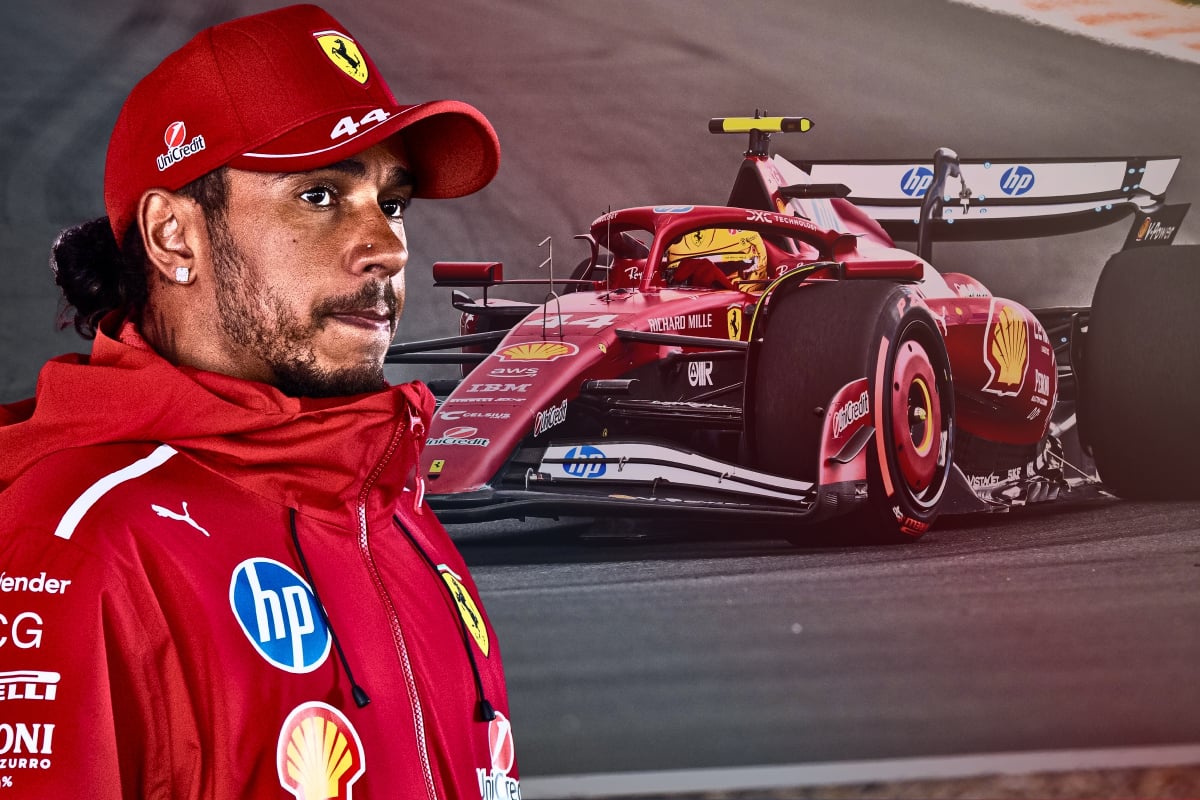
The 2026 regulations strictly mandate a maximum engine compression ratio of 16 to 1, measured when the power unit is completely cold in the garage. On paper, it is a straightforward rule. However, Mercedes has allegedly engineered a masterstroke of exploitation. They have reportedly designed internal engine components that physically expand when the engine reaches intense racing temperatures. While the engine perfectly passes the FIA’s cold inspection at 16:1, the effective compression ratio climbs closer to an astonishing 18:1 once the car is out on the track. In Formula 1, this translates to an estimated gain of fifteen brake horsepower—roughly three to four tenths of a second per lap. In the fiercely competitive world of qualifying, that is the massive difference between securing pole position and languishing on the second row.
Ferrari, Honda, and Audi have erupted in fury, sending a joint letter demanding immediate clarification and intervention from the FIA. Unsurprisingly, every team utilizing Mercedes customer engines—McLaren, Williams, and Alpine—has vehemently defended the innovation. Williams team principal James Vowles issued a stark warning: if the FIA suddenly outlaws this design, up to eight cars could be physically missing from the grid in Melbourne, as completely redesigning the core architecture of a power unit in mere weeks is an impossible task. The FIA, caught in the crossfire, issued a terribly vague statement acknowledging that both sides have valid interpretations, committing to absolutely nothing while the homologation clock ticks down to zero.

A Turning Point in Motorsport History
Formula 1 now stands at the edge of a massive precipice. Is this entirely a disaster, or are we simply witnessing the traditional, dramatic overreaction that accompanies any major regulatory shift? History reminds us that the introduction of the hybrid era in 2014 was met with intense initial disgust, yet it ultimately spawned a period of incredible technological and commercial growth. Similarly, the Halo device was universally mocked in 2018 before it undeniably saved multiple lives, cementing its permanent place in the sport.
Yet, this time feels palpably different. When the greatest champions of the modern era are questioning the joy of driving, when brilliant engineers are warning of catastrophic speed differentials, and when the paddock is fractured over fundamental technical loopholes, the foundation of the sport is legitimately trembling. Formula 1 has always been a delicate, beautiful dance between cutting-edge technology and raw human instinct. In 2026, the technology threatens to completely consume the human element. The decisions made in the coming weeks will not just determine the outcome of the season opener in Melbourne; they will define the very soul of Formula 1 for a generation. The world is watching, waiting to see if the pinnacle of motorsport has finally pushed the limits too far.
