Something simply did not feel right at the Suzuka circuit. You could hear it in the heavy, uncomfortable silence that fell immediately after the chequered flag. Usually, this is the precise moment when drivers let their emotions pour out over the team radio. They break down the race, they vent their profound frustrations, or they celebrate a hard-fought battle. Yet, Lewis Hamilton said absolutely nothing. There was no fiery outburst, no demand for an immediate debrief, and no explanation. There was just silence.
In the high-stakes world of Formula One, that kind of silence is incredibly loud. Just minutes earlier, the seven-time world champion had asked his team a very direct and pointed question: why did he suddenly have considerably less power than his teammate? They were driving the exact same car, powered by the exact same engine, under the exact same race conditions. Instead of a reassuring answer or a technical explanation, Hamilton received absolute nothingness. His race engineer did not respond. The radio simply cut out, leaving the British driver isolated in the cockpit. That chilling moment of radio silence is where this entire complex and controversial story begins.
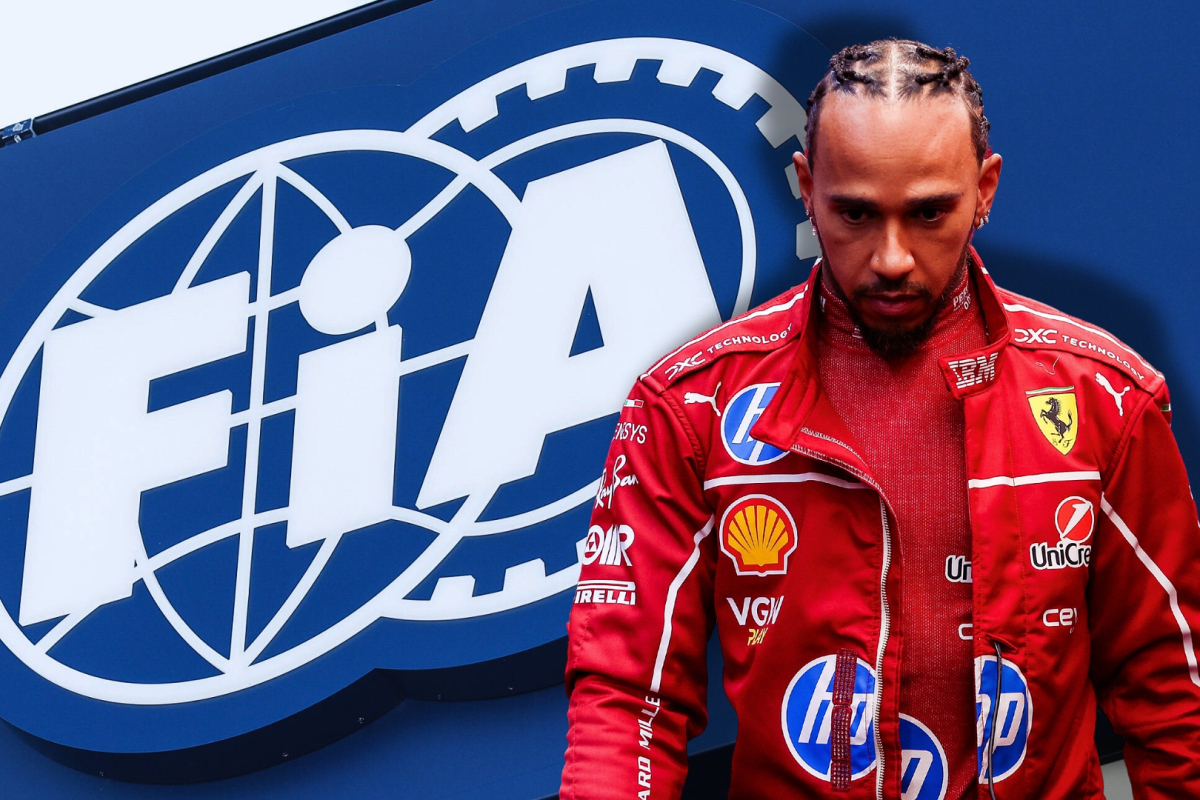
To understand the magnitude of the situation, we must look at how the race unfolded. Hamilton was running an incredibly strong race. He was sitting comfortably in third place and looking completely in control of his destiny. Following the safety car restart, he executed a beautifully clean and clinical move on George Russell, effectively locking himself into what appeared to be a guaranteed podium finish. He was building massive momentum with back-to-back podiums looking like a certainty, and everything was pointing in the right direction for the Ferrari driver.
Then, seemingly out of nowhere, his race completely collapsed. First, his teammate Charles Leclerc closed the gap and blasted past him down the main straight. Shortly after, George Russell came roaring back through to exact his revenge. Moments later, Lando Norris joined the pursuit and relegated Hamilton even further down the order. In the blink of an eye, Hamilton plummeted from a comfortable third to a miserable sixth place. The most alarming part? This did not look like a standard tyre drop-off or a botched pit wall strategy. It looked as though his car had been completely drained of its lifeblood. He simply did not have the horsepower to fight back or defend his position.
Over the team radio, the sheer confusion in Hamilton’s voice was palpable. He was desperately asking his engineers about energy deployment. He was questioning why Leclerc was suddenly achieving rocket-like speeds on the straights. He was trying to intellectually process a mechanical scenario that fundamentally did not make sense from behind the wheel. You do not hear a driver of Hamilton’s immense pedigree and experience question his machinery in such a bewildered manner unless he genuinely feels that a critical system has failed. This was not the sound of a driver making excuses; this was a seasoned veteran who knew precisely what his car should be capable of, realising it was effectively crippled.
When Ferrari team principal Fred Vasseur finally stepped in front of the world’s media to explain the disastrous sequence of events, his answer appeared entirely technical, heavily detailed, and on the surface, incredibly convincing. He did not speak of mechanical failures or suggest that anything was fundamentally broken on Hamilton’s car. Instead, Vasseur pointed directly at the newly introduced 2026 regulations, specifically targeting the highly controversial overtake mode system.
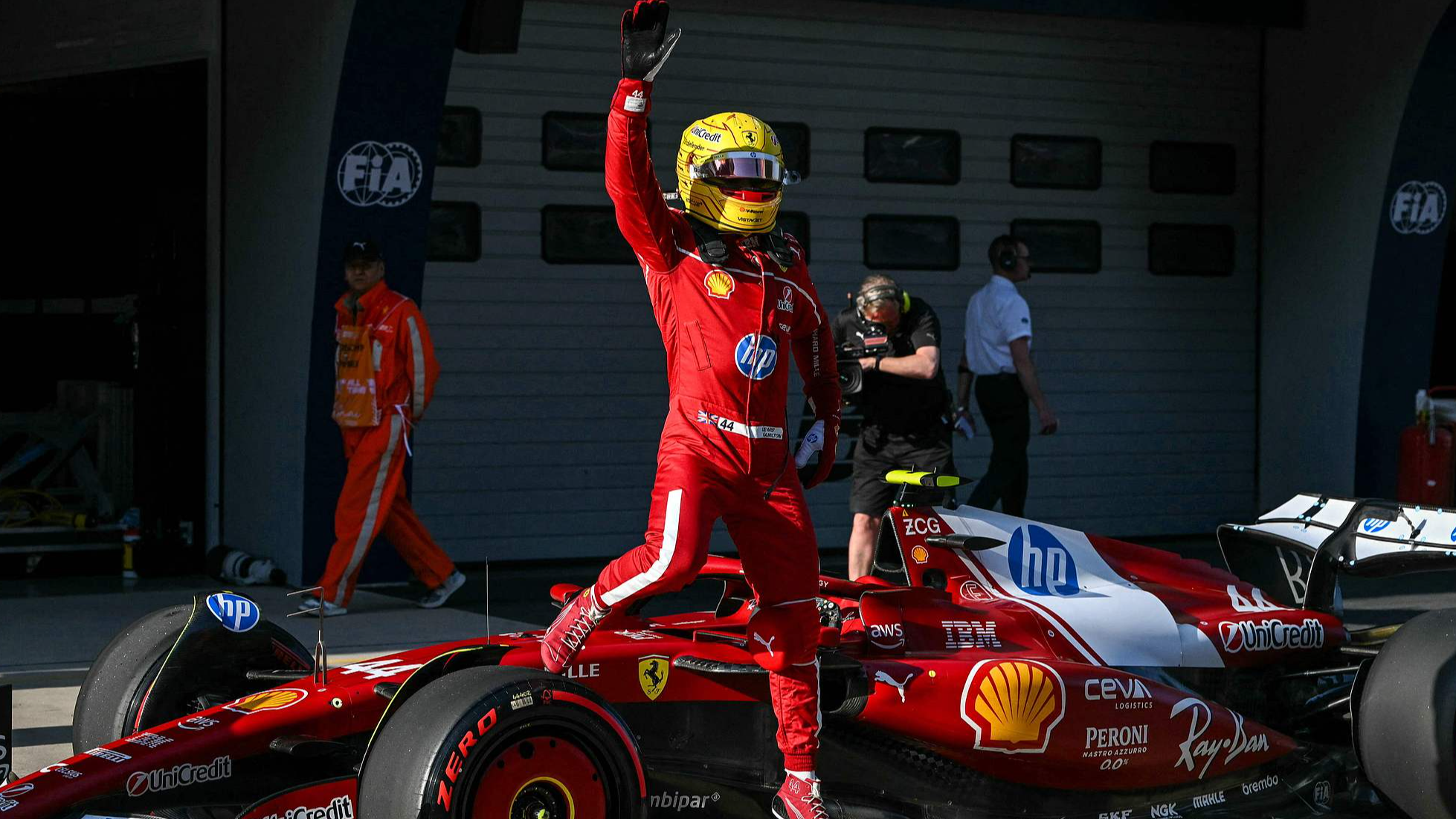
To grasp what happened, one must understand how power is generated and distributed in this modern era of Formula One. The traditional Drag Reduction System (DRS) that we have known for years is gone. The rear-wing advantage has been completely replaced by an infinitely more complex electrical system. In 2026, the power output of a Formula One car is split almost perfectly down the middle. Roughly 500 horsepower is generated by the internal combustion engine, whilst another 500 horsepower is delivered exclusively by the sophisticated electrical battery system. Consequently, half of a car’s overall performance is no longer dictated by raw engine grunt; it is entirely dependent on energy deployment.
The most critical caveat of this new era is the overtake mode. This crucial system, which provides a massive burst of electrical energy on the straights, is exclusively activated if a driver remains within a strict one-second window of the car directly ahead. If you drop out of that proximity window, you are entirely locked out of the boost system. Ferrari’s official explanation was that the very moment Hamilton dropped outside of that vital one-second gap, he lost all access to his extra electrical power. Without that crucial boost, his straight-line speed fell off a cliff. Because he lacked top speed, he could not close the gap to the cars ahead, meaning the system remained locked out lap after miserable lap. It created a perfect, inescapable negative feedback loop.
While this explanation makes perfect sense on paper, it completely ignores what was happening on the other side of the Ferrari garage. Charles Leclerc was not merely reacting to the complex 2026 systems; he was actively manipulating them to his distinct advantage. At certain critical moments during the race, Leclerc was deliberately slowing down and allowing George Russell to get ahead of him heading into the final chicane. This was not a driving error. It was a calculated, genius manoeuvre to ensure he remained within that magical one-second window. By doing so, as soon as they hit the long straight, Leclerc could instantly trigger his overtake mode, unleash maximum electrical power, and effortlessly reclaim the position. He was playing a high-stakes game of chess at 300 kilometres per hour. Leclerc understood that in 2026, the overtake mode is not just an attacking tool; it is an absolute necessity for survival.
Hamilton, conversely, appeared to be driving with an old-school mentality. He was pushing the car flat out, maximising his speed through every single corner, and inherently trusting that the power would be there when he demanded it on the straights. When the gap opened up and the one-second window closed, the system aggressively turned against him, leaving him completely exposed.
However, even with Vasseur’s thorough explanation regarding the overtake mode, a glaring omission remains. Ferrari never actually answered Hamilton’s initial, burning question: were both cars producing the exact same power? When you analyse the onboard footage from the race, a deeply uncomfortable truth begins to emerge—one that Ferrari chose not to mention.
The rear rain lights on the 2026 cars serve a dual purpose. They are not merely for visibility in wet conditions; they act as a visual telemetry system for energy management. When the red lights are flashing rapidly, the car is actively harvesting and recharging its electrical battery. When the lights turn off, the car is deploying its stored energy, sending maximum electrical power to the rear wheels.
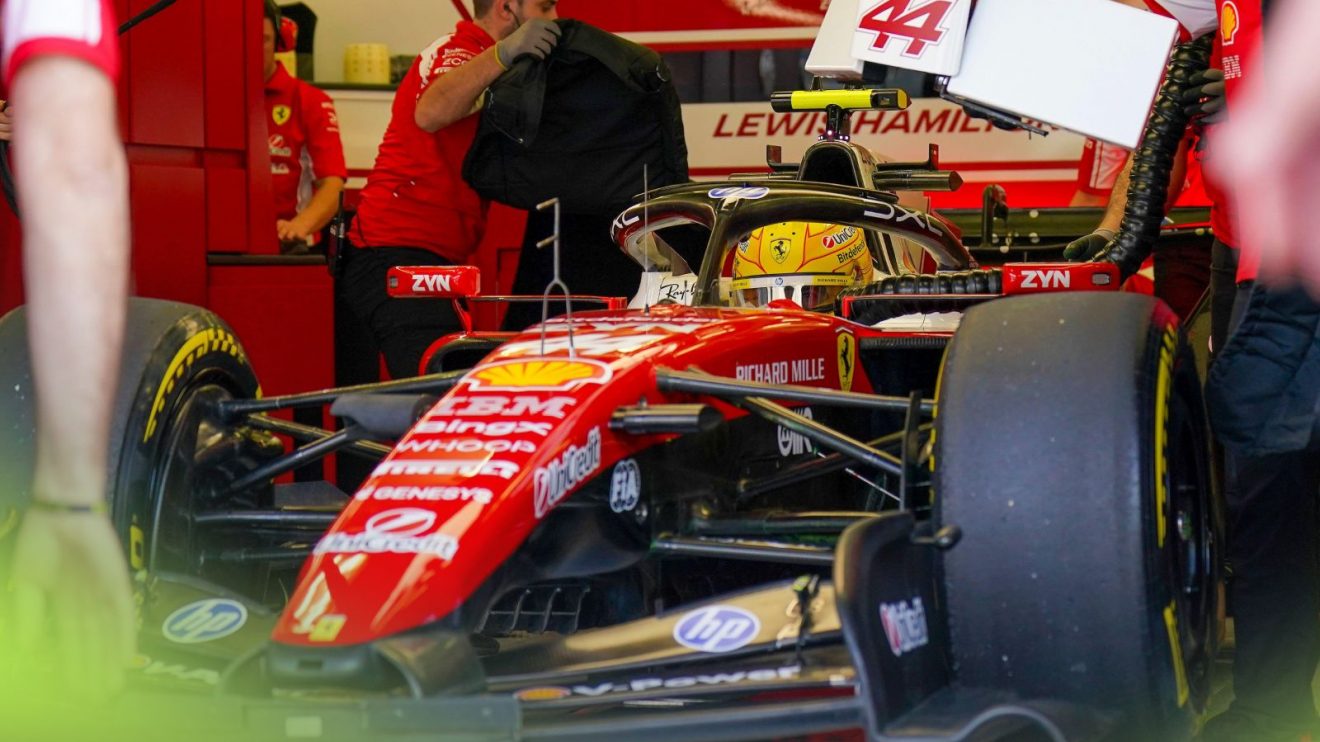
Looking closely at the critical moment when Lando Norris effortlessly swept past Hamilton on the outside of Turn One, the flashing red lights tell a completely different story to Ferrari’s press release. Hamilton’s rain lights were flashing for just a fraction of a second longer than they should have been. This tiny, almost imperceptible detail proves that while Hamilton was accelerating down the straight, his car was still trapped in harvesting mode, actively recovering energy instead of unleashing it. At that exact same moment, Charles Leclerc had already switched his harvesting off and was deploying full, unadulterated maximum power.
This revelation fundamentally changes the entire narrative. We are no longer discussing a mechanical failure, nor are we pointing fingers at internal team sabotage. We are looking at manual driver input. In the 2026 era, a driver is essentially managing an incredibly volatile energy system manually, corner by meticulous corner. Hold onto the harvesting mode for a fraction of a second too long, and you lose your top speed. Lose your top speed, and you lose track position. Lose track position, and you fall out of the crucial one-second window, triggering the catastrophic negative feedback loop.
Yet, beneath the strategy and the split-second driver errors, an even darker reality is haunting the famous Italian marquee. Even if Hamilton had executed his energy deployment with absolute perfection, the Ferrari SF26 is fundamentally flawed. Across the opening races of the season, a depressing pattern has firmly established itself: Ferrari simply cannot compete with Mercedes on raw straight-line speed. The Mercedes power unit delivers consistent, unrelenting electrical deployment all the way to the heavy braking zones. The Ferrari, however, suffers from severe early battery depletion. The electrical energy simply runs out before the end of the straight, causing the car to dramatically clip and lose momentum.
This inherent design flaw means that when Hamilton lost his crucial slipstream, he was not just losing a temporary boost; he was falling back onto a baseline performance that was vastly inferior to his main rivals. Leclerc’s tactical brilliance managed to temporarily mask this terrifying power deficit, but strategic trickery can only hide a slow car for so long. Ferrari is not currently fighting for race victories; they are desperately clinging on to third place.
The pressure inside the Maranello camp is now reaching a boiling point. Hamilton joined this new era seeking a dominant reset, yet he finds himself trailing his younger teammate in the critical adaptation phase. The tension is so severe that Ferrari has already mandated a drastic change, bringing in a brand-new race engineer for Hamilton ahead of the upcoming Miami Grand Prix. Furthermore, the team is frantically rushing an upgraded power unit and redesigned deployment software to Florida in a desperate bid to salvage their campaign.
Until those major upgrades arrive and prove their worth on the tarmac, the dark cloud over Suzuka will remain. Hamilton asked a simple, desperate question in the heat of battle, and he was met with total silence. In the ruthless, unforgiving world of Formula One, that kind of silence rarely means everything is fine. It usually means the storm has only just begun.
