The roar of Formula 1 has changed, but in 2026, the loudest sound in the paddock isn’t coming from the exhaust pipes—it’s the sound of frantic typing in the engineering offices of Maranello and Brackley. We have entered an era where the championship isn’t being won by the person with the biggest wrench, but by the person who wrote the best code.
After the dust settled at Albert Park in Melbourne, the reality of the new regulations became crystal clear: Mercedes is speaking a language that no one else has learned yet, and Ferrari is scrambling to build a translation device before the season slips away.
At the heart of this technological rift is a concept that has become the most discussed phrase in the sport: “Super Clipping.” To the casual observer, the Mercedes W17 looks fast, but the telemetry tells a story that borders on the supernatural.
In qualifying, George Russell put his car on pole by a staggering eight-tenths of a second. Most of that gap didn’t come from brave late braking or superior cornering grip; it came on the straights, where software dictates every millisecond of performance.
Under the 2026 regulations, the power unit has been turned inside out. Combustion engine output has plummeted, while the electric motor—the MGU-K—has nearly tripled its influence. For the first time, electrical power makes up nearly half of the car’s total output. The catch? Battery capacity hasn’t increased. A driver has roughly 11 seconds of full electric boost per lap before the battery runs dry. In Melbourne, you could see the exact moment the “clipping” happened. Cars would be flying down the straight at full throttle, the battery would hit zero, and the car would visibly shed 50 km/h or more while the driver’s foot was still pinned to the floor.
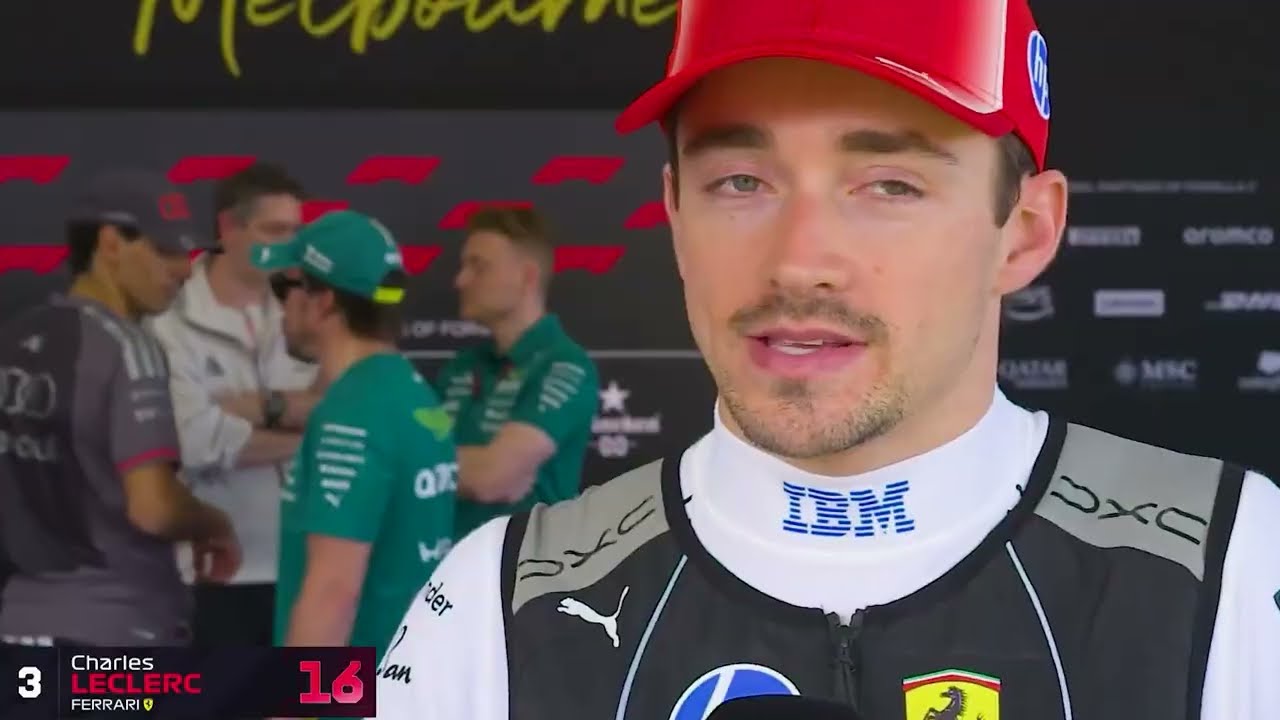
This is where Mercedes found their “unfair” advantage. While rivals like Ferrari and Red Bull were lifting off the throttle to harvest energy for the next lap, Mercedes perfected Super Clipping. This allows the MGU-K to act like a dynamo, pulling energy from the rear wheels and recharging the battery while the driver stays at 100% throttle. Because the car stays at full throttle, the active aerodynamics stay in “straight mode,” keeping drag at a minimum. Mercedes arrives at the braking zone faster, with more charge, and breaks later than anyone else. It is a compounding loop of efficiency that left Ferrari’s Charles Leclerc 14 km/h slower at the end of the main straight.
The pain for Ferrari is measurable. Telemetry revealed that when Leclerc’s battery hit 0% charge on the straights, the Mercedes battery behind him still held 29%. That difference alone accounts for half a second of lap time in a single sector. It isn’t a hardware failure; it is a calibration nightmare.
However, Ferrari isn’t taking this sitting down. The team’s energy systems group, known internally as GES, is currently rewriting the entire energy management code of the SF26 ahead of the Chinese Grand Prix. They are shifting their harvesting strategy to medium-speed corners, keeping engine revs higher in lower gears to force energy into the battery even while the car is turning. It is a risky move—initial tests made the car feel unpredictable and “twitchy” for Leclerc and Lewis Hamilton—but it is a necessary gamble to stop the bleeding.
But software is only half of the story. Ferrari has also unveiled what might be the most visually shocking piece of engineering in modern F1 history: the “Macarena” rear wing. During testing, photographers captured something that looked like a mechanical failure but was actually a stroke of genius. The upper flaps of the Ferrari wing don’t just flatten out like a standard DRS; they rotate over 200 degrees, flipping completely upside down at high speed.
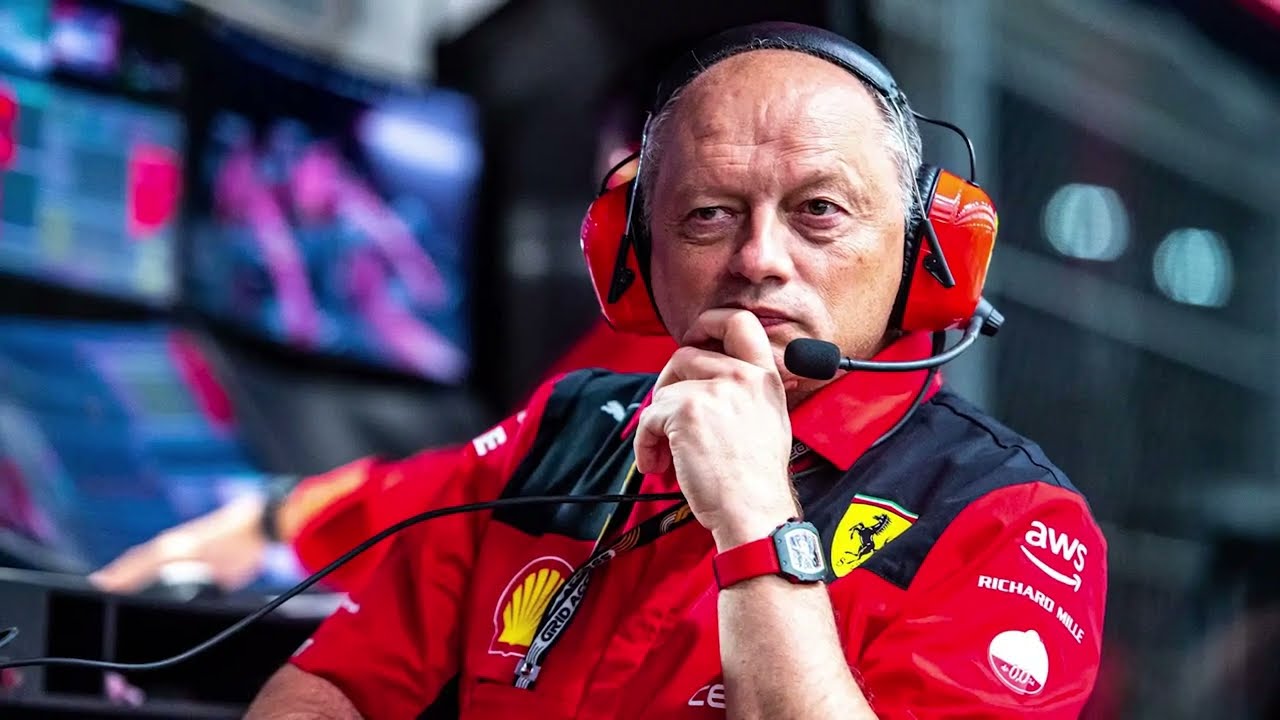
In this inverted position, the wing behaves like an aircraft wing in reverse—it generates lift rather than downforce. This eliminates almost 75% of the rear wing’s drag, allowing the car to slice through the air with almost zero resistance. Ferrari Team Principal Fred Vasseur jokingly dubbed it the “Macarena” because the dramatic throwing motion of the flaps reminded him of the 1990s dance craze. Beneath the joke lies a packaging miracle; the entire mechanism had to be shrunk to fit inside the wing’s endplates, a feat so complex that rivals like Williams admit they hadn’t even considered it possible.
There is even a hidden secondary benefit to the Macarena. As the wing rotates back to its cornering position, it passes through a vertical phase for a fraction of a second, acting as a massive air brake. This helps the car slow down more effectively, compensating for the narrower 2026 tires that offer less mechanical grip. It is a bold, high-stakes innovation that could either catapult Ferrari back to the front or become a massive distraction that drains their resources.

While the engineering war rages, a political chess match is happening in the background. Mercedes has been accused of exploiting a loophole in the engine compression ratio regulations. By using components that expand under heat, they’ve managed to run an 18:1 ratio while the rules mandate 16:1. This is worth an estimated 30 horsepower. The FIA has already voted to close this loophole, but the new tests won’t start until June 1st. This gives Mercedes seven races to build a lead that might be insurmountable.
This creates a fascinating dynamic for the upcoming races. We have Mercedes, the masters of the digital realm, using superior algorithms and a temporary engine advantage to dominate. On the other side, we have Ferrari, the masters of mechanical innovation, trying to “hack” their way back into contention with upside-down wings and a total software overhaul.
The perspective of Lewis Hamilton is perhaps the most telling. Having moved from the dominant Mercedes environment to the “energy-starved” Ferrari, he has been vocal about the deficit. He hasn’t sugarcoated the situation, noting that while the Ferrari chassis is world-class and its low-speed starts are legendary, the feeling of the power cutting out on the straights is a helpless one for a driver. “You just sit there with your foot on the floor watching the speed number drop,” he remarked after Melbourne.
As the circus heads to Shanghai, the stakes couldn’t be higher. The Shanghai International Circuit features one of the longest straights in the world, a place where energy management and drag reduction aren’t just important—they are everything. If Ferrari’s software updates can bridge the 29% battery gap, and if the Macarena wing can deliver its promised 10 km/h boost, we are in for a classic battle.
This isn’t just a race between drivers anymore. It is a race between the programmers in Italy and the engineers in England. It is a story of loopholes, dancing wings, and the relentless pursuit of a “new language” of speed. Whether you are a fan of the technical wizardry or the high-speed drama, one thing is certain: the 2026 season is just getting started, and the rulebook has been thrown out the window.
