The 2026 Formula 1 season was highly anticipated as a grand reset for the pinnacle of motorsport, an opportunity to wipe the slate clean with a brand-new set of engine and aerodynamic regulations. Fans around the globe eagerly awaited a fiercely competitive championship, hoping to see a grid packed with equal machinery and unpredictable outcomes.
Instead, the current season has swiftly transformed into a treacherous political battlefield. While the on-track action has been surprisingly processional at the front of the pack, the off-track maneuvering has escalated into an unprecedented war of words, accusations, and high-tech espionage. At the absolute center of this furious storm is Mercedes, a team whose unparalleled engineering genius is now being overshadowed by accusations of deeply unsportsmanlike conduct.
Mercedes is practically untouchable when the lights go out, but in the paddock, they are entirely under siege from all sides. Initially, the paddock whispers centered around the controversial compression ratio of their groundbreaking new engine. However, those whispers have now evolved into a deafening roar regarding a much more severe and insidious accusation: the age-old racing sin of “sandbagging.”
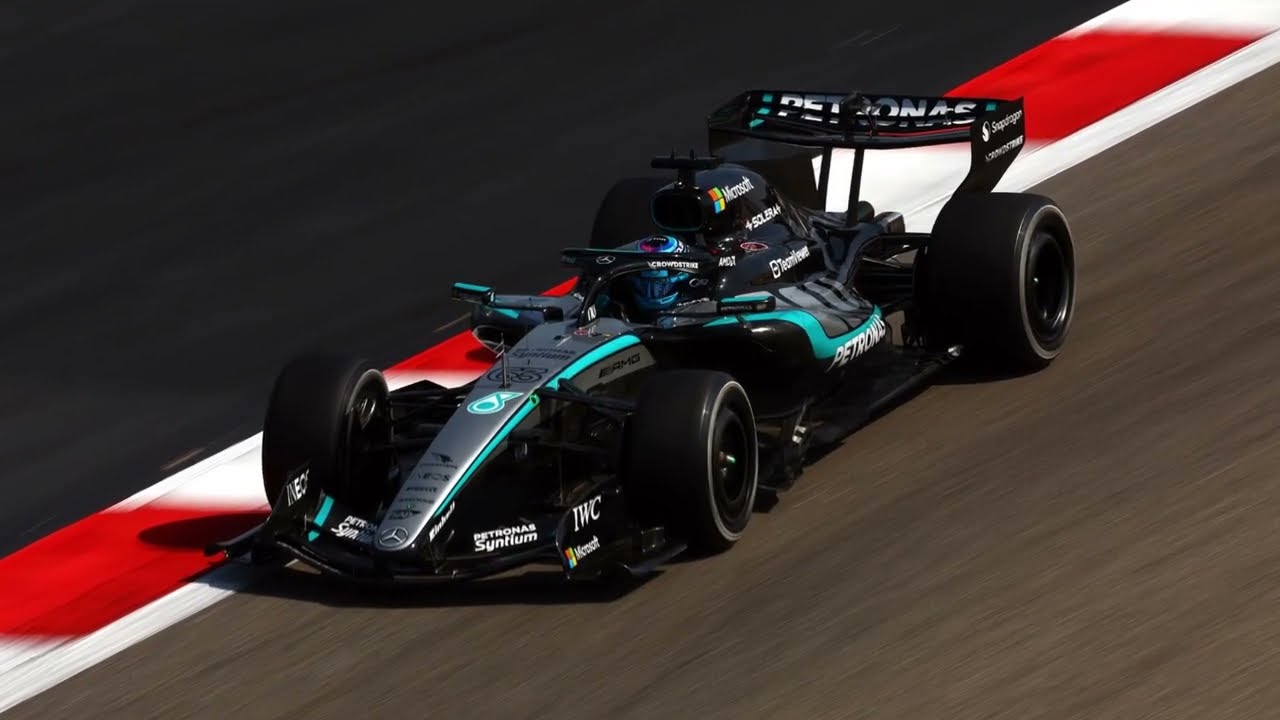
To fully understand the gravity of the situation, one must first understand what sandbagging entails in the high-stakes realm of professional motorsport. The term is universally used to describe a team or driver that deliberately conceals their true potential. By intentionally holding back, managing their pace, and making their car look significantly slower than it actually is, a team can manipulate the expectations of both their rivals and the governing body. Historically, sandbagging has been utilized as a psychological weapon, a way to lull competitors into a false sense of security during pre-season testing or free practice sessions, only to unleash devastating, unbeatable speed during the final moments of qualifying. However, the accusations currently being hurled at Mercedes are far more complex and dangerous than mere psychological warfare. Rival teams, led by a visibly furious Ferrari, are convinced that Mercedes is deploying a highly sophisticated sandbagging strategy to actively subvert and manipulate the 2026 sporting regulations to maintain an unfair monopoly on the championship.
The root of this massive controversy lies in the newly introduced regulatory framework for the 2026 season, specifically a system known as the Additional Development and Upgrade opportunities, or ADU. The FIA, in its infinite wisdom, designed the ADU system to act as a great equalizer, a safety net constructed to prevent a single constructor from completely dominating the sport for years on end, as has happened so frequently in the modern turbo-hybrid era. The ADU regulations explicitly state that if any competing engine manufacturer finds themselves more than two percent behind the power output of the fastest engine on the grid, they will automatically be granted a mid-season opportunity to upgrade their power unit. Furthermore, if a manufacturer falls more than four percent behind the benchmark, they are rewarded with two massive upgrade slots. This performance-balancing mechanism was intended to guarantee a close, thrilling, and fiercely competitive championship by extending a much-needed lifeline to the slower teams.
This is precisely where the allegations of Mercedes’s sandbagging become so deeply controversial. According to a growing coalition of furious rival teams, Mercedes has engineered an engine so incredibly powerful that they are terrified of showing its true pace. Ferrari and others assert that Mercedes is deliberately throttling their performance on the track, meticulously managing their lap times to ensure that the performance gap to the second-fastest team remains comfortably perched just below that critical two-percent threshold. By artificially keeping the competition close—but not too close—Mercedes can consistently win races while simultaneously denying their rivals the crucial ADU upgrades they desperately need to mount a genuine challenge. It is, undeniably, a stroke of strategic brilliance. It is a calculated, mathematical approach to absolute dominance. However, it is also an incredibly risky gamble that borders on a severe breach of sporting ethics.
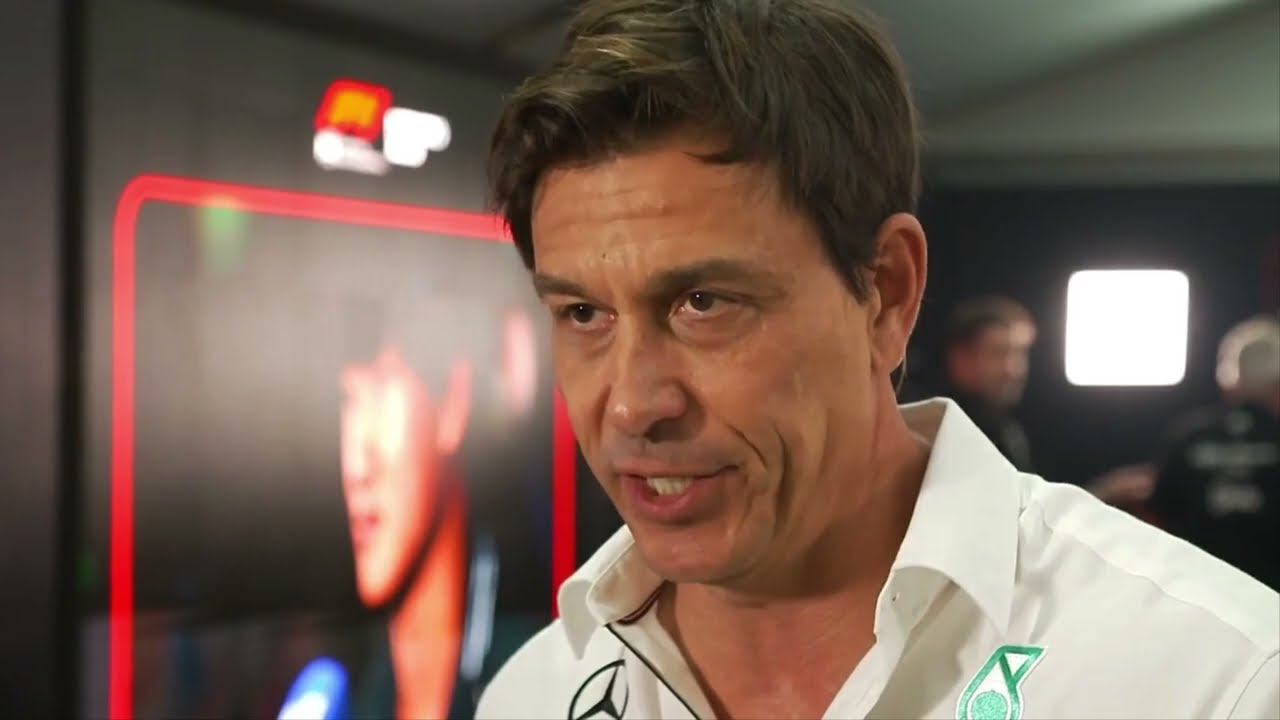
The immense frustration echoing through the paddock is palpable. Rival team principals are absolutely incensed, viewing this alleged tactic as a blatant mockery of the FIA’s intent to create a level playing field. The situation has placed the FIA in a remarkably difficult and uncomfortable position. As the ultimate governing body of Formula 1, they are facing immense, mounting pressure from almost every team on the grid to take immediate and decisive action. The rulebook does, in fact, contain a specific clause designed to prevent and penalize sandbagging. This clause grants the FIA the sweeping authority to revoke a team’s developmental upgrade slots entirely at their own discretion if deliberate underperformance is proven. Yet, historically, proving that a racing driver is intentionally driving slowly has been an impossible task. How can regulators definitively differentiate between a driver navigating a tricky tire preservation phase, cruising at ninety percent capacity, and a driver genuinely pushing the car to its absolute mechanical limit? For decades, evaluating a driver’s effort has been a heavily subjective and ultimately unpoliceable endeavor.
But 2026 is different. The subjective arguments of the past have been completely neutralized by the introduction of groundbreaking, undeniable telemetry. This year, every single car on the Formula 1 grid has been mandated to carry hyper-advanced torque sensors mounted directly on the rear axle. These state-of-the-art sensors are a technological marvel, designed to capture and transmit real-time, high-fidelity data regarding the exact amount of power the internal combustion engine and electrical systems are deploying to the rear wheels. This data stream is entirely encrypted and sent directly to the FIA’s remote servers. It is absolutely impossible for a team to tamper with, manipulate, or fake this data. This new technology serves as the ultimate smoking gun, the exact tool required to expose the reality of Mercedes’s alleged sandbagging operation. If this encrypted telemetry proves that the Mercedes power unit is capable of reliably producing drastically more power than is currently being deployed during Grand Prix races, it will be virtually impossible for the reigning champions to deny that they are engaged in a systematic campaign of deception.
Consequently, the FIA has launched a massive, deep-dive investigation into the gigabytes of data flooding in from the torque sensors. Investigators are meticulously cross-referencing and comparing the telemetry from the primary Mercedes works team with the data generated by their various customer teams, including McLaren, Alpine, and Williams. They are hunting for glaring discrepancies, unusual engine mapping patterns, and any concrete evidence indicating that the factory team is artificially capping their maximum output. The scale of this investigation is staggering, and the potential consequences for the world championship are apocalyptic. If Mercedes is formally found guilty of deliberate sandbagging and rule manipulation, the penalties will be uniquely severe. They could face astronomical financial fines, a devastating deduction of Constructor and Driver championship points, or in the most extreme scenario, utter exclusion and disqualification from the 2026 World Championship entirely. Such a ruling would represent an unparalleled blow to the Mercedes brand and easily the most explosive scandal in the rich, dramatic history of Formula 1.
Even if Mercedes manages to navigate this political minefield and avoid formal punishment, the catastrophic damage to the fabric of the sport may have already been dealt. The fundamental trust that allows the Formula 1 paddock to function has been totally shattered. The very spirit of fair competition and mutual respect has been dragged through the mud. Yet, what makes this escalating crisis even more captivating is the unapologetic, fiercely defiant stance taken by Mercedes’s management. Toto Wolff, the intensely competitive team principal of Mercedes, has completely refused to back down. Instead of issuing carefully worded PR deflections, Wolff has been incredibly vocal, aggressively defending his team’s honor. He has continuously insisted that Mercedes has not violated a single regulation and that their current predicament is simply the result of doing a vastly superior engineering job compared to their whining rivals. In a remarkably bold display of psychological warfare, Wolff even publicly stated that the other teams on the grid would be utterly embarrassed if they truly understood the sheer magnitude of the advantage Mercedes currently holds.
Unsurprisingly, Wolff’s incendiary comments have acted like gasoline on an already raging fire. Ferrari, representing the old guard and the traditional heart of Formula 1, has been the most aggressive in their counter-attacks. As Mercedes’s most historic and bitter rivals, Ferrari has proudly positioned themselves at the forefront of the crusade to have the German manufacturer punished. While skeptics might argue that Ferrari’s outrage is simply sour grapes born from their own engineering failures, the team adamantly insists that their fight is about the pure integrity of motorsport. They firmly believe that allowing a team to exploit the regulations so brazenly makes a complete mockery of the sport, and they absolutely refuse to stand idly by while the championship is manipulated.
As the 2026 season marches forward, Mercedes finds themselves trapped in a horrifying dilemma of their own making. It is an impossible tightrope walk with absolutely no easy answers. If they choose to unleash the full, terrifying might of their power unit and completely obliterate the field, they will inevitably cross the two-percent threshold, thereby triggering the ADU upgrades for their rivals and handing them the exact developmental lifeline they have fought so hard to withhold. Conversely, if they continue their current strategy of managing their pace, they run the terrifying risk of being fully exposed by the FIA’s infallible torque sensors, subsequently facing monumental sporting penalties and a reputation forever stained by accusations of cheating.
For the millions of passionate fans watching around the world, this saga leaves behind a trail of confusing questions. Is Mercedes simply operating on a higher plane of existence, demonstrating unparalleled genius by mastering the new regulations better than anyone else? Or have they crossed the line from clever interpretation into malicious rule-bending, willing to sacrifice the foundational spirit of the sport for guaranteed victory? The answer is likely to remain intensely debated for decades to come. Regardless of the outcome, the 2026 Formula 1 season is already cemented as one of the most fiercely controversial, politically charged, and unforgettable years in modern racing history. The ultimate battle for the World Championship is no longer just about tires, aerodynamics, and driver skill; it is a ruthless war of high-tech espionage, paddock politics, and a desperate fight for the very soul of Formula 1.
