The checkered flag fell in Abu Dhabi, marking the end of the Formula 1 campaign. On the surface, the headlines screamed a narrative of redemption: Lewis Hamilton, the legendary British driver, had pulled off an “epic comeback,” climbing from a dismal 16th-place qualifying position to a respectable eighth on race day.
Social media was flooded with celebratory posts, and certain news outlets rushed to fuel the drama, hailing the performance as a heroic feat. But within the walls of Maranello, and for those who dare to look beyond the sensationalist surface, the story was far different.
The supposed “comeback” was not a triumphant return but a perfect, chilling metaphor for the deep, silent frustration and systemic collapse consuming the Scuderia Ferrari from within.
The reality, stripped of the emotional montages and epic music, is that what transpired at the Yas Marina circuit was anything but miraculous. It was, instead, a decent performance executed in the most disastrous of contexts, serving only to highlight the monumental chasm between Ferrari’s historical prestige and its current, debilitating reality.
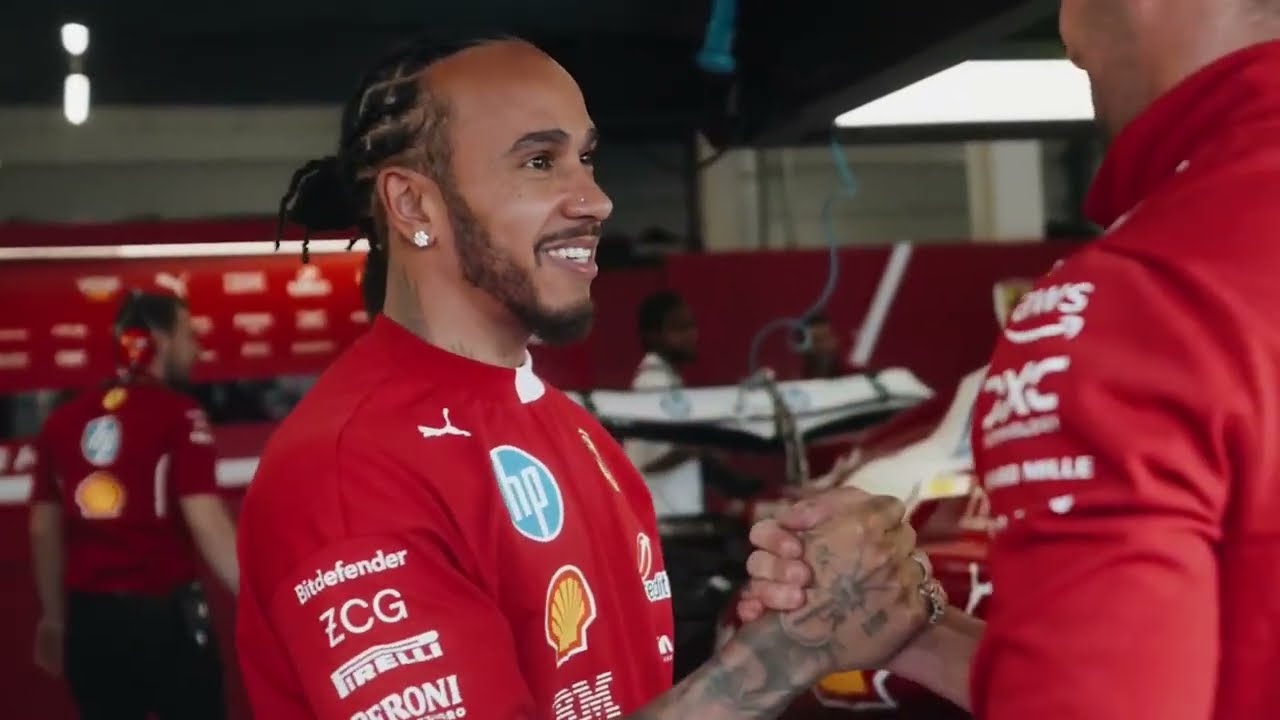
The Myth of the Miracle: Deconstructing P16 to P8
Let’s dismantle the “epic comeback” narrative. Lewis Hamilton qualified in a shocking 16th position, marking his fourth consecutive elimination in the first qualifying session (Q1). For a driver of his unparalleled caliber, this streak is not just embarrassing—it represents a break with the tradition of excellence that Ferrari is supposed to embody. The campaign itself was already historically grim: it was the first time in 44 years that a Ferrari driver had completed an entire season without stepping onto a podium. That single, damning statistic should be enough to shred any romantic tale of heroism.
During the race, Hamilton did manage to rise eight places to finish in eighth. While eight positions gained is commendable, it does not constitute a miracle in the high-stakes, attrition-heavy world of Formula 1. Such progression is common when a car possesses a decent underlying pace, and when factors such as other drivers abandoning the race, making costly mistakes, or succumbing to failed strategies come into play. Hamilton’s climb was less a surgical strike of brilliance and more a steady ascent enabled by the chaos around him.
The most brutal evidence of Ferrari’s true standing, however, lay at the finish line. The time difference between Hamilton’s eighth-place finish and the winner was a staggering 1 minute and 12 seconds. In a sport where victory is measured in milliseconds, one minute and twelve seconds is an eternity—a brutal reminder of how far a team that was once the yardstick by which success was measured has fallen. That is not a comeback; it is a profound failure of design and execution, starkly revealed in the time sheets. The narrative, pushed by desperate media seeking clicks, inflated a damage-limitation exercise into a fictitious story of glory, effectively hiding the festering wound at the heart of the team.
The Hostile Environment: When the Machine Fails the Master
To understand the full disaster of Abu Dhabi, one must look at the technical environment surrounding the race. In the final Free Practice session (FP3), the SFXX suffered a serious accident. Hamilton lost control at Turn 9, spun, and ended up violently in the barriers. The images told an uncompromising truth: the car was, in a word, indomitable. Over the radio, the pilot reported a mechanical anomaly—”something buckled in the front and broke the rear.”
This nuance is fundamental: the car failed. The structure gave way. And while Ferrari’s mechanics performed a near-miraculous feat by rebuilding the car in time for qualifying, the underlying message was clear: the problem resides in the machine, not the driver. The heroic efforts of the pit crew to put a wounded car back on the grid should not be confused with the strategic or technical competence of the design team. What truly happened was a decent, gritty performance by Lewis Hamilton, struggling to rescue dignity in the midst of a hostile technical environment, driving a car that is simply not up to his talent. There were no glorious overtakes, no master strategies, just pure, desperate struggle.
The Peril of Perception: Losing Control of the Narrative
Ferrari’s crisis extends far beyond a slow car or poor track performance; it has become a profound perception problem. The team is rapidly losing control of its own story. The official silence and lack of transparent communication have allowed external forces to define the truth of the Scuderia’s woes.
The confusion is deliberately amplified by the digital content machine. Dozens of YouTube channels and social media accounts thrive on pushing baseless, sensationalized theories—morbid titles hinting at internal sabotage, explosive tensions, and even conspiracies against Hamilton. When examined, these viral contents all follow the same pattern: statements without sources, dramatization without data, emotional montages with epic music, and zero real documentation. The most viral videos about Abu Dhabi, in a display of narrative fraud, didn’t even analyze that race but earlier events like Belgium.
This external narrative, though false, becomes more convincing than the official version because Ferrari has ceded its monopoly on its own history. They have let the outside world tell their truth, and when a mythical team becomes a passive character in its own narrative, trust disintegrates from within. This desperate need to keep an illusion alive—manifested in the hyperbole around the “comeback”—is precisely what should worry Maranello the most. Ferrari has lost more than just points on the track; it has lost its way, and a structure like Maranello cannot survive a crisis of identity.
The Hamilton Paradox: Exhaustion in the Chaotic Culture
The arrival of Lewis Hamilton was designed to herald a new era, a cultural transformation that would inject structure, focus, and a winning mentality learned over decades at Mercedes. Yet, until now, the integration has been forced and almost artificial.
Hamilton, for his part, has become a victim of the endemic disorganization that has long defined the Italian team. The problems are structural: multiple voices vying for authority, a lack of coherent technical leadership, and strategic decisions that change erratically without a long-term vision. The management of race weekends has repeatedly showcased this disorientation: poor tire usage, ill-timed qualifying runs, conservative decisions when aggressiveness was needed, and late strategies when anticipation was required. The Australian GP was a warning; Abu Dhabi was a devastating confirmation. Decision-making has been erratic and, worse, without subsequent learning; there are no signs of evolution, only survival.
Pilots of Hamilton’s caliber are not immune to the emotional environment. His performance is linked not only to his pure speed but also to the technical and emotional atmosphere around him. Right now, that atmosphere is collapsing, toxic, and rife with rumors of divisions between British and Italian engineers.
Hamilton has maintained his composure publicly, leaning on his vast experience. But his gestures inside the cockpit, his guarded tone on the radio, and his post-race statements betray a deep-seated frustration and a growing sense of helplessness. He called the recent campaign “the worst of his career.” The most alarming part was not the phrase itself, but the tone of absolute resignation in which he pronounced it. It was a type of emotional exhaustion that cannot be solved by a new spoiler or a suspension upgrade—a weariness measured not in tenths per lap, but in impatience. He is trapped in a paradox: he wants to bring Anglo-Saxon operational precision, but the team maintains the fragmented hierarchical structures and volatile passion of its past.
A Crossroads of No Return
The campaign has delivered Ferrari to an existential crossroads that it can no longer postpone. The team must ask itself: Does it possess the technical, human, and strategic tools to genuinely fight for championships again, or is it doomed to repeat the cycle of self-destruction that has defined much of its modern history?
What happened in Abu Dhabi was no exception. It was the natural, predictable result of a chain of failed decisions, unfulfilled promises, and a brutal disconnection between institutional discourse and sporting reality. From within, Ferrari attempts to maintain a calm posture, appealing to the long-term process and the supposed aerodynamic evolutions yet to come. But from the outside, the view is of a team that has lost control of its destiny, clinging desperately to a legendary driver as a last-resort celebrity shield to avoid disappearing from the elite.
Hamilton, the symbol of this false hope, is navigating one of the most complex transitions of his career—not due to age or motivation, but because he is caught between his demanding standard and the chaotic, political reality of the Ferrari culture.
Abu Dhabi was not the return of the king nor the rebirth of Ferrari. It was a clear, unmissable warning. It was a reminder that history weighs, that time does not wait, and that even giants can crumble if they fail to recognize, in time, how profoundly they are hurt. The tragedy is that the loudest message coming from the Scuderia today is not of speed or passion, but of denial.
