Formula 1 is a world entirely defined by microscopic margins. It is a highly volatile environment where a fraction of a second on the track, or a single signature on a confidential contract, can permanently alter the course of racing history. If you thought the most intense drama this season was confined solely to the asphalt and the battles between drivers, the latest developments happening behind closed doors will change everything you thought you knew. A monumental shift is currently tearing through the paddock, blending high-stakes personnel poaching with a deeply complex, ongoing engineering war between the sport’s greatest constructors. From shock departures altering the futures of major brands to secret aerodynamic tricks giving legacy teams an unexpected edge, the current landscape of Formula 1 has never been more unpredictable.
The story that has completely blindsided the motorsport community revolves around an abrupt and massive departure. One of the most highly respected and fundamentally important people in the entire paddock has just walked away from his position with immediate effect. Jonathan Wheatley leaving Audi at this exact moment is a massive development, not just because of his legendary status within the sport, but because of what his sudden exit reveals about the fierce power struggles happening behind the scenes. Wheatley is not just another standard team boss or passing executive. He was widely recognized as one of the absolutely critical key figures behind Red Bull’s era of absolute dominance. He was the operational mastermind, the guy who made the impossibly complex garage operations function perfectly on high-pressure race weekends. He was the man who intimately knew exactly how to translate a fast car into consistent race wins, time and time again.
Therefore, when a figure of that immense caliber suddenly abandons a massive, well-funded, long-term project like Audi, the industry is forced to ask one very simple, yet dangerous question: who exactly is pulling him away? Right now, every single sign and whispered rumor points in one clear direction: Aston Martin. The moment you begin to connect those dots, this narrative expands from a simple job change into something much more profound. This looks exactly like the next aggressive move in Lawrence Stroll’s incredibly ambitious, long-term master plan to forcefully build a championship-winning team. Whether you admire his methods or heavily criticize them, you have to admit one undeniable truth about Stroll: he is absolutely not afraid to spend whatever financial resources it takes to achieve his ultimate vision.
Over the past few years, Stroll has systematically brought in some of the most prominent and brilliant names in the entire sport. He has bankrolled the construction of one of the most technologically impressive and advanced factory facilities ever seen on the grid. Now, it appears he is aggressively targeting the one glaring weakness that Aston Martin has never quite managed to solve: flawless race day execution. Having the fastest car on the grid means absolutely nothing if the team’s operational execution isn’t perfect when the pressure is highest. That flawless execution is precisely the foundation upon which Wheatley built his legendary reputation. But what makes this developing story even more fascinating is the rumor circulating within the paddock regarding Adrian Newey. There is a rapidly growing belief that Newey himself specifically requested someone with Wheatley’s specific skill set to handle the grueling operational side of the team. This would theoretically allow Newey to completely isolate himself and focus purely on what he does best: designing the ultimate racing machine. If this theory holds true, we are not just looking at a simple hiring decision; we are witnessing a complete, ground-up restructuring of how Aston Martin plans to dominate the future of Formula 1. Conversely, this move raises glaring red flags regarding the internal state of Audi. Losing an operational linchpin of this magnitude is not a scenario any team would ever willingly allow if their long-term project was running smoothly.
While Aston Martin attempts to aggressively rebuild off the track, an entirely different, heavily technical war is raging on the track. Ferrari is currently locked in a desperate and incredibly close battle with Mercedes. On the surface, this legendary rivalry looks competitive, tight, and evenly matched. However, when engineers dig deep into the telemetric data, a very clear and undeniable advantage keeps showing up, and it is originating directly from the Mercedes power unit. Ferrari has undeniably built a phenomenal piece of machinery. Their car can genuinely challenge anyone in the corners, their chassis is remarkably strong, their mechanical traction is arguably one of the very best on the entire grid, and their race starts have been nothing short of explosive.
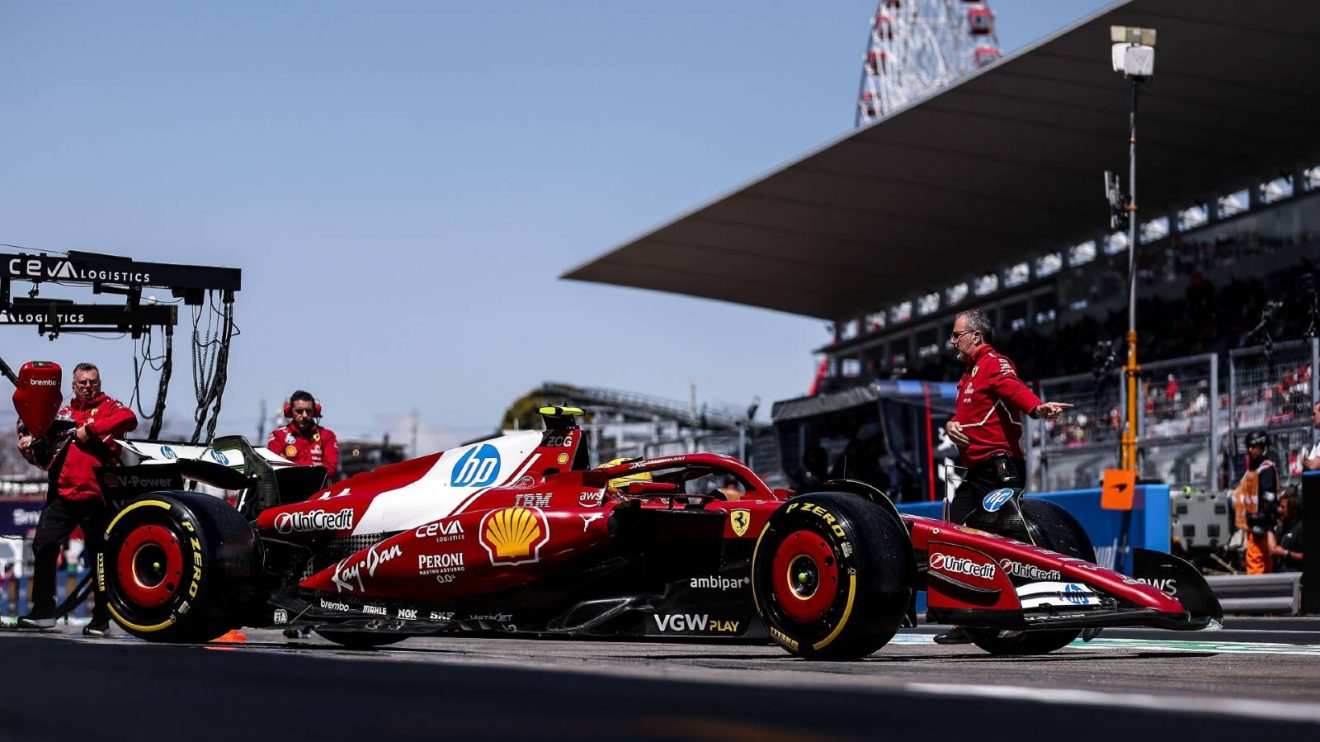
Yet, over the course of a full qualifying lap, and especially over a grueling full race distance, Mercedes consistently keeps finding crucial time where it matters most: blazing down the straights. The core reason behind this discrepancy takes us straight into the heart of one of the biggest and most fascinating technical debates of the entire racing season. It all comes down to contrasting turbocharger philosophies. Ferrari has stubbornly gone in one distinct direction, while Mercedes has committed to another, and right now, that single engineering divergence is actively shaping the outcome of the championship.
Ferrari made the calculated decision to opt for a significantly smaller turbocharger. The physics behind this choice are clear: a smaller turbo provides a much faster spool rate, delivering quicker throttle response at low revs and an instant, violent punch of torque. This perfectly explains why the red cars have been so incredibly strong off the starting line. It is the secret behind those breathtaking launches, why they can attack so aggressively in the early stages of a race, and why they often look so overwhelmingly sharp in the opening phase of any given stint. But the trade-off is massive and highly punishing. A smaller turbo simply cannot deliver the same sustained level of peak airflow and relentless power as a larger unit, especially when the cars are pushing maximum high speeds at the end of a long straight.
Mercedes, on the other hand, went the completely opposite route. They have constructed their entire system around a considerably larger turbocharger. While this setup may not feel quite as aggressive or responsive in those initial split-seconds out of a slow corner, once it fully spools up and gets going, it delivers vastly superior top-end performance. Crucially, it provides vastly better efficiency over the entire course of a lap. This directly translates to more raw power on the straights, more consistent energy deployment, and significantly less drop-off in performance when the race reaches its critical moments. This creates a deeply fascinating contrast on the track. Ferrari looks incredibly dangerous at the start, fiercely aggressive out of slow corners, and highly competitive in short, explosive bursts. But Mercedes builds its terrifying advantage gradually. Straight after straight, lap after lap, they chip away until the gap becomes mathematically impossible for Ferrari to ignore.

This leaves Ferrari facing a brutal dilemma. Having the absolute best race starts in Formula 1 is a fantastic asset, but if you are consistently bleeding lap time over the rest of the circuit—especially on heavily power-sensitive tracks—you will perpetually find yourself fighting from a strategic disadvantage. Internal discussions are already raging inside Maranello regarding whether they need to completely rethink this approach, potentially scaling up the size of their turbo to claw back overall race performance. However, doing so means actively sacrificing the very advantage that currently makes them so lethal off the grid.
But the plot thickens even further, because the turbo size might not actually be the full story behind Ferrari’s performance. There is a growing, quiet belief among keen observers that their true advantage stems from something far more subtle, clever, and highly technical: the mastery of airflow through the wastegate system. In simple terms, the wastegate controls exactly how much exhaust gas is directed into the turbo and how much is bypassed, directly impacting the boost generated by the engine. In previous regulatory eras, the MGU-H helped heavily manage and smooth out this entire process, keeping the turbo spinning efficiently. With that specific system now banned under the current rules, teams have been forced to discover new, innovative ways to control turbo behavior.
The prevailing theory is that Ferrari has secretly developed a highly advanced method of managing that exact airflow. By potentially utilizing incredibly precise, computer-controlled inputs over multiple wastegate valves, they might be allowing the engine to maintain a significantly stronger and more consistent boost pressure. This would be incredibly beneficial in those absolutely critical, low-speed, high-traction moments like race starts or exiting tight hairpins. If this theory is accurate, the smaller turbo is merely one small piece of a much larger, brilliantly engineered puzzle. This means Ferrari could theoretically transition toward a slightly larger turbo to gain top-end speed, while relying on their superior, ultra-smart wastegate airflow management to retain their cherished low-speed responsiveness. But in the hyper-complex world of Formula 1, every single adjustment triggers a domino effect of new compromises, and pushing too far in one direction could destroy the delicate balance of their current package.
As if the engineering battles weren’t complicated enough, a massive wildcard is currently threatening to disrupt the entire grid. The sport’s governing body is facing mounting pressure to step in and force a regulatory reset regarding a very specific and growing problem: qualifying behavior. While the actual Sunday racing has remained highly entertaining, the way these modern cars are being forced to behave over a single, ultimate qualifying lap has raised serious, widespread concerns. Due to the current energy deployment rules, drivers are no longer physically able to push their cars flat out in the heroic way fans are used to seeing. Instead, qualifying has devolved into a highly calculated mathematics exercise of managing electrical energy. Drivers are intentionally lifting off the throttle in unexpected places and ironically losing overall lap time if they push too hard early in the lap, simply because they will completely run out of battery deployment before the finish line.
When the fastest drivers in the world are openly complaining that going faster actually makes them slower, it becomes painfully obvious that the formula is fundamentally broken. Discussions are already well underway regarding how to tweak these systems mid-stride. Potential solutions include strictly limiting how much energy teams can harvest, heavily adjusting deployment mapping, or slightly increasing the overall importance of the traditional internal combustion engine to bring back the visceral feeling of a true, flat-out qualifying lap. While none of these fixes are perfect, the impending changes will absolutely not affect every team equally. If the rule makers reduce the heavy reliance on energy management, it could shift the balance of power right back toward raw engine output. Depending on the final wording of the rules, this could either act as a lifeline for Ferrari to instantly close the gap, or it could inadvertently allow Mercedes to extend their dominant advantage into an untouchable lead.
Simultaneously, Ferrari is aggressively exploring every single loophole and opportunity within the current framework. Under the existing sporting regulations, if a manufacturer’s power unit falls significantly behind the established benchmark, they can actually earn special opportunities to introduce targeted upgrades during the active season. Based on the current performance metrics, Ferrari might strategically position themselves to qualify for these crucial development allowances, opening the door for a massive performance step late in the year.
When you stand back and look at the entire board—the personnel poaching of geniuses like Jonathan Wheatley, the complex turbocharger philosophies, the brilliant wastegate innovations, and the looming threat of mid-season regulation changes—a completely different and infinitely more complex picture emerges than what the simple championship standings suggest. The next few races are going to be absolutely critical. They are no longer just about securing points; they are about establishing crucial momentum in a war of attrition. Whether Ferrari can stay close enough to launch a devastating counter-attack when the opportunity arises, or whether Mercedes will flawlessly execute their strategy to build an insurmountable gap, remains the ultimate question of the season.
