The pre-season testing at the Bahrain International Circuit is usually a time for sandbagging, cautious optimism, and the inevitable “we have a lot of work to do” press releases. It is rarely the setting for a complete upheaval of a team’s internal narrative. Yet, over three intense days in the desert heat, that is exactly what happened inside the Ferrari garage.
The expectation heading into the 2026 season was clear: Lewis Hamilton, despite his seven world titles, would need time. Time to understand the complex hybrid systems of Maranello, time to adapt his braking style to the red car, and time to find his footing against Charles Leclerc, the Prince of Ferrari who has lived and breathed this team for years.
That script didn’t just get rewritten; it was shredded. What unfolded in Bahrain was not a tentative adaptation process but a display of technical dominance that has reportedly stunned Ferrari’s engineers and potentially shifted the balance of power before the first light has even gone out.

The “Immediate Construction” Mode
From the moment the SF-26 hit the asphalt, something was different. While other teams grappled with reliability gremlins and setup headaches, Ferrari was a picture of metronomic efficiency. The team racked up over 120 laps per day without a single serious structural failure. But the real story wasn’t the reliability; it was what Hamilton was doing with it.
The SF-26 is a car with a high ceiling—boasting incredible straight-line efficiency and a powerful engine—but it is also “sensitive.” It requires a delicate touch during load transfers and precise throttle application in critical phases. Historically, this sensitivity has been Ferrari’s Achilles’ heel, turning fast cars into tire-shredding monsters.
Hamilton, however, didn’t fight the car’s nature; he modulated it. In complex conditions with strong crosswinds and a “green” track offering little grip, the Briton found stability where there should have been none. His traction out of slow corners—a perennial weakness for the Scuderia—was surprisingly clean. He wasn’t just surviving the laps; he was manipulating the differential settings and brake balance with a surgical precision that usually takes months to refine.
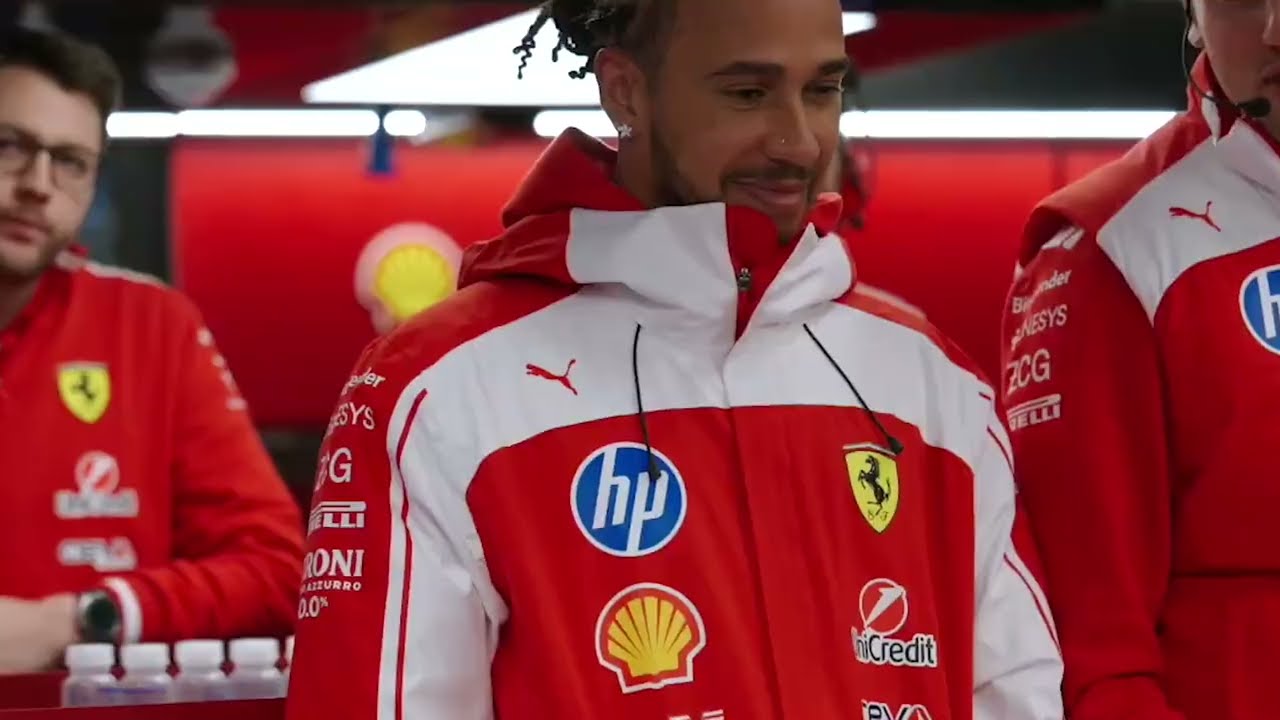
Insiders noted that Hamilton wasn’t in “learning mode.” He was in “immediate construction mode.” He wasn’t asking how the car worked; he was telling the engineers how to make it work better.
A Technical Coup
The second day of testing offered the clearest evidence of this new dynamic. As the track rubbered in and conditions became more representative, Hamilton clocked a 1:34.2, placing him firmly in the front group. But the stopwatch tells only half the story.
It was his long-run pace that raised eyebrows. Usually, a new driver in a new car will see their lap times oscillate as they grapple with tire degradation and changing fuel loads. Hamilton’s stints were frighteningly linear. He maintained rear stability—the Holy Grail of modern F1 aerodynamics—under control even as the tires wore down.
By classifying which issues were structural (aerodynamics) and which were adjustable (setup), Hamilton accelerated the engineers’ work significantly. He wasn’t just driving; he was filtering data in real-time. This level of feedback is gold dust in Formula 1, and it’s something Ferrari hasn’t always had such immediate access to. It effectively turns the driver into a development shortcut, allowing the team to bypass weeks of simulation work.
The Leclerc Question
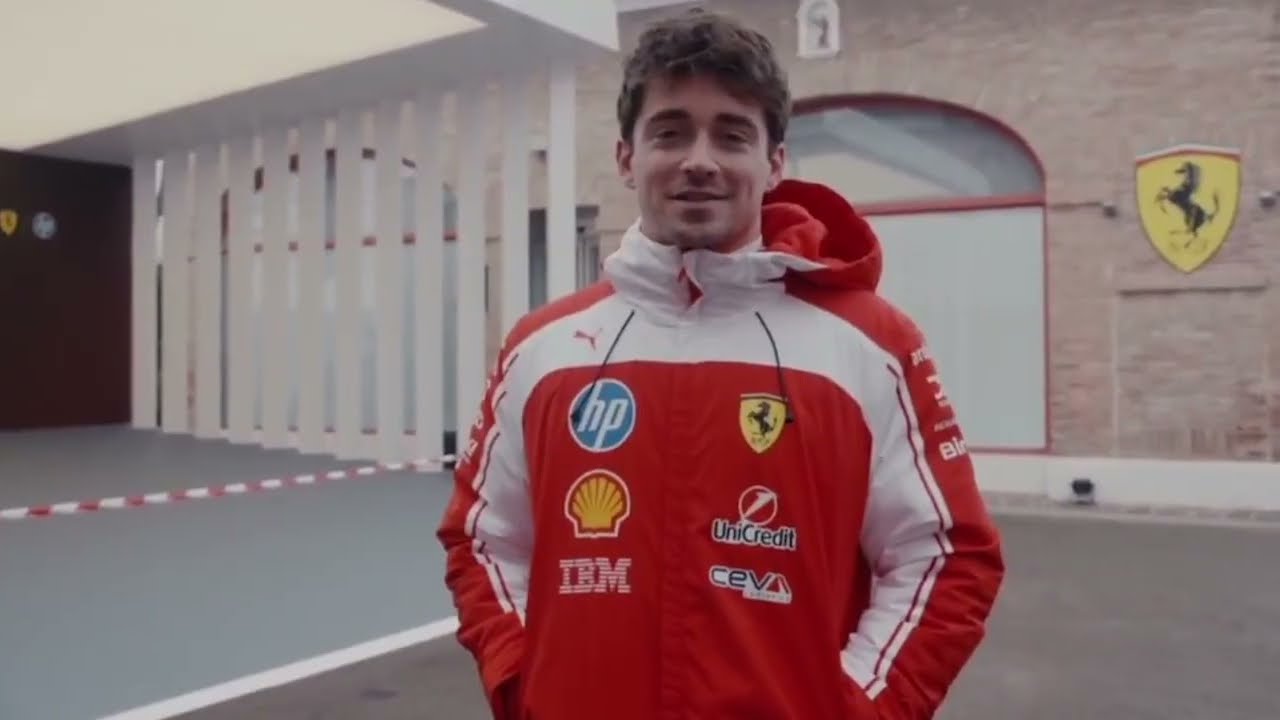
This brings us to the uncomfortable elephant in the room: Charles Leclerc. For years, Leclerc has been the undisputed reference point for Ferrari’s performance. The car has evolved around his preferences, and his raw speed has never been in doubt.
However, the arrival of a teammate who doesn’t need a “settling in” period changes the emotional and technical equation of the garage. If Hamilton is already dictating the development direction and proving capable of stabilizing the car’s trickier traits, the team’s center of gravity inevitably begins to shift.
This isn’t to say Leclerc performed poorly—he didn’t. But the narrative of 2026 was supposed to be “Leclerc leads, Hamilton learns.” Instead, we are seeing a dual-pronged attack where the “new guy” is speaking the technical language of the car just as fluently as the veteran. It removes the safety net of experience that Leclerc might have relied on in the early rounds.
A Silent Warning to the Grid
Ferrari leaves Bahrain with something they haven’t possessed in a decade: clarity. They know the SF-26 is reliable. They know it has exceptional straight-line speed. And now, they know they have a driver who can squeeze every ounce of performance out of it without needing a six-month grace period.
The SF-26 is not a perfect car. It demands a narrow operating window and can be unpredictable in the wind. But Hamilton’s ability to keep it within that window during long runs suggests that the “unpredictable” beast can be tamed.
As the paddock packs up for the season opener, the vibe at Maranello has shifted from cautious hope to quiet confidence. The “Hamilton Experiment” was a gamble on talent over age. Based on three days in the desert, that gamble is already paying out. The seven-time champion hasn’t just arrived at Ferrari to retire; he has arrived to lead. And for the rest of the grid—and perhaps even for the driver on the other side of the garage—that is a terrifying prospect.
