In the high-stakes, adrenaline-fueled world of Formula 1, speed is almost universally associated with sheer aggression. To the casual observer watching from the grandstands or the living room couch, the fastest driver must surely be the one fighting the steering wheel the hardest, attacking the braking zones with reckless abandon, and stomping on the accelerator pedal the moment the car catches a glimpse of the straightaway.
But motorsport is a discipline built on physics, not just bravery. When you strip away the roar of the engines and dive deep into the cold, hard telemetry data, a fascinating paradox emerges. Raw data reveals something highly unusual about Lewis Hamilton’s driving style—something that fundamentally contradicts our basic understanding of speed. When comparing throttle traces between the top drivers on the grid, Hamilton often appears remarkably, almost confusingly, slow on the throttle at corner exit. Yet, he is undeniably one of the fastest and most successful drivers in the history of the sport.
To truly understand the genius of Hamilton’s hidden technique, we first have to understand the traditional anatomy of a Formula 1 corner. For the vast majority of professional racing drivers, the approach to a corner exit is driven by one singular, overriding goal: reach maximum, wide-open throttle as early as physically possible. In the modern era of Formula 1, where straight-line speeds exceed two hundred miles per hour, acceleration out of slow and medium-speed corners is the absolute holy grail of lap time.
The conventional textbook method is relatively straightforward. Drivers brake aggressively into the corner, rotate the nose of the car toward the apex, and then immediately begin feeding in the power the very millisecond the steering wheel starts to unwind. The underlying logic is simple mathematics—the earlier you can reach one hundred percent full throttle, the more time you spend accelerating down the subsequent straight, and the faster your overall lap time becomes.

When you look at the telemetry data from most drivers on the grid, this aggressive philosophy is clearly visible. Their throttle trace—a line graphing how hard the driver is pressing the pedal—often resembles a jagged cliff face. It rises violently from zero to full power in a sharp, abrupt spike the moment the car points down the straight. While this highly aggressive approach can certainly produce strong, explosive acceleration, it comes wrapped in immense physical risk. If a driver applies the throttle just a fraction of a second too quickly, the immense torque of the engine violently overwhelms the mechanical grip of the rear tires. The rubber briefly loses its connection to the asphalt, resulting in micro-slips or visible wheel spin. Because electronic traction control systems have been strictly banned in Formula 1 for well over a decade, the driver’s right foot is the only safeguard against disaster. Even the smallest, barely perceptible amount of wheel spin drastically reduces forward acceleration. The driver might proudly reach full throttle early, but the car is completely failing to use that power efficiently.
This is exactly where Lewis Hamilton’s telemetry begins to look entirely alien compared to his peers. Instead of a sharp, aggressive spike, Hamilton’s throttle trace rises with a smooth, beautiful elegance. The data line climbs upward in a carefully controlled, progressive curve rather than jumping wildly to the top of the chart. At first glance, looking purely at the raw graph, it genuinely looks like Hamilton is hesitating. It appears as though he is slower to accelerate, cautiously waiting while his braver rivals smash the pedal to the floor. But the reality of the physics at play is infinitely more complicated and masterful. Hamilton is not hesitating; he is actively and carefully controlling the delicate balance of the car at the most critical phase of the corner.
By feeding the power in gradually, Hamilton is intentionally keeping the rear tires operating exactly at the absolute limit of their grip, rather than foolishly pushing beyond it. He understands a fundamental truth of vehicle dynamics: tires only provide maximum traction when they are rolling perfectly in sync with the road surface, not when they are sliding or spinning over it. Rather than violently forcing the car forward with sudden, shocking bursts of horsepower, Hamilton builds his acceleration progressively. The immediate result of this disciplined application is a significantly smoother and drastically more stable corner exit. The chassis remains perfectly balanced, the aerodynamic platform of the car is entirely undisturbed, and the acceleration builds continuously without a single micro-second of interruption.

This profound difference in driving style becomes incredibly visible in the slowest sections of a race track. Hairpins and tight, agonizing chicanes require heavy, punishing braking followed by sharp, acute rotation. This sequence throws a massive, destabilizing load onto the rear tires. During the acceleration phase out of these slow corners, many highly talented drivers deeply struggle to apply power without accidentally triggering a sudden loss of traction. When they apply the throttle aggressively, the massive torque spike causes the rear tires to briefly break traction. Even if this wheel spin only lasts for a tenth of a second, it costs precious lap time. The hybrid engine is producing maximum power, but that immense mechanical energy is being wasted generating tire smoke and heat instead of pushing the car horizontally down the track.
Hamilton’s uniquely smooth approach entirely bypasses this costly problem. By feeding the throttle in with a progressive curve, he allows the rear tires to gradually handle the increasing load without ever exceeding their maximum friction threshold. This keeps his acceleration incredibly consistent and totally predictable. When engineers lay Hamilton’s telemetry directly over a rival’s data, the results are staggering. Hamilton may technically reach the one hundred percent full-throttle mark slightly later than the other driver, but his actual speed trace tells a wildly different story. Instead of fluctuating, dipping, or flattening out due to sudden traction loss, Hamilton’s speed increases in a flawless, uninterrupted upward trajectory. The car continues to surge forward, and over the total length of a massive straightaway, what initially looked like a slower throttle application actually turns out to be significantly faster.
Beyond pure, immediate lap time, this hidden throttle technique unlocks a massive secondary advantage that has defined Hamilton’s legendary career: phenomenal tire preservation. The rear tires of a modern Formula 1 car experience absolutely enormous, punishing stress during heavy acceleration. Sudden, violent throttle inputs drastically spike the surface temperature of the rubber, leading to rapid thermal degradation and extreme wear. Over the course of a gruelling fifty-lap race stint, an aggressive driver will literally melt the grip out of their rear tires, leading to a catastrophic drop in performance. Hamilton’s buttery-smooth approach severely reduces these immense stresses. By applying power progressively, he completely avoids sudden, damaging spikes in tire load. This masterclass in mechanical sympathy helps him maintain peak rear tire performance over substantially longer runs. Engineers up and down the pit lane have frequently marveled at Hamilton’s uncanny ability to magically extend the life of his tires, and his invisible throttle control plays the central role in that famous ability.
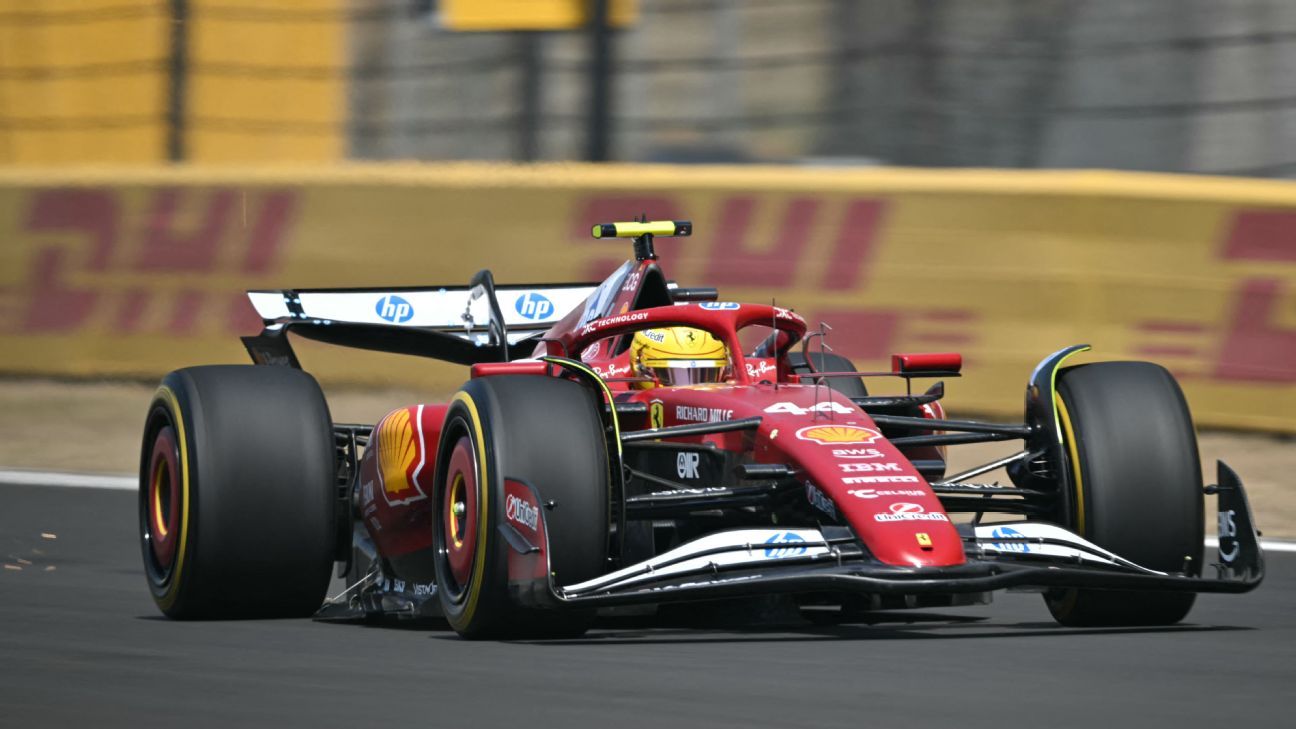
Furthermore, this technique radically improves the overall balance of the race car. When a driver applies power too aggressively, the rear of the car naturally wants to break loose and step out of line. To counteract this oversteer, the driver must quickly make tiny, frantic steering corrections to keep the car pointed in the right direction. Every single time a driver turns the steering wheel to catch a slide, they are effectively scrubbing off forward speed. It is a desperate correction that makes driving exponentially more difficult and physically exhausting. Hamilton’s famously smooth throttle application keeps the rear of the Mercedes perfectly stable, entirely eliminating the need for these frantic mid-corner corrections. This allows him to focus purely on hitting his marks with absolute precision. The car feels predictably planted, which in turn gives Hamilton the immense psychological confidence to push closer and closer to the absolute limit without fear of a sudden, race-ending spin.
What makes this entire technique so incredibly impressive is the elite mental discipline it requires. Hamilton is not simply being cautious; he is overriding a racing driver’s most basic, primal instinct. Inside the violently shaking, deafening cockpit of a Formula 1 car, aggressive throttle application genuinely feels faster to the human brain because it creates a sudden, violent surge of G-force. Smooth, progressive acceleration can psychologically feel slow, even when the dashboard delta clearly proves it is equally effective or better. Hamilton actively ignores that deceptive physical sensation, relying entirely on his vast experience and an exceptionally sensitive driving feel. He possesses a supernatural ability to feel microscopic changes in grip through his pedals, utilizing that physical feedback to judge exactly how much torque the tires can accept at any given millisecond.
In the modern hybrid era, where heavily electrified power units deliver instant, terrifying torque the moment the pedal is touched, throttle control has become the ultimate differentiator between the good and the truly great. Lewis Hamilton has effectively turned his right foot into a human traction control system. By prioritizing mechanical traction and perfect chassis balance over aggressive, showy inputs, he efficiently converts pure engine power into relentless forward motion better than anyone else in history. It is a quiet, hidden efficiency that is entirely invisible to the naked eye of the television viewer. But once you look at the raw telemetry data, the illusion of slowness vanishes. You realize that Lewis Hamilton isn’t hesitating at all; he is simply operating in a realm of absolute, controlled perfection. And that is exactly why, in the high-speed world of Formula 1, sometimes the absolute fastest way out of a corner is not the most aggressive one, but the smoothest.
