Formula 1 is a sport inherently obsessed with the visibly spectacular. Fans around the world tune in every weekend to witness breathtaking, late-braking overtakes, sparks violently flying down the straights, and the raw, aggressive maneuvers that ultimately define the high-stakes battle for the world championship. However, the most profound secrets of elite racing are often entirely invisible to the naked eye.
They are hidden deep inside the darkest corners of highly restricted engineering rooms, securely locked away within the complex, jagged lines of classified telemetry screens. Among these closely guarded technical secrets lies a absolutely fascinating revelation about one of the greatest drivers in motorsport history. Lewis Hamilton does not just drive a car smoothly; he fundamentally uses the throttle pedal differently than anyone else on the grid.
According to highly detailed telemetry data, this microscopic difference in foot movement might be the absolute biggest hidden reason behind his legendary long-run pace and race-winning consistency. But why do Hamilton’s graphs look so bizarrely different? And how does purposefully slowing down your acceleration actually make you the fastest man on the track?

To the average motorsport fan watching from home, the concept of throttle control seems incredibly straightforward and binary. You successfully apex the corner, spot the exit, and smash the pedal down to the floor. Basic racing logic dictates that the faster you reach one hundred percent full throttle, the faster your car will accelerate down the following straight. But the hyper-complex, terrifyingly powerful world of modern Formula 1 simply does not operate on basic logic. Modern hybrid power units are absolute engineering monsters that produce enormous, violent torque at incredibly low speeds. The electric Motor Generator Unit-Kinetic (MGU-K) alone can instantly deliver an astonishing 120 kilowatts of pure electrical power. That equates to roughly 160 horsepower dumped directly into the rear wheels, layered forcefully on top of a screaming internal combustion engine.

Unlike the naturally aspirated V10 or V8 eras of the distant past, where drivers had to wait patiently for engine revolutions to build up before the power arrived, today’s massive torque arrives instantaneously. It is an immediate, brutal hit of kinetic energy. If a modern driver applies the throttle too aggressively, that massive wave of torque instantly overwhelms the delicate mechanical grip of the rear tires. The tires slide. That microscopic sliding creates intense surface friction, which rapidly generates massive amounts of heat. The extreme heat instantly destroys the fragile chemical grip of the Pirelli rubber, and that devastating loss of traction ultimately slows down the car’s overall acceleration. In the brutal physics of Formula 1, pushing the pedal harder can actually make you substantially slower.
When seasoned engineers examine the telemetry traces of a typical Formula 1 driver exiting a corner, the throttle graph usually resembles a steep, sharp mountain. The driver aggressively attacks the pedal, launching it rapidly toward maximum capacity to escape the corner as quickly as possible. Lewis Hamilton’s highly classified telemetry traces, however, tell a completely different, almost artistic story. Instead of a jagged, aggressive spike, his throttle trace consistently looks like a beautifully smooth, progressive curve. It builds gradually, and most shockingly, it often pauses briefly mid-application. Right around the sixty or seventy percent mark, Hamilton’s foot completely stops demanding more power for just a fraction of a second before finally committing to the full one hundred percent.
To an amateur observer, this momentary pause might look like nervous hesitation or a lack of absolute confidence in the machinery. To a veteran telemetry engineer, it is pure, unadulterated genius. That split-second pause is not hesitation; it is masterful grip synchronization. Hamilton is actively applying torque to the rear wheels at the exact microscopic rate that the rear grip is naturally increasing. As the car begins to straighten its steering angle and the aerodynamic downforce rapidly builds with rising speed, he smoothly feeds in more power to seamlessly match the shifting physics. By perfectly synchronizing his physical throttle input with the rapidly evolving grip levels, he entirely prevents wheel spin while maximizing his forward momentum.
This raises a fascinating and highly counterintuitive question: If Lewis Hamilton is applying the throttle much more gradually than his desperate rivals, why is he consistently exiting the corners noticeably faster? Theoretically, a slower application of power should inevitably result in slower overall acceleration. The magical answer to this riddle lies in the incredibly complex science of the “tire slip ratio.”
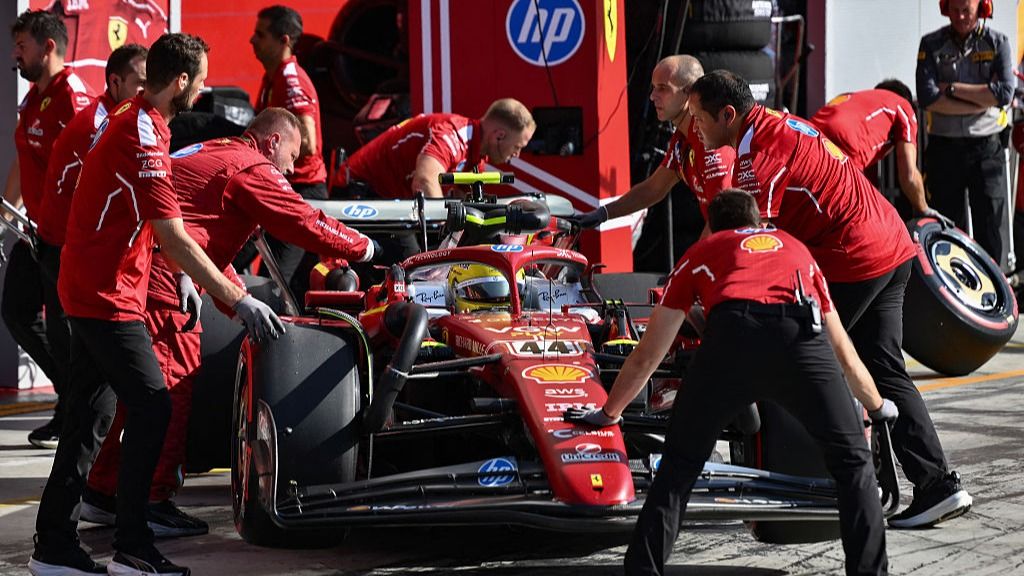
Every racing tire in the world produces its absolute maximum level of traction at a very specific slip ratio—usually hovering around the five to ten percent mark, heavily depending on the current aerodynamic load and the specific rubber compound being utilized. If there is too little slip, the tire simply is not utilizing its full grip potential, leaving precious lap time on the table. However, if there is too much slip, the grip levels fall off a terrifyingly steep cliff. Because Hamilton is feeding the power in so progressively and patiently, he constantly operates his rear tires precisely within that incredibly narrow, optimal slip ratio window. Other highly aggressive drivers constantly exceed that absolute limit for brief, chaotic moments. Those tiny, violent moments of excess slip dramatically reduce their average overall acceleration out of the corner. So, while Hamilton’s peak throttle moment might technically arrive slightly later than his fierce competitors, his smoother, perfectly synchronized curve produces a significantly higher average traction across the entire acceleration phase. Over a single corner, the time difference might just be a few thousands of a second. Over a qualifying lap, it becomes highly measurable. Over a grueling two-hour race distance, it becomes absolutely decisive.
The sheer brilliance of Hamilton’s unique throttle control extends far beyond mere acceleration; it is fundamentally linked to his legendary, unparalleled tire management. Fans often overlook the crucial fact that throttle control affects tire temperature significantly more than steering input ever could. When a Formula 1 car violently accelerates out of a braking zone, the rear tires absorb monumental amounts of raw energy, heating up incredibly rapidly. If the slip ratio spikes uncontrollably, the delicate outer surface temperature of the tire can absolutely skyrocket by dozens of degrees within mere seconds.
If this surface temperature violently exceeds the optimal operating window—which typically sits delicately between 100 and 110 degrees Celsius—the vital chemical grip of the tire drops precipitously. Hamilton’s progressive, incredibly smooth throttle application successfully keeps that highly volatile surface temperature incredibly stable. By actively stabilizing the surface heat, he actively protects the deeper carcass temperature of the tire from overheating. A stable carcass temperature is the holy grail of long-run racing performance. Therefore, Hamilton’s famous tire management and his secretive throttle control are completely inseparable concepts. Severe rear tire degradation is almost always the direct result of repeated, microscopic wheel spin events that secretly accumulate immense heat over dozens of laps. Telemetry engineers measure this specific phenomenon through “throttle oscillation frequency”—tracking precisely how rapidly and often a driver’s foot changes the pedal input. Hamilton’s oscillation frequency is remarkably low compared to his peers. Fewer abrupt changes mean fewer brutal grip shocks to the rubber, directly resulting in lower heat spikes and drastically slower degradation over a stint.
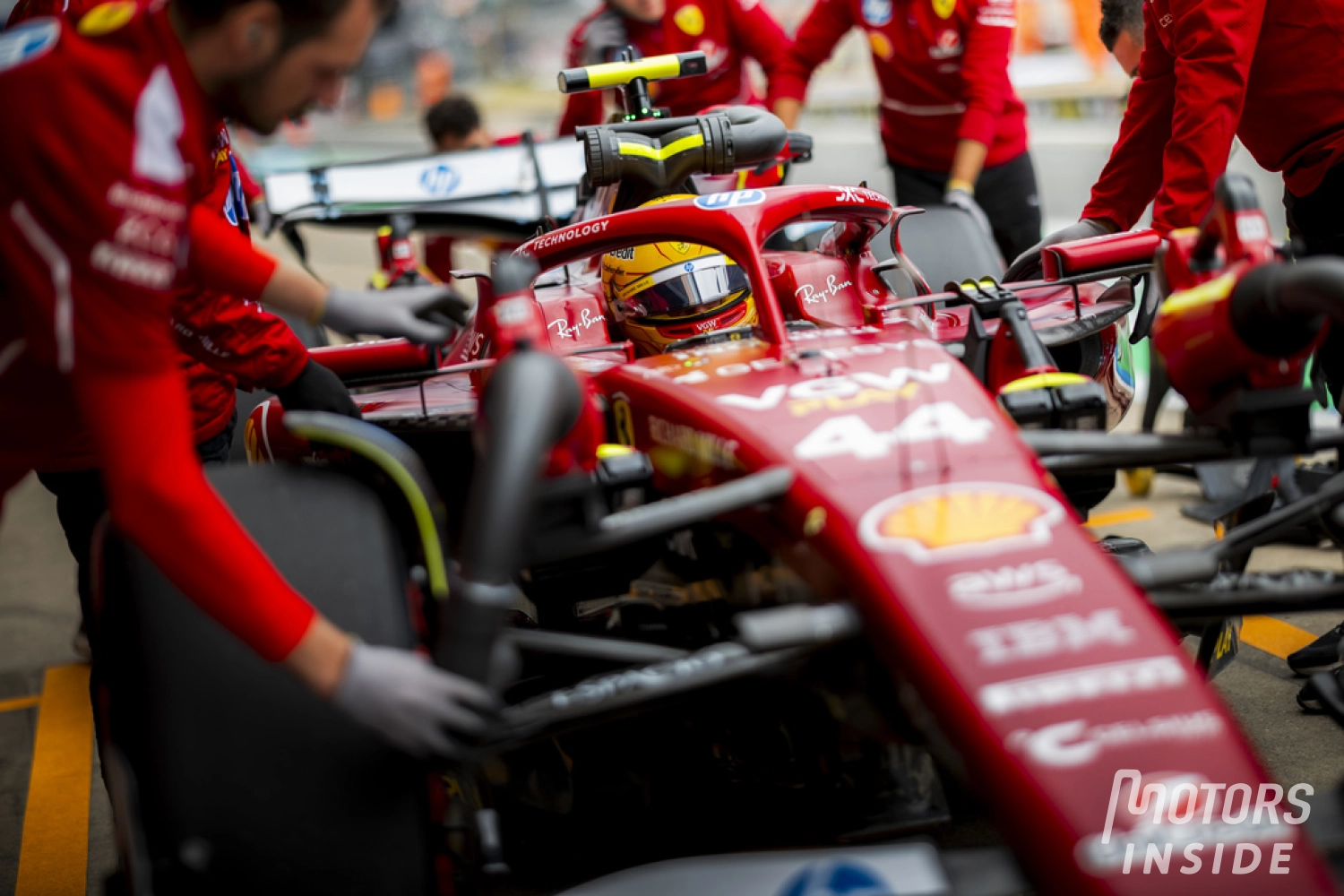
If this driving technique is so devastatingly effective, the obvious question quickly arises: why don’t rival teams simply program their highly advanced electronic engine maps to replicate Hamilton’s exact throttle curve automatically? The honest truth is that perfect throttle control is not a rigid, programmable electronic formula; it is a highly fluid, human sensory art form based on raw timing and instinctual feeling.
Formula 1 drivers are constantly forced to adjust their throttle inputs based on a chaotic, ever-changing environment. They must rapidly calculate their exact steering angle, the shifting surface grip of the blistering asphalt, the fluctuating tire temperatures, and the specific hybrid energy deployment mode they are currently using. No computer algorithm or electronic engine map in the world can perfectly predict all of those shifting variables simultaneously. The human driver must physically feel them. Hamilton’s innate biological sensitivity to rear grip is entirely exceptional in the history of the sport. His ability to feel the exact microscopic moment the tire is ready to accept more electrical power is completely unparalleled, safely allowing him to operate precisely on the absolute bleeding edge of physics without ever overstepping the dangerous boundary.
As Formula 1 hurtles aggressively toward the massive regulatory overhaul scheduled for the 2026 season, the entire racing paddock is anxiously holding its collective breath. The completely new regulations will dramatically alter the fundamental architecture of the sport, drastically increasing the contribution of raw electrical power. Nearly half of the car’s total horsepower will now come directly from instantaneous electric deployment, and the highly complex MGU-H—a hybrid component that previously helped mechanically smooth out turbo response—will be completely eliminated.
This impending technological revolution will make throttle modulation more critical and terrifying than ever before. The sudden, violent delivery of electric torque will ruthlessly punish any driver who is too eager with the pedal, which should theoretically play perfectly into Hamilton’s incredibly smooth hands. However, the 2026 cars are also heavily targeted to be significantly lighter, which naturally reduces the heavy tire load and overall rubber degradation. If the new generation of tires refuse to degrade as aggressively as the current models, the enormous race-day advantage actively generated by careful throttle management may significantly shrink. The upcoming era of motorsport will undoubtedly be defined by this intense, high-stakes technical tension, raising the ultimate question: will the new rules perfectly cement Lewis Hamilton’s invisible superpower, or will they tragically render the greatest throttle control in racing history entirely obsolete?
