Formula 1 has always been a ruthless sport defined by eras of staggering dominance, but nobody in the paddock could have fully predicted the sheer magnitude of the shockwave that has just hit the 2026 season. Just two races into this highly anticipated, heavily regulated new era, the landscape of the pinnacle of motorsport has been entirely upended.
The reigning constructors’ champions are currently floundering with a shocking zero points, massive engine scandals are brewing angrily behind closed doors, and one iconic team has resurrected itself from the ashes to completely obliterate the competition. Mercedes-AMG is back, and they might just be more terrifyingly fast than ever before. But lurking in the shadows of this Silver Arrow resurgence is the defining storyline of the decade: Lewis Hamilton, watching his former team absolutely dominate from the unfamiliar vantage point of the Ferrari garage.
To truly grasp the gravity of the situation, we must first look at the brutal reality of the scoreboard. We are exactly two rounds into the 2026 Formula 1 World Championship, and Mercedes has achieved the absolute maximum result mathematically possible: two consecutive one-two finishes. The season opener at the Albert Park circuit in Australia set a grim, terrifying tone for the rest of the grid.
George Russell qualified on pole position with a staggering margin over the nearest non-Mercedes car of nearly eight-tenths of a second. In modern Formula 1, eight-tenths is not just a gap; it is an entirely different postcode. Russell went on to comfortably win the race, with the sensational 19-year-old prodigy Kimi Antonelli bringing the sister car home in a brilliant second place.
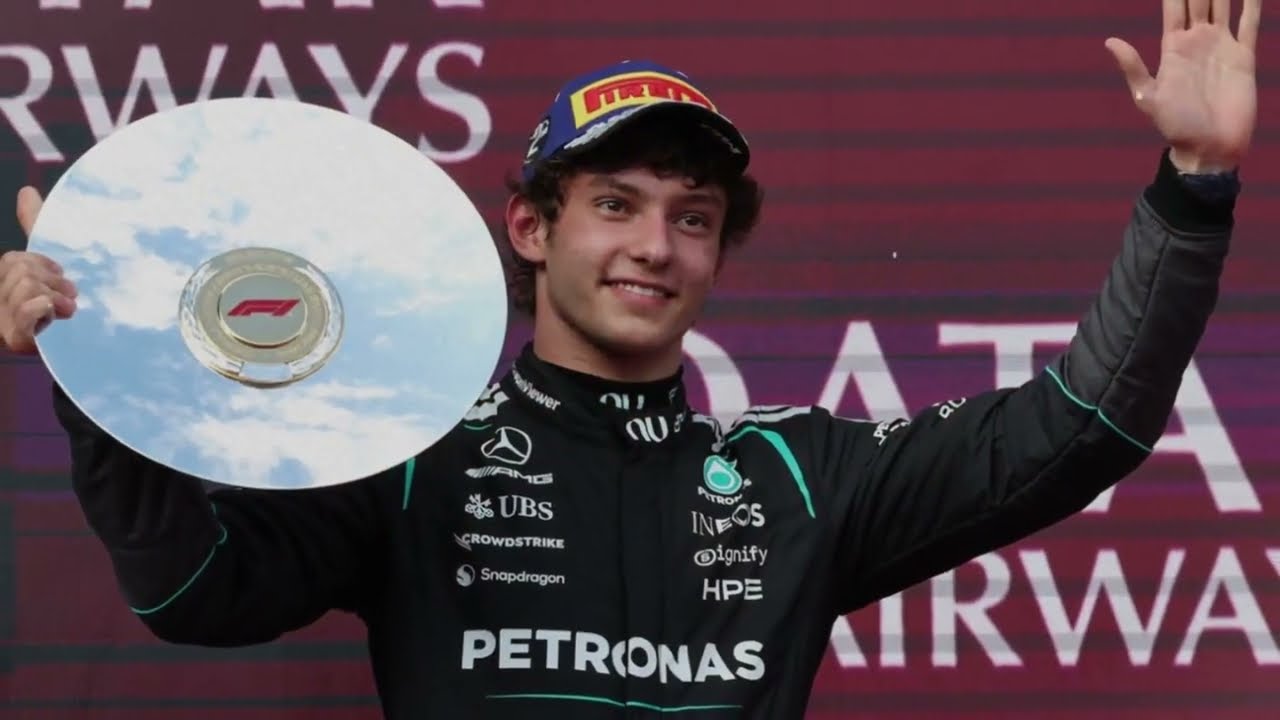
Then came round two at the Shanghai International Circuit in China. The result was equally devastating for the competition, but this time, the running order flipped. The teenage sensation Antonelli claimed his first-ever Formula 1 Grand Prix victory, with Russell perfectly playing the wingman in second. Two races, two perfect scores. Mercedes currently sits on a towering 98 points in the constructors’ standings. Scuderia Ferrari, their closest realistic rival, is miles behind at 61 points. Meanwhile, McLaren, the reigning double champions who entirely dominated the previous era, have managed to scrape together a miserable 18 points after a catastrophic weekend in China where both of their cars failed to even start the Grand Prix. The Silver Arrows have not just returned to form; they have practically built an impenetrable fortress at the very front of the grid.
To understand exactly why Mercedes is running away with this championship so early in the year, we have to deeply analyze the radical changes introduced for 2026. This was not merely a minor tweak to the rulebook; it represents the most extreme technical overhaul Formula 1 has seen in over a decade. The new regulations were carefully built upon three distinct pillars that were meant to completely level the playing field, but instead, they have provided brilliant engineers with an entirely new playground to exploit.
The first pillar is the absolute revolution of the power unit. The old engine architecture, where the internal combustion engine did the vast majority of the heavy lifting, is officially dead. The 2026 regulations mandated a strict fifty-fifty power split. Roughly half of the propulsion now comes from the 1.6-liter turbocharged V6 engine, while the other half is generated by the drastically beefed-up electric motor generator unit, known as the MGU-K. This electrical component now produces a massive 350 kilowatts, translating to approximately 470 horsepower—nearly triple what the previous generation of hybrid systems was capable of delivering. Crucially, the incredibly complex and wildly expensive MGU-H (the heat harvesting unit) has been completely eliminated. This simplified electrical blueprint was specifically designed to entice new automotive manufacturers into the sport, and it successfully lured in giants like Audi, Ford, and Honda.
The second pillar revolves around the highly controversial introduction of active aerodynamics. The traditional Drag Reduction System, commonly known as DRS, has been completely retired. In its place, the cars now feature intricate front and rear wings that can actively reshape themselves on designated straights. This system operates in three highly complex modes: a standard configuration for corners, an active aero mode for basic drag reduction, and an aggressive overtake mode for drivers running within one second of the car ahead. Additionally, drivers now have access to a manual boost mode, an electrical energy button that can be deployed defensively or offensively at any point on the circuit. To complement these aerodynamic shifts, the cars themselves have been put on a severe diet. They are now thirty kilograms lighter, bringing the minimum weight down to 768 kilograms, making the chassis notably shorter, narrower, and significantly more agile through the corners.

The third and perhaps most critical pillar is the immense, undeniable advantage of works team integration. Whenever regulations flip this dramatically, the team that supplies its own power unit and has seamlessly integrated the chassis design around that exact engine block from day one possesses an enormous, almost unfair edge over customer teams. McLaren, Williams, and Alpine all utilize the Mercedes power unit. Yet, as McLaren’s team principal Andrea Stella publicly admitted with pure frustration, his team was operating with essentially 450 horsepower less than the factory Mercedes squad in certain specific corners of the Australian circuit due to software and intricate integration disparities. This is the sheer power of the works advantage in action. It proves that this story is not simply about Mercedes building a good car; it is about them engineering a fully cohesive machine that currently has absolutely no equal on planet Earth.
However, as is tradition in the cutthroat, hyper-political world of Formula 1, sheer engineering brilliance is rarely the entire story. Before the red lights even went out in Melbourne, specialized motorsport publications began reporting on something truly extraordinary, and highly controversial. Mercedes had allegedly uncovered a massive, championship-defining loophole hidden deep within the complex wording of the 2026 power unit regulations, specifically involving the highly sensitive physics of thermal expansion.
The technical details of this loophole are both brilliant and infuriating to rival teams. The governing body’s regulations strictly cap the engine’s compression ratio at a maximum of 16 to 1. In standard practice, as a Formula 1 engine aggressively heats up under grueling race conditions, the metal components naturally expand, causing that ratio to typically drop down to around 15.4 to 1. However, Mercedes reportedly engineered a revolutionary connecting rod designed to expand in a highly specific, controlled manner under extreme heat. This ingenious design allows their compression ratio to effectively remain at the maximum limit, or potentially even exceed the static limit, once the engine reaches its optimal race operating temperature. The resulting performance gain is estimated to be somewhere between 13 and 15 pure horsepower. In a ruthless sport where fractions of a millisecond routinely decide world championships, a 15-horsepower advantage is an absolute mountain of lap time.
Naturally, rival teams immediately protested, forcing the FIA to launch a thorough investigation into the legality of the Silver Arrows’ power unit. The resulting ruling from the governing body is the exact flashpoint that is going to entirely define the first half of this fiercely contested season. The FIA determined that, based on how the rules are currently written and tested, Mercedes is legally permitted to run these highly controversial power units for the first seven races of the championship. However, to close the loophole, the FIA has hastily updated the regulations to include strict hot testing procedures starting on June 1st. After that specific deadline, which falls immediately after race seven, Mercedes will be legally forced to fundamentally redesign their internal engine components to comply with the new, stricter measurement standard.
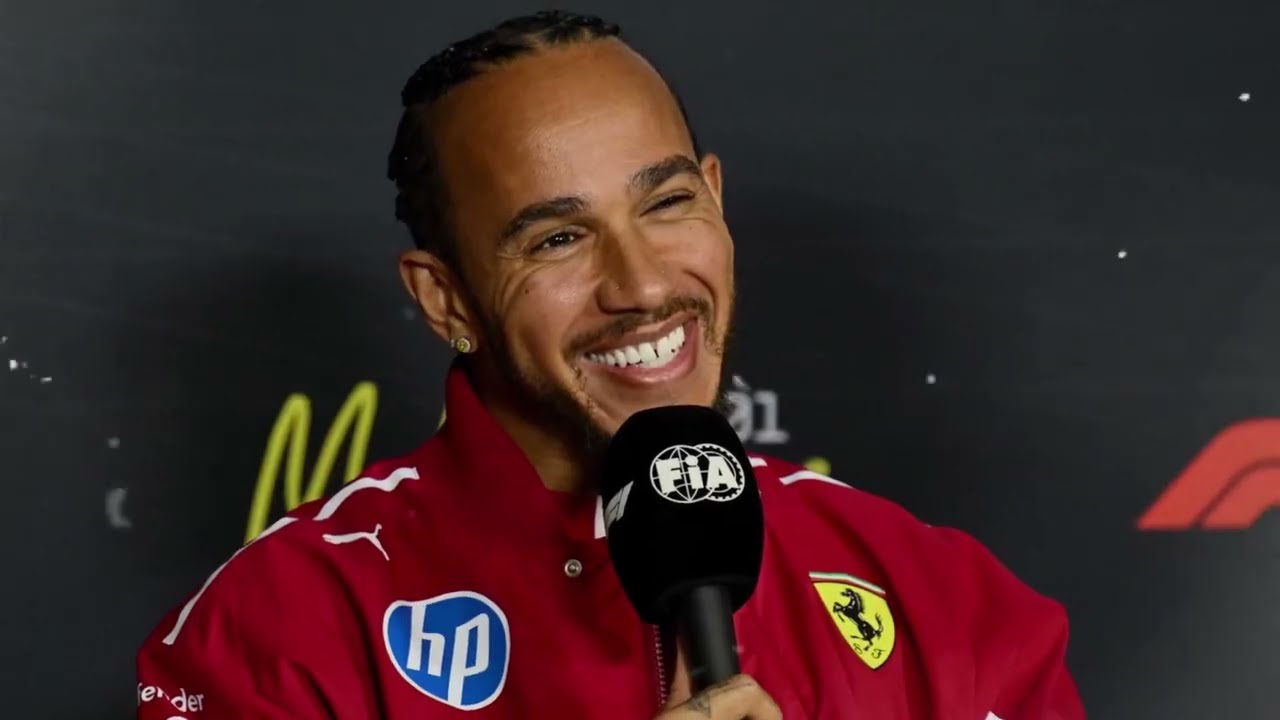
So, as the paddock currently stands today, the Mercedes engine is technically legal under the current static garage checks. But the proverbial ticking clock is echoing loudly through the pit lane. Is this temporary advantage fair? The rivals emphatically say no. Key figures like Jonathan Wheatley at Audi have publicly called out the absurdity of the ruling, while reigning champion Max Verstappen has been openly critical and deeply frustrated by the new regulations across the board. In their defense, the Mercedes camp and their drivers firmly maintain that their massive superiority is not just down to a clever engine trick. George Russell himself pointedly credited the radical chassis architecture, stating they simply have a brilliantly designed car beneath them.
Yet, beneath the noise of technical directives and bitter rivalries, the most fascinating and deeply underrated narrative of the 2026 season revolves around one man: Lewis Hamilton. After a legendary, twelve-year dynasty with the Mercedes-AMG team, he finally made the ultimate, romantic move of his illustrious career, signing a blockbuster deal to join Scuderia Ferrari. It was meant to be the dream scenario, the final, glorious chapter of his racing legacy. Instead, he has been forced to watch the team he just abandoned build a rocket ship while his new team desperately tries to catch up.
Many pundits expected Hamilton to publicly struggle or voice his intense frustrations as Mercedes dominated. Instead, the seven-time world champion is doing the exact opposite. While chaos and unreliability strike down his rivals, Hamilton is quietly, methodically executing a masterclass in consistency. He is currently the only driver on the entire grid to finish inside the top five in every single race held so far. There have been no unforced errors, no dramatic radio outbursts, and no unnecessary noise—just cold, calculated results. He secured a solid fourth place in Australia, followed by a brilliant third in the China Sprint race, and ultimately claimed his first-ever podium in Ferrari red by finishing third in the main Chinese Grand Prix.
Even his incredibly fast teammate, Charles Leclerc, openly admitted that Hamilton was simply the stronger driver across the entire Shanghai weekend. This speaks volumes about Hamilton’s current mindset. He acutely understands that the early phase of this season is no longer about matching Mercedes on raw pace; that is currently mathematically impossible. Right now, it is purely about survival and severe damage limitation. Mercedes has the unequivocally fastest package under the new regulations, fueled by an engine advantage that Ferrari simply cannot replicate today.
But Hamilton is a battle-hardened veteran of championship warfare, and he knows exactly where this story gets incredibly interesting: June 1st. That looming FIA deadline is the exact moment Mercedes may be legally forced to strangle their own power unit. If that 15-horsepower advantage suddenly evaporates into thin air, the entire competitive landscape of Formula 1 will violently shift on its axis. The massive gap at the front could instantly close, the grid could dramatically reset, and suddenly, Ferrari will find themselves right back in the middle of a brutal championship street fight.
This dramatic 2026 season is not going to be defined by who bolted out of the starting gates the fastest; it is going to be ruthlessly decided by who adapts the fastest when the strict rules inevitably change mid-stream. Right now, Lewis Hamilton is calmly playing the ultimate long game. There is absolutely no panic or desperation in the Ferrari garage, just the quiet, relentless accumulation of crucial championship points. True champions do not waste their precious energy chasing early-season headlines; they patiently build pressure behind the scenes. The ultimate question hovering over the paddock is whether Mercedes can stockpile enough points to run away with the title before the summer, or if June 1st will completely flip the entire season on its head. Because if that regulatory hammer falls hard on the Silver Arrows, Lewis Hamilton will no longer be chasing from a distance. He will be right there, fully prepared to strike.
