As the fiery sun sets over the sweeping curves of the Sakhir circuit in Bahrain, teams are frantically packing eleven grueling days of pre-season testing data into their haulers. Yet, amidst the clatter of tools and the roar of departing engines, the entire atmospheric pressure of the Formula One paddock has shifted abruptly.
For weeks leading up to this crucial juncture, the prevailing narrative spun by pundits and insiders was deeply familiar and somewhat ominous: Mercedes had allegedly reclaimed its invincible, dominant form of 2014, leaving their desperate rivals to bitterly fight for leftover scraps.
However, as the final timing screens flickered and settled, Ferrari shattered that prevailing silence so loudly that even the stoic Mercedes engineers were visibly seen frowning in disbelief at their telemetry monitors. The Maranello-based squad has not merely arrived at the 2026 season; they have arrived with an absolute vengeance.
Charles Leclerc’s blistering lap time of 1 minute 31.992 seconds was undeniably spectacular, but it was not just a low-fuel glory run designed to capture fleeting headlines. It was a terrifying manifesto of the SF-26’s sheer aerodynamic brilliance and mechanical readiness. But the real, terrifying story that has the paddock buzzing is not hidden in Leclerc’s outright single-lap pace. The true weapon is concealed within Lewis Hamilton’s jaw-dropping launch simulations and Ferrari’s highly deceptive, game-changing energy efficiency.
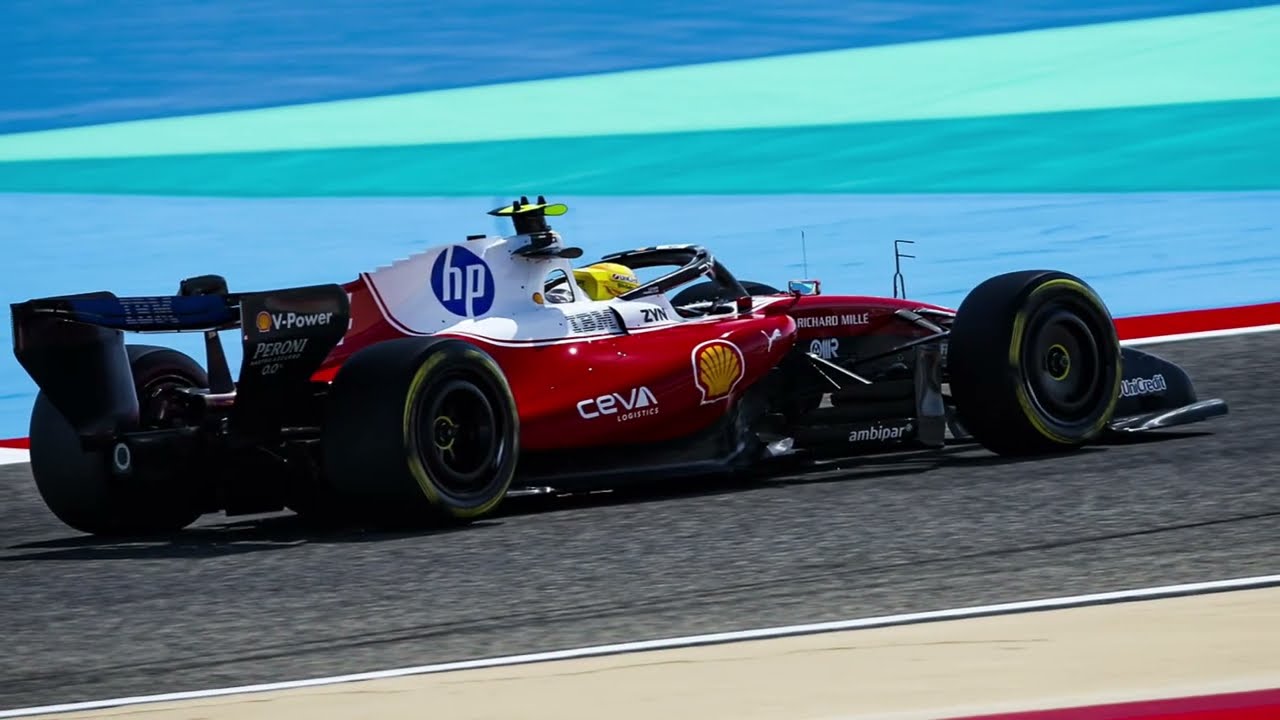
To understand the magnitude of Ferrari’s achievement, one must first understand the brutal reality of the 2026 Formula One regulations. The sport has entered an era defined by what insiders are calling the “Pillars of Chaos.” This season will not be won simply by bolting on the most aerodynamic downforce or generating the highest peak horsepower. This is an all-out energy war. The revised hybrid systems now rely far more heavily on electrical deployment, making the massive 350-kilowatt electric motor the undisputed beating heart of the race car. Ferrari does not look like a passive player waiting for the season to start; they look like a highly trained special forces unit prepared to seize the lead at Turn One in Melbourne and effectively end the race right there. What truly places the Scuderia firmly in the title fight this year is their preemptive, masterful understanding of energy management. Ferrari currently possesses the wealthiest battery bank in the paddock. Mercedes might be producing more peak horsepower at the very end of the long straights, but Ferrari fundamentally understands when, where, and exactly how to deploy their hybrid power better than anyone else on the grid.
The moment that literally froze the paddock in its tracks during testing was a specific launch simulation conducted by their blockbuster new signing, Lewis Hamilton. Under the incredibly convoluted 2026 starting protocols, Hamilton surged from a virtual eleventh place on the grid to first place before his car even reached the braking zone for the first corner. Let that sink in. In an era where rival drivers, including Mercedes’ own George Russell, openly admit that race starts are currently their tallest and most unpredictable hurdle, the Ferrari SF-26 launches off the line like a perfectly calibrated mechanical slingshot. The 2026 start procedures require an immensely delicate equilibrium. Drivers must balance turbo RPM management, the massive torque of the 350-kilowatt electric motor, and an incredibly precise clutch bite-point sensitivity. Ferrari’s absolute, buttery smoothness in this highly complex domain has triggered a blaring red alert inside the Mercedes garage. Russell publicly confessed that his own practice starts were the absolute worst he has ever felt in his entire Formula One career. Ferrari’s brutal superiority in those crucial opening three seconds could effectively render all of Mercedes’ meticulously crafted strategic plans completely obsolete within the first two hundred meters of the Australian Grand Prix.
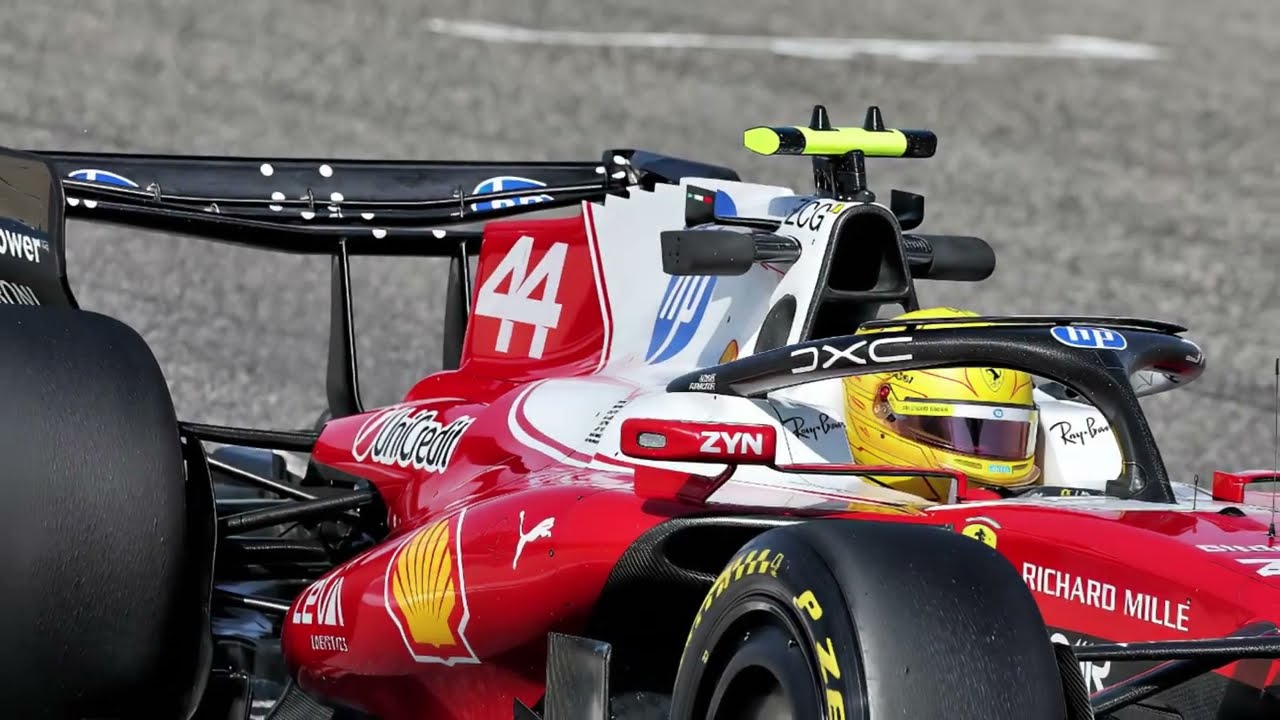
Behind Ferrari’s staggering launch capabilities and their neck-snapping low-speed acceleration lies a radical, irreversible architectural decision made deep within the halls of Maranello: the adoption of the small turbo. While Mercedes opted for a significantly larger turbocharger unit designed to maximize outright peak power at the end of the long straights, Ferrari deliberately chose a completely different path. They engineered a smaller turbo that spools up to its optimal operating window exponentially faster. It requires vastly less exhaust energy to reach its optimum revolutions per minute, allowing it to pair with the electric motor in a matter of milliseconds. This is not a simple software patch or a line of code that rival teams can easily pirate and replicate on their laptops overnight. This is a fundamental, hardware-level advantage permanently embedded into the physical DNA of the SF-26. Because of this brilliant engineering pivot, Ferrari produces maximum torque much faster than its competitors out of tight, low-speed corner exits like Turns 1 and 10. Mercedes might eventually hit a mathematically higher top speed of 345 kilometers per hour by the end of the straight, but because Ferrari reaches the peak of its velocity curve so much earlier, they have already built an insurmountable physical gap while the Mercedes is still suffering from turbo lag, desperately waiting for its larger unit to provide full boost.
This brilliant architectural pivot regarding the power unit is in perfect, harmonious alignment with the energy-conscious ethos of the 2026 era. Ferrari’s overarching aerodynamic philosophy is no longer just about generating mechanical grip and downforce; it is intricately built around keeping the hybrid battery fully charged at all times. Enter the most controversial and discussed innovation of the winter: Ferrari’s 180-degree somersaulting rear wing flaps. When spectators and rival engineers observe this wing in action, they assume it is designed purely to grant raw top speed. They are mistaken. The primary, genius objective of this radical design is to forcefully minimize the car’s electrical deployment requirements while traveling down the straights. When the wing performs its full rotation to an inverted aerodynamic profile, it virtually deletes the car’s drag coefficient. This miraculous reduction in drag allows the SF-26 to easily hit highly competitive velocities while simultaneously drawing 15 to 20 percent less energy from the battery compared to its heavy-dragging rivals. Ferrari then treats this newly saved electrical energy exactly like a high-yield bank account. They hoard it, storing it up for crucial defensive maneuvers to hold off the Mercedes, or utilizing it for aggressive, overtake-mode bursts later in the lap when their rivals’ batteries are completely drained. It is universally regarded as the most brilliant energy management solution currently sitting in the paddock. Given the strict gearbox homologies and internal packaging constraints mandated by the FIA, rivals successfully copying and integrating this complex system mid-season seems technically impossible.
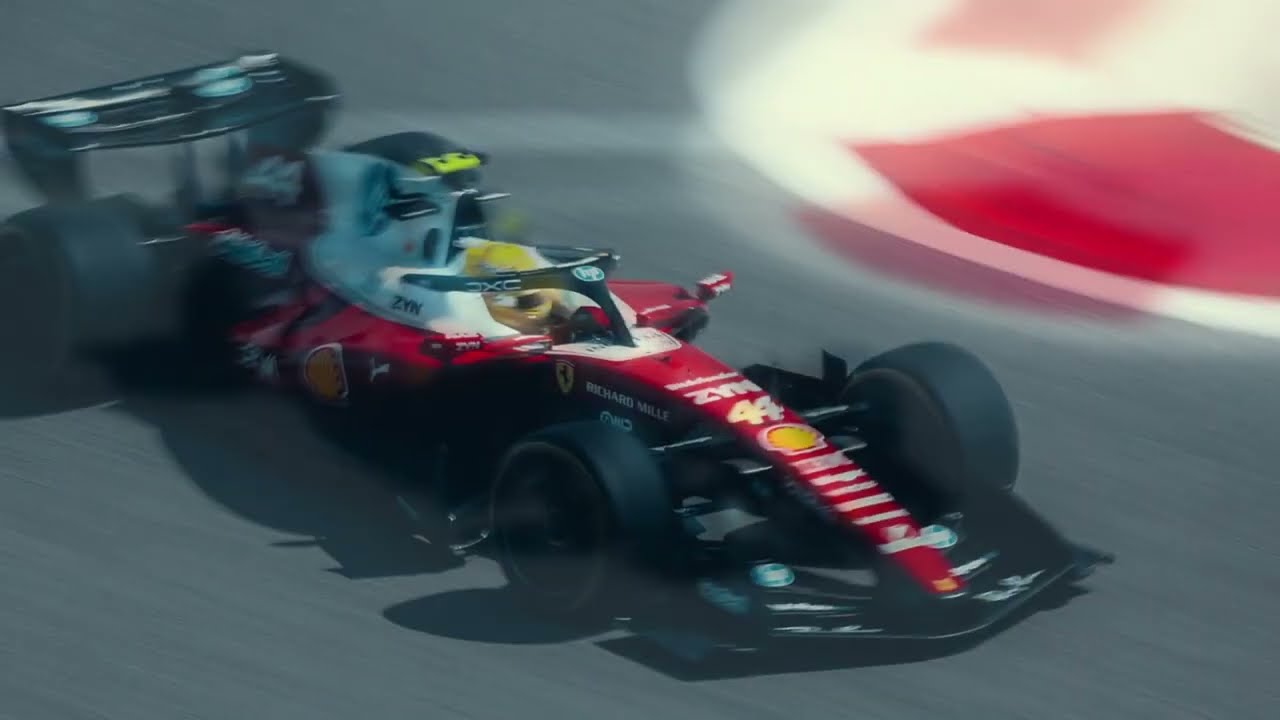
But a brilliant car is nothing without a driver who possesses complete confidence in its mechanics, and this is where the Ferrari narrative becomes truly terrifying for the rest of the grid. Lewis Hamilton actively integrated into the SF-26’s early development phases months ago via the simulator in Maranello. He explicitly told Team Principal Fred Vasseur, “My DNA must be in this car.” And the engineers listened. The frustrating, unpredictable rear-end instability that violently plagued Hamilton’s final three years at Mercedes seems to have been completely eradicated by Ferrari’s ingenious new diffuser and exhaust configuration. The Italian engineers successfully developed a system that meticulously directs hot exhaust gases directly into the intricate diffuser veins during deceleration. This essentially creates an aerodynamic vacuum that sucks the rear of the car to the track surface under heavy braking. This localized downforce allows Hamilton to aggressively reclaim his signature, world-famous late-braking style. When a driver of Hamilton’s pedigree describes his new challenger as fundamentally different from anything he has recently driven, and that deep connection reflects in his metronomic, flawless testing consistency, Mercedes has every single reason to be deeply afraid. A Lewis Hamilton who explicitly trusts his rear axle heading into a corner is a lethal, championship-winning prospect.
As the circus prepares to descend upon the Albert Park circuit in Melbourne, the strategic battle lines are officially drawn. Mercedes’ long-run pace is absolutely undeniable. During the Bahrain test, they put on a masterclass of reliability, consistently hitting the 1 minute 35 mark in their race simulations with robotic precision. However, the 2026 World Championship will not be settled solely by a spreadsheet of theoretical lap times; it is a brutal, tactical operational war. On a street circuit as notoriously narrow and overtaking-averse as Melbourne, the launch off the grid and intelligent energy management are absolutely paramount. Even if Mercedes genuinely holds a theoretical one-tenth raw speed advantage over the course of a perfectly clean lap, it means nothing if they lose the lead into the first braking zone. If Ferrari executes their slingshot start, piercing through Ferrari’s smart energy defense while battling in their turbulent dirty air will be a Herculean, perhaps impossible, task for the Silver Arrows. Ferrari’s race strategy is startlingly clear and ruthlessly efficient: seize the lead at Turn One, utilize the battery-saving somersault wing to defend effortlessly on every single straight, and slowly suffocate the Mercedes in a wake of aerodynamic turbulence.
Mercedes might mathematically be the fastest car in the paddock in a perfect vacuum, but Ferrari is currently the most clinical, race-ready, and strategically dangerous outfit on the planet. George Russell’s shocking admission that their starts are currently a “disaster” is not an exercise in false modesty or a clever media distraction; it is a blaring signal of deep, structural technical alarm. Mercedes engineers have yet to fully optimize the severe turbo lag inherent in their large-turbo design choice during those critical, race-defining first two seconds of the launch sequence. With only three short hours of free practice available in Melbourne before qualifying begins, Mercedes faces a razor-thin window to somehow patch this massive energy software glitch. While Ferrari has already achieved a terrifying state of operational confidence, Mercedes might still be trapped in their garage, frantically troubleshooting with laptops. The cool, measured optimism radiating from the Ferrari garage under the steady hand of Fred Vasseur signals a much more disciplined, focused, and deadly Scuderia than we have seen in years. The SF-26 might be the most complete, devastating package Ferrari has produced in the last two decades. As the Bahrain testing officially enters the history books, we are not just counting down the days to Melbourne; we are witnessing a formal declaration of technical warfare. The ultimate question remains: By the time Mercedes finally drops its hidden pace onto the table, will the red cars have already cleared the first corner and vanished into the distance? The 2026 revolution is here, and it is painted in Ferrari red.
