The transfer was heralded as the sporting event of the decade. Lewis Hamilton, the seven-time World Champion and arguably the greatest driver in Formula 1 history, trading the polished silver of Mercedes for the iconic, passionate scarlet of Ferrari. It was meant to be the final, glorious chapter of an unparalleled career: the master driver uniting with the sport’s most legendary team to capture an unprecedented eighth title. The world held its breath, expecting a renaissance, a surge of pure dominance.
Instead, this season delivered a gut-wrenching descent into competitive purgatory. The roar of the engine was there, the sweet scent of burnt rubber lingered, but the dominance vanished, replaced by a creeping, dangerous instability. For the first time in his career, the biggest threat to Lewis Hamilton wasn’t a rival driver, a daring overtake, or a safety car—it was the machine beneath him, the team that was supposed to uplift him, and the bitter, painful truth that the very foundation of his success had cracked.
The season ended not with a celebration, but with a confession that shook the paddock: “It’s been the worst season ever,” Hamilton admitted after the Las Vegas Grand Prix, “I feel terrible.” These were not the words of bravado, but the sound of a legend forced to swallow a truth more painful than any crash: his talent had been rendered powerless by a fundamentally flawed car and a team paralyzed by long-term planning. The Ferrari SF25, the Prancing Horse he was meant to ride to glory, became a nightmare.
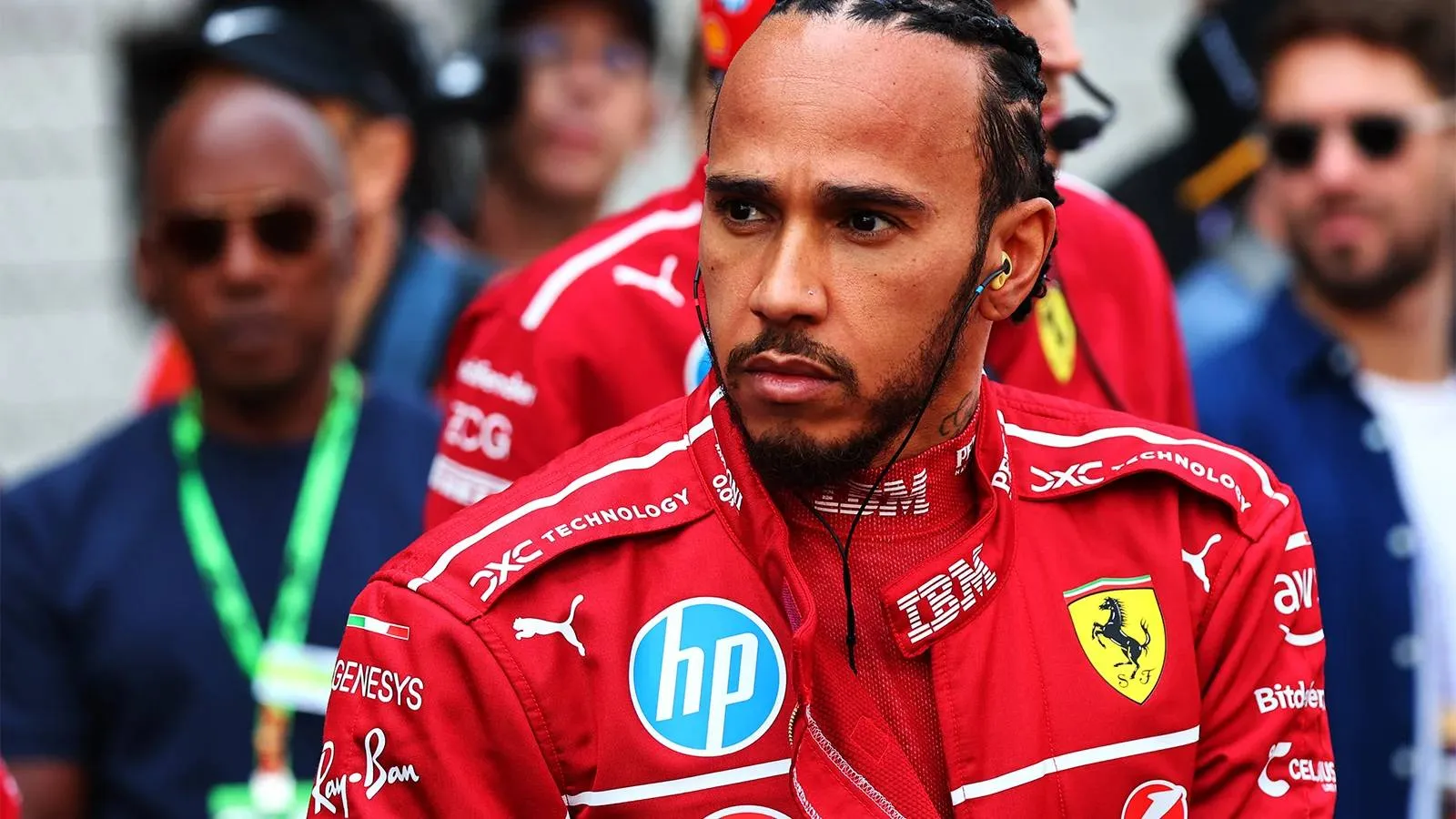
The Warning Signs of Instability
The problems began not on the starting grid, but in the quiet intensity of pre-season testing. While the world focused on the shimmering spectacle of the new partnership, the engineers were already noticing anomalies. The SF25, it turned out, was a temperamental beast. Wind tunnel numbers simply refused to align with real-world behavior.
The inconsistencies were immediate and severe: aerodynamic flaws cropped up unexpectedly on high-speed circuits, tire temperatures were notoriously difficult to manage, and in certain crucial corners, the car felt unpredictable—even vicious. For a driver like Hamilton, whose dominance has always been built upon precision, consistency, and a profound, intuitive trust in his equipment, this lack of predictability was a poison.
This wasn’t a matter of minor fine-tuning; it was a structural problem. The traditional assumption that Ferrari would “find the magic fix” simply did not materialize. The issues followed them relentlessly into the season, leading to a profound, public decline. The Constructor’s Championship picture tells the brutal story: Ferrari locked into a deeply disappointing fourth place. The gap to frontrunners like the McLaren F1 team wasn’t merely a point deficit; it was a chasm of lost confidence, momentum, and, most critically, team morale. Hamilton, who had dreamt of title glory, found himself trapped in a creeping nightmare of competitive decline.
The Mid-Season Betrayal: A Champion Made Mortal
The crisis deepened mid-season, cemented by a management decision that felt, to many observers, like a strategic betrayal of their champion driver. In a move that underscored the team’s grim acceptance of reality, Ferrari officially halted major aerodynamic development on the SF25 as early as mid-spring. Their focus—and their resources—were ruthlessly redirected to the next regulation cycle.
This pivot meant that the upgrades necessary to fix the SF25’s persistent, season-ruining flaws simply never arrived. Furthermore, a rear suspension overhaul that was desperately needed to stabilize the car was only partially executed mid-summer—far too late to salvage the campaign.
This decision was a brutal acceptance that this year was a write-off, a year to be sacrificed for the sake of a longer-term gamble on the new rules. For Hamilton, who thrives on the relentless pursuit of performance and the expectation of continuous improvement, this sudden slowdown felt crushing. A champion driver is an equation: Talent + Car + Team Synergy + Rhythm. When the team pulled the plug on the car’s development, they removed a crucial element, turning a legend into a mere mortal.
The devastating irony was that while Ferrari was deliberately standing still, their rivals were speeding forward. McLaren, in particular, evolved rapidly throughout the year, iterating setups, honing reliability, and adding substantial upgrades. The contrast was stark and deeply painful: when competitors move forward while you remain frozen, the inevitable result is a slide backward.
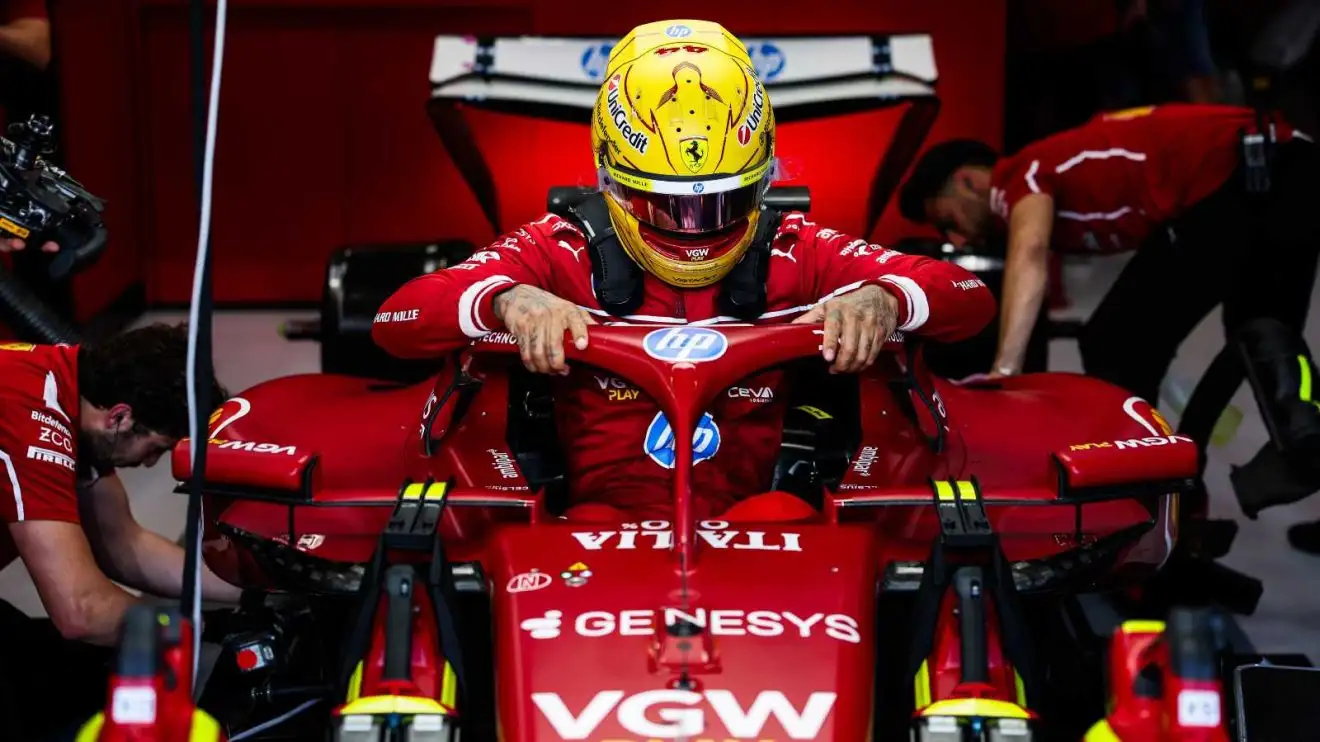
The Las Vegas Low: An Unprecedented Humiliation
The consequences of this strategic surrender were laid bare in the most public and personally humiliating fashion. This season will forever be marked in the record books as the first in Hamilton’s long F1 career where he failed to score a single Grand Prix podium.
The nadir came during the Las Vegas Grand Prix weekend, an event that became a perfect, symbolic distillation of Ferrari’s chaos. Hamilton qualified last on pure pace. It was an unprecedented low—the first time in his legendary career that speed, not a penalty or a mechanical issue, left him languishing at the very back of the grid. This also marked Ferrari’s worst grid performance in over a decade and a half.
The car, by Hamilton’s own admission, was “undrivable”. The balance was gone, the tires snapped, the brakes locked. He tried everything, exhausting every ounce of his skill, yet nothing worked. If a single moment screamed, “This car is broken,” that was it.
Hamilton’s agony was not isolated. His teammate, Charles Leclerc, voiced similar frustrations, particularly after the Qatar Grand Prix, admitting that for an entire weekend, the car offered “no confidence and no pace”. The team’s own post-race analysis confirmed the worst: the struggle exposed “deeper weaknesses” beyond circumstantial factors. This was not a temporary slump; it was structural failure wrapped in an iconic red livery.
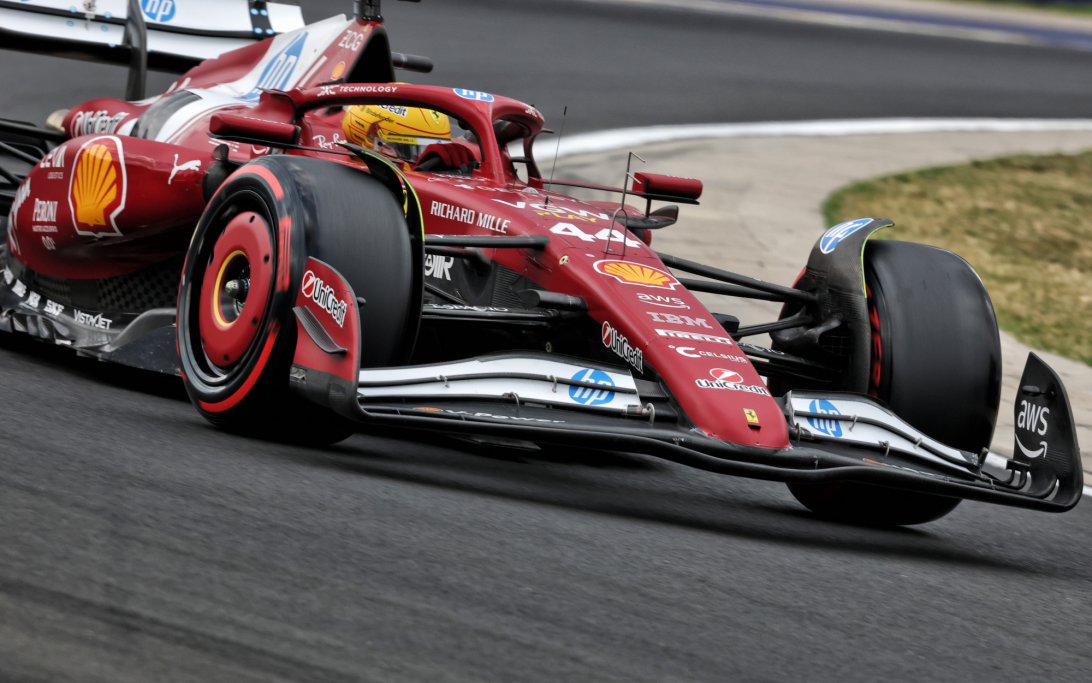
The Message: The Season is Done
As the season drew to a close, the team itself sent undeniable, public signals that they had emotionally and strategically moved past the current campaign. For the season finale at Abu Dhabi, Ferrari even replaced Hamilton in the first practice session (FP1) to comply with the regulatory requirement to run a rookie. While a mere formality, the optics were damning: a clear message that the team’s attention had wholly shifted to the future, and Hamilton’s current car was merely a test mule.
For a driver who arrived expecting to fight for a title, the team’s loud declaration—This season is done, move on, invest in the future—was a bitter pill to swallow.
As the circus packed up, the weight of the season settled. Ferrari finished fourth in constructors, with no wins, no podiums, and a legacy car that catastrophically failed to deliver. A seven-time World Champion was left staring at a mountain of expectations and the reality of failure. For fans, it was heartbreak; for the team, chaos; for Hamilton, a nightmare.
This season raises the scariest question of all: is this the beginning of the end for the legend? Not because Hamilton has lost his talent or his hunger—the transcript makes clear his efforts were ceaseless—but because the car and the team lost their faith in the current project. Talent without trust is powerless. Speed without stability is worthless. History is often unkind to almost-champions, and the narrative of Lewis Hamilton’s final years risks being defined not by the glories of his past, but by the chaos and surrender of this turbulent year.
The ultimate tragedy is that in his first year at Ferrari, Hamilton’s talent was neutralized by a fatal combination of a flawed car and a strategic choice that prioritized the distant future over the competitive present. It serves as a chilling reminder that in Formula 1, even the greatest driver is entirely dependent on the machine beneath him and the unwavering commitment of the team around him. Hamilton survived the crash he didn’t see coming, but the scars of the worst season ever will linger, defining the ultimate question for his career: does he have the strength, and does Ferrari have the resolve, to turn this crushing defeat into an improbable future triumph?
