The Australian Grand Prix was supposed to be a coronation for the “new” Mercedes. As the silver cars crossed the line in Melbourne for a dominant one-two finish, the narrative seemed written: 2026 would be a procession, a clinical display of German engineering prowess under the sport’s revolutionary new regulations.
But as the freight is loaded for Shanghai, a different story is emerging—one of tactical gambles, secret software “sandbagging,” and a Ferrari upgrade so radical it has been nicknamed after a 90s dance craze.
Formula 1 is currently navigating its most significant transformation in decades. The 2026 rules have turned the power unit inside out, placing nearly half the performance burden on electrical deployment. In Melbourne, Mercedes spoke a “digital language” that left the rest of the grid stuttering.
Their energy management was so precise that George Russell and Kimi Antonelli seemed to be racing in a different category. Yet, beneath the surface of that defeat, Ferrari found something they haven’t had in years: genuine, fighting hope.
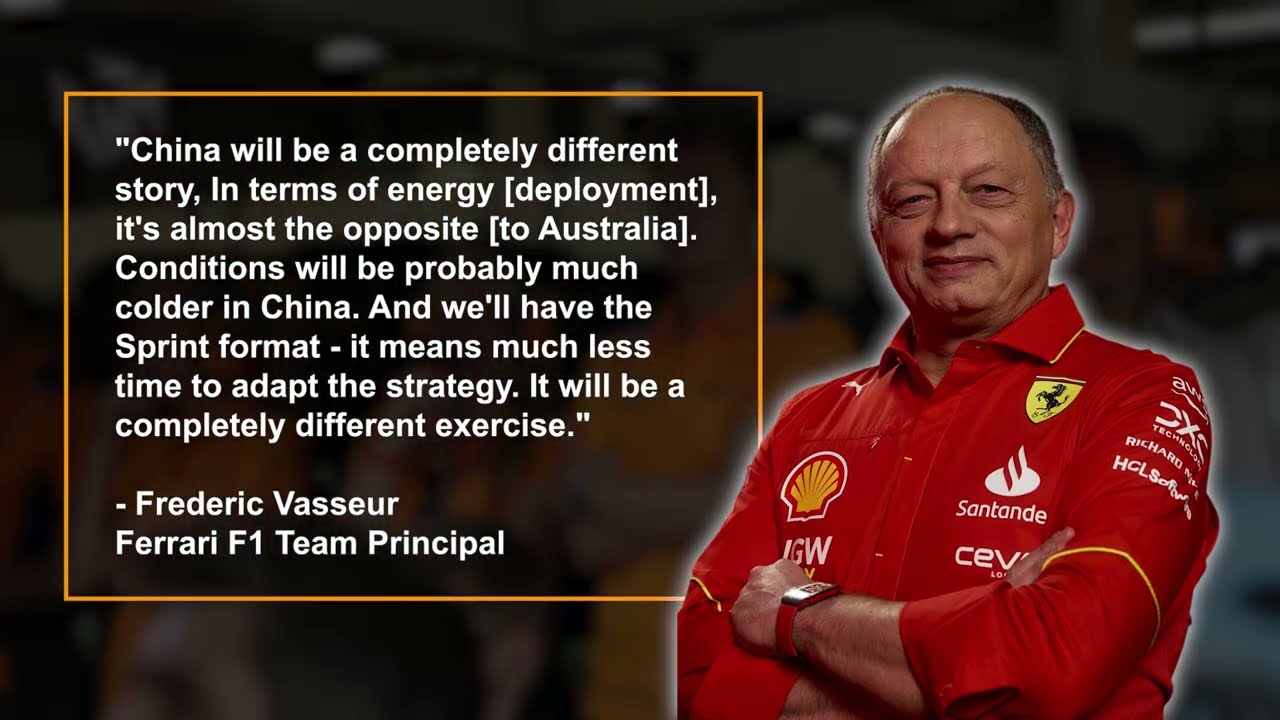
Fred Vasseur, the man tasked with returning the Scuderia to its former glory, isn’t looking at the Melbourne results with despair. Instead, he’s looking at the data. Ferrari pushed Mercedes far harder than anyone predicted, staying within “touching distance” for the duration of the race. While the fans were quick to criticize Ferrari’s strategy—specifically the decision not to pit under the early Virtual Safety Car on Lap 12—the reality inside the garage was far more calculated. Ferrari didn’t make a mistake; they took a “gamble to win.” They bet on higher tire degradation and more reliability failures that never materialized. In an era where Mercedes has a raw pace advantage, playing it safe is a recipe for a lonely third place. Ferrari chose to fight.
Now, the battleground shifts to the Shanghai International Circuit, and the stakes have been raised by a factor of ten. China marks the first Sprint event of the 2026 season, a format that gives teams exactly sixty minutes of practice before the cars are locked into “Parc Fermé” conditions. In a year where every lap is a learning experience, this limited window is a nightmare for engineers but a dream for a team looking to pull off an upset.
“It will be a completely different exercise,” Vasseur noted, highlighting that China is the opposite of Melbourne. While Australia is “energy-starved”—making it difficult to recharge the massive 2026 batteries—Shanghai offers heavy braking zones that allow for more “natural” harvesting. This plays directly into Ferrari’s hands. If they can balance their energy deployment over Shanghai’s massive back straight, the gap to Mercedes could vanish.
But the real talking point isn’t just software; it’s the hardware Ferrari is rushing to the track. Internal reports suggest the “Macarena” wing is set for its competitive debut. This isn’t your standard Drag Reduction System (DRS). Under the new active aero rules, Ferrari has developed a rear wing where the upper flap rotates a staggering 200 degrees, essentially flipping upside down at high speed.
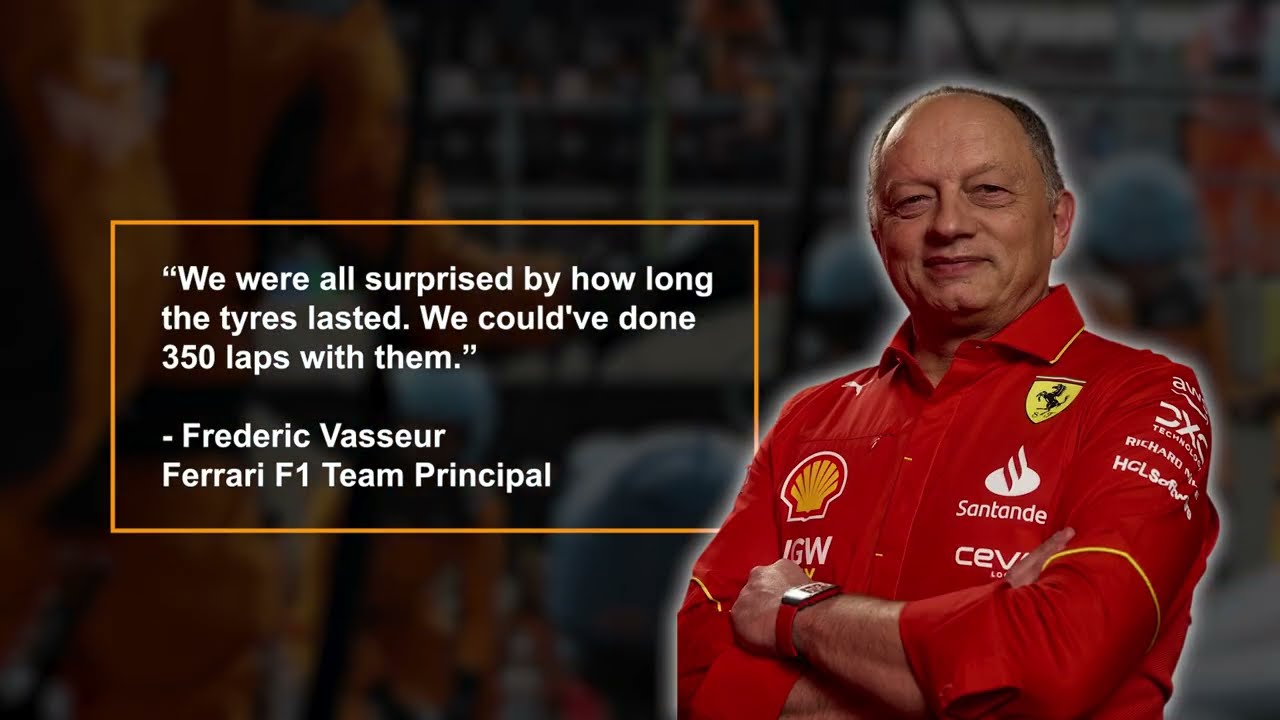
The logic is as brilliant as it is bizarre. A traditional Formula 1 wing is designed to be the opposite of an airplane wing—it creates downforce to push the car into the tarmac. Ferrari’s “Macarena” mode turns it back into an airplane wing. By generating a small amount of lift on the straights, it drastically reduces the friction on the rear tires and eliminates almost all aerodynamic drag. It is a high-speed “disappearing act” that could give the SF26 a terrifying advantage on the world’s longest straights.
The innovation speaks to a shift in Maranello. For the past decade, Ferrari has often been accused of being reactive, but the Macarena wing is a product of a team that stopped developing their 2025 car nearly a year ago to focus entirely on these new rules. They aren’t just following the regulations; they are bending them to their breaking point.
However, as Ferrari brings the “magic,” Mercedes may be bringing the “smoke and mirrors.” A dark cloud of suspicion has begun to hang over the Mercedes garage. Under the 2026 “Performance Convergence” mechanism, if any engine manufacturer is more than 2% down on power compared to the leader, the FIA grants them extra R&D time and a budget cap boost to catch up. Mercedes knows this. There is a growing belief among rival team principals that Mercedes is “sandbagging”—deliberately telling their drivers to lift and coast, even when they don’t need to, to hide the true extent of their engine’s power.
In Melbourne, race engineers were heard repeatedly telling Russell and Antonelli to conserve, even while Ferrari was breathing down their necks. Was it tire management, or was it a calculated political move to ensure Ferrari and Red Bull don’t get a “free” development pass from the FIA? If Mercedes is hiding a “party mode” that is seconds faster than the rest of the field, they are playing a dangerous game. If Ferrari’s upgrades put them under real pressure in China, Mercedes will be forced to show their hand. If they suddenly find two seconds of pace to defend a win, the FIA’s technical delegates will be waiting at the scales with some very difficult questions.
The geopolitical landscape is also adding an unexpected layer of tension. With the ongoing conflict in Iran, there are whispers that the upcoming Middle Eastern leg of the season—Bahrain and Saudi Arabia—could be cancelled. If that happens, the gap between the Japanese Grand Prix in late March and the Miami Grand Prix in May becomes a massive month-long void. Teams are now treating China as a “now or never” moment. Any upgrade brought to Shanghai will have a month of data analysis behind it before the next race. Ferrari is rushing their parts specifically to avoid being “blind” during that potential break.
This weekend in Shanghai isn’t just about who takes the checkered flag. It is a referendum on the 2026 regulations. We will see if Ferrari’s mechanical audacity can overcome the digital perfection of Mercedes. We will see if the “Macarena” wing is a stroke of genius or a structural liability at 330 km/h. And most importantly, we will see if the silver cars are truly as vulnerable as they looked in the closing stages of Melbourne, or if they have simply been playing with their food.
One thing is certain: the era of Mercedes dominance is no longer a foregone conclusion. The “Red Menace” is back, and they are bringing a wing that dances and a spirit that refuses to settle for second place. In the high-speed chess match of Formula 1, Ferrari just moved their Queen. Now, it’s Mercedes’ turn to respond.
