When George Russell crossed the finish line to take victory in the Chinese Grand Prix sprint race, the initial reaction from the casual observer might have been a resigned sigh. Another Mercedes victory in the 2026 season seemed to signal a continuation of their iron-fisted dominance.
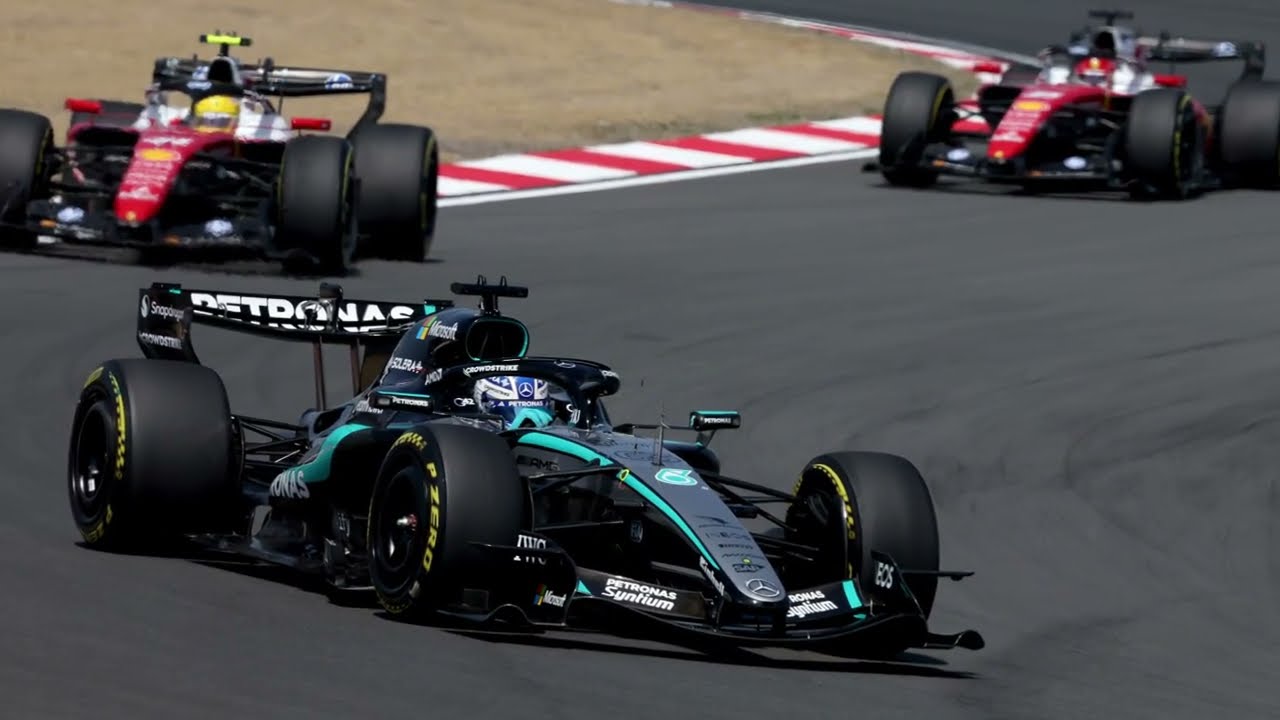
However, if you looked closely at the timing screens, the real story was hiding just fractions of a second behind him. Charles Leclerc finished a mere 0.674 seconds back in second place, with Lewis Hamilton crossing the line in third, just two and a half seconds adrift of the lead. Ferrari had managed to split the mighty Mercedes cars and stay within striking distance over a fiercely competitive sprint.
This result was not a lucky coincidence, nor was it the product of unusual track conditions. What happened in Shanghai was a monumental turning point in the 2026 Formula 1 season. It was the moment a rival team publicly identified, dissected, and exposed the exact engineering trick that has allowed Mercedes to lock out the front row week after week.
Ferrari has fundamentally figured out what makes the Silver Arrows so fast, and more importantly, they are rapidly engineering the solution to dismantle that advantage. The era of untouchable Mercedes speed is under serious threat, and the political and technical warfare in the paddock has never been more intense.

To understand the sheer magnitude of this revelation, we have to look beyond the basic race results and dive into the fascinating world of modern Formula 1 telemetry. Since the dawn of the heavily revised 2026 engine regulations, the sport has shifted its focus. It is no longer just about raw aerodynamic downforce or traditional horsepower; it is about the hyper-efficient management of electrical energy. Going into the Shanghai weekend, Ferrari made a bold operational choice. They arrived with an experimental rear wing—affectionately dubbed the “Macarena” wing—but swiftly removed it from both cars before competitive running began due to durability concerns. They reverted to their standard, older-specification Melbourne wing, fully knowing it would leave them at a slight aerodynamic disadvantage on the sprawling Chinese straights.
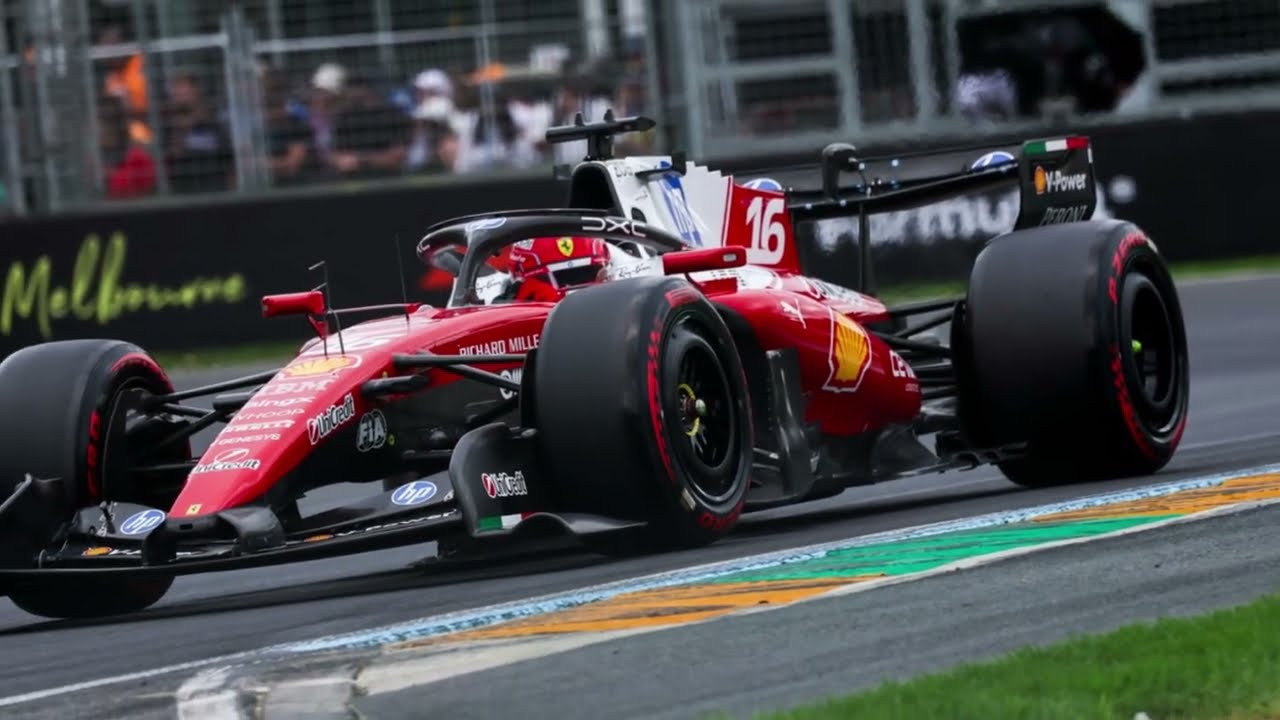
Despite this known deficit, Leclerc still managed to hunt Russell down relentlessly in the closing laps of the sprint race. The Ferrari SF-26 proved that when energy demands are spread out over a longer racing stint rather than compressed into a single, explosive qualifying lap, it is a genuinely phenomenal piece of machinery. The chassis is beautifully balanced, the tire wear is highly competitive, and the mechanical grip is sensational. The problem holding the Scuderia back is not physical; it is deeply embedded in the digital brain of the power unit.
The grand secret that Ferrari has dragged out into the daylight revolves entirely around how Mercedes deploys its electrical energy during qualifying. In 2026, the traditional Drag Reduction System (DRS) was replaced by a sophisticated, fully active aerodynamic system. When a driver activates what the paddock now calls “straight mode,” the front and rear wing flaps dynamically flatten at the exact same time, shedding massive amounts of drag and rocketing the car to terminal velocity. Every team on the grid has this system, and every driver activates it at the exact same predetermined points on the circuit. So, why does Mercedes constantly pull away?
The answer lies in the microscopic milliseconds after that wing opens. Mercedes has engineered a way to arrive at the beginning of a straight with significantly more battery charge than any of their rivals. When they engage straight mode, they can sustain maximum deployment from the MGU-K (Motor Generator Unit – Kinetic) for a much longer duration. While the Ferraris and McLarens begin to “derate”—the dreaded phase where the electrical power naturally tapers off at the very end of a long straight—the Mercedes power unit just keeps pushing. They carry a monumental speed advantage deep into the braking zones while their competitors are essentially hitting an invisible aerodynamic wall with their foot flat to the floor.
No one understands this brutal reality better than Lewis Hamilton. Having spent over a decade winning world championships with Mercedes, the British racing legend possesses a unique, intimate knowledge of how the team operates behind closed doors. Now wearing the iconic red overalls of Ferrari, Hamilton has transformed from Mercedes’ greatest asset into their most dangerous liability. After the sprint race in China, he spoke with a clinical precision that sent shivers down the pit lane. He noted that the Mercedes advantage lives almost entirely on the straights, specifically when they enter their aggressive engine mapping modes. “It seems mostly on the straits,” Hamilton observed. “But it seems more so when they open up straight mode—that is when they take a huge step.” He further twisted the knife by pointing out that they experience far less derating than the rest of the grid.
This is not a traditional hardware advantage. If it were simply a matter of building a better engine, Mercedes’ customer teams like McLaren and Williams would be matching their pace. Yet, McLaren qualified nearly nine-tenths of a second behind the factory Mercedes squad in Melbourne, despite using the exact same physical power unit. The colossal gap is born entirely of software calibration and a vastly superior understanding of the 2026 energy recovery algorithms. Mercedes simply started developing the complex code for this system much earlier than the rest of the grid.
But Ferrari is not panicking. Instead of frantically rushing a massive, unpredictable upgrade package to the track, the team under the leadership of Fred Vasseur is operating with cold, calculated precision. The decision to run the experimental Macarena wing in practice just to gather pure data, only to remove it before the sprint, shows a team deeply committed to the scientific method. They are analyzing the problem race by race, session by session.
More importantly, while the aerodynamic experiments captured the cameras’ attention, Ferrari’s true counter-strike in Shanghai was entirely invisible. They quietly introduced a brand-new MGU-K software package specifically targeted at altering how their car recovers energy in medium and high-speed corners. The telemetry from previous races showed that the Ferrari battery was bleeding crucial energy through the sweeping corners, leaving them vulnerable on the straights. By rewriting the algorithms using real-world data from the track rather than relying solely on factory simulations, Ferrari is attempting to perfectly replicate the Mercedes trick. They are walking a terrifying engineering tightrope—pushing the software to recover more energy without making the rear of the car unstable and undrivable for Hamilton and Leclerc.
This aggressive developmental push is already yielding terrifying results for the Silver Arrows. While Kimi Antonelli and George Russell still managed to lock out the front row in standard qualifying for the Grand Prix, the gap to the Ferraris on the second row shrank drastically compared to the season opener. The structural qualifying advantage built by Mercedes over years of early development will not vanish overnight with a single line of code. However, the sprint race proved definitively that in race conditions, where battery management must be sustained over a full stint, the gap virtually evaporates.
The pressure mounting inside the Mercedes garage is palpable, and the calendar offers them no comfort. A highly anticipated rule change regarding compression ratios is scheduled to hit the sport on June 1st, a regulation shift that was unanimously voted upon by the FIA. This adjustment is expected to brutally strip Mercedes of anywhere between 13 to 30 brake horsepower—an unintended advantage they exploited in the early drafts of the rulebook. Furthermore, the governing body is actively looking into capping the “super clipping” electrical benefits that currently give Mercedes their devastating straight-line speed.
Formula 1 is a sport defined by relentless evolution, where today’s unbeatable innovation is tomorrow’s baseline standard. Mercedes fired the opening salvo of the 2026 season with a brilliantly executed software strategy, creating an illusion of untouchable dominance. But the Chinese Grand Prix shattered that illusion. Ferrari has looked behind the curtain, stolen the blueprints, and is currently rewriting the rulebook on energy deployment in real-time.
With Lewis Hamilton using his insider knowledge to push Maranello’s engineers to their absolute breaking point, and Charles Leclerc driving with the ferocious hunger of a man who knows he finally has a capable machine, the landscape of the championship has fundamentally shifted. Mercedes is no longer running away from the pack; they are desperately looking in their rearview mirrors. The secret is out, the gap is closing, and the real war for the 2026 Formula 1 World Championship has officially begun.