Lewis Hamilton sat in the cockpit, the engine cooling, the twilight haze of the Yas Marina Circuit settling over the asphalt. This was the post-season test in Abu Dhabi, the final, high-stakes commitment after a grueling campaign.
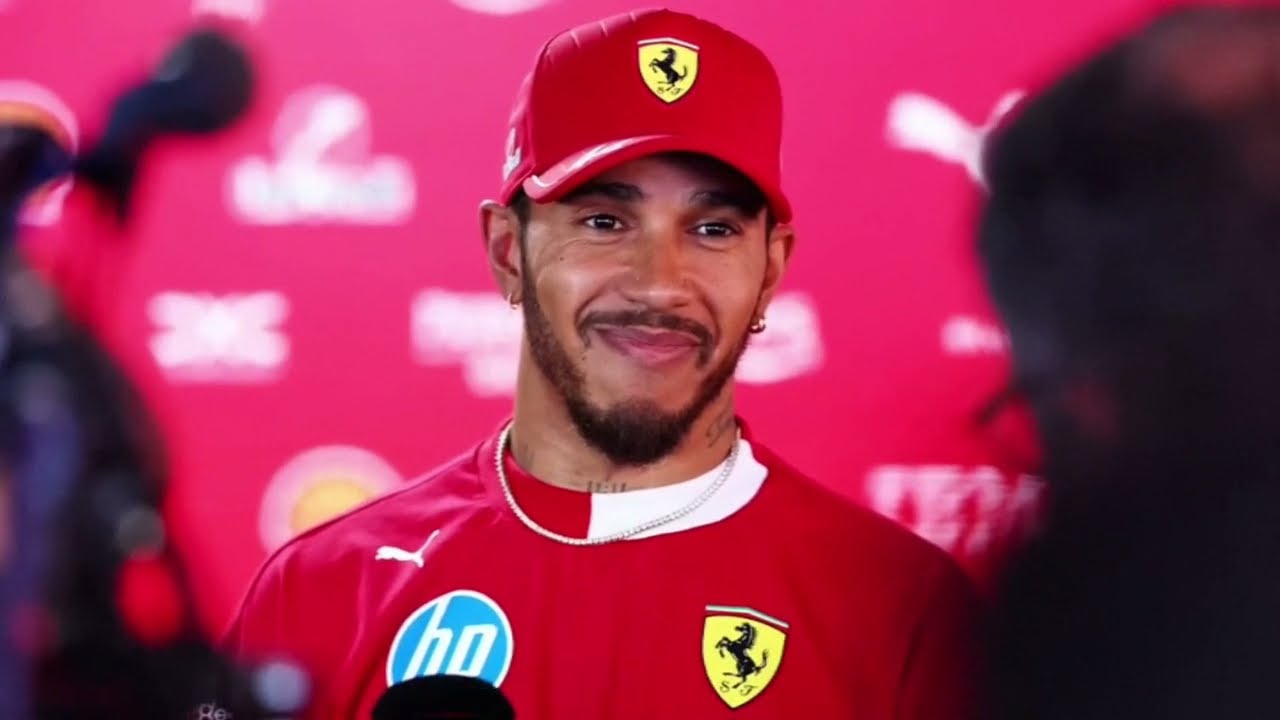
Hamilton climbed out of the SF25 mule car, having logged a monumental 270 laps—the equivalent of four full Grand Prix distances. The expression on his face, for the first time in many difficult months, was unmistakable: relief.
It wasn’t a smile born of blistering lap times or a sudden, miraculous discovery of pace. It was a look of clarity. For a driver whose recent campaign with Ferrari was marred by unexpected struggles, whispers of retirement, and a distinct lack of podium finishes, that simple sense of understanding was priceless.
The world had spent a season asking, “What’s wrong with Lewis Hamilton?” But veteran analyst Martin Brundle, with the sharp eye of a seasoned observer, had posed a far more prescient question all along: What if the problem was never the driver?
The Agony of the Fading Star
The narrative surrounding Lewis Hamilton’s recent season was brutal, simplistic, and almost universally accepted by casual observers: the seven-time World Champion was losing his touch.
This was the same driver who had built a career turning intense pressure into surgical precision, whose instinctual ability to read a car mid-corner was legendary. Yet, the season saw him outscored by his teammate, struggling with race pace, and consistently battling a car that seemed fundamentally averse to his driving style. The easy conclusion was that the maestro had finally been caught by time. He was too old, the SF25 chassis didn’t suit him, he had simply lost the competitive edge that made him unstoppable.
But for those who understood the deep mechanics of Formula 1 performance, the explanation felt shallow. A champion does not simply forget how to drive. The emotional toll of this public, relentless scrutiny must have been immense. Hamilton, a figure who had become synonymous with excellence, was facing a crisis of identity, publicly battling a machine that felt alien and an atmosphere that lacked the cohesive perfection he was accustomed to. The season wasn’t just a statistical failure; it was an exercise in profound professional frustration.
The Hidden Handicap: Telepathy Lost
Brundle’s theory cut through the noise with surgical precision. The true issue wasn’t Hamilton’s age or his ability to adapt; it was the destruction of the single most crucial operational partnership in modern F1: the driver-engineer relationship.
For over a decade at Mercedes, Hamilton had Peter Bonington (“Bono”). Their partnership transcended the usual radio banter, operating on a level of intuitive telepathy. Hamilton would often formulate a question or realize a necessary adjustment just as Bono was transmitting the solution. Strategy, tire management, brake migration—all flowed seamlessly, two minds working as one to fine-tune a hyper-complex machine in real-time. This synchronization was the secret foundation of Hamilton’s dominance.
At Ferrari, he was paired with Ricardo Adami. Adami is a respected engineer, but the essential alignment, that near-telepathic bond, was absent. Brundle didn’t just suggest a poor rapport; he highlighted a failure in operational efficiency. The evidence was laid bare in the race weekend radio exchanges: requests for clarification, pauses where there should have been instant confidence, feedback loops that took precious seconds too long to close.
These were not catastrophic, dramatic failures. They were “micro inefficiencies,” repeated over dozens of laps and compounded across an entire season. In a sport defined by tenths and thousandths of a second, this communication lag acted like a competitive handicap. It resulted in misjudged setups, delayed strategy calls, and an inability to swiftly adjust to the car’s inherent aerodynamic instability. Hamilton was not just fighting the car; he was fighting the operational system layered on top of it. He was operating in an environment that denied him the condition he needed to be at his peak.
The Documentation of Disconnect
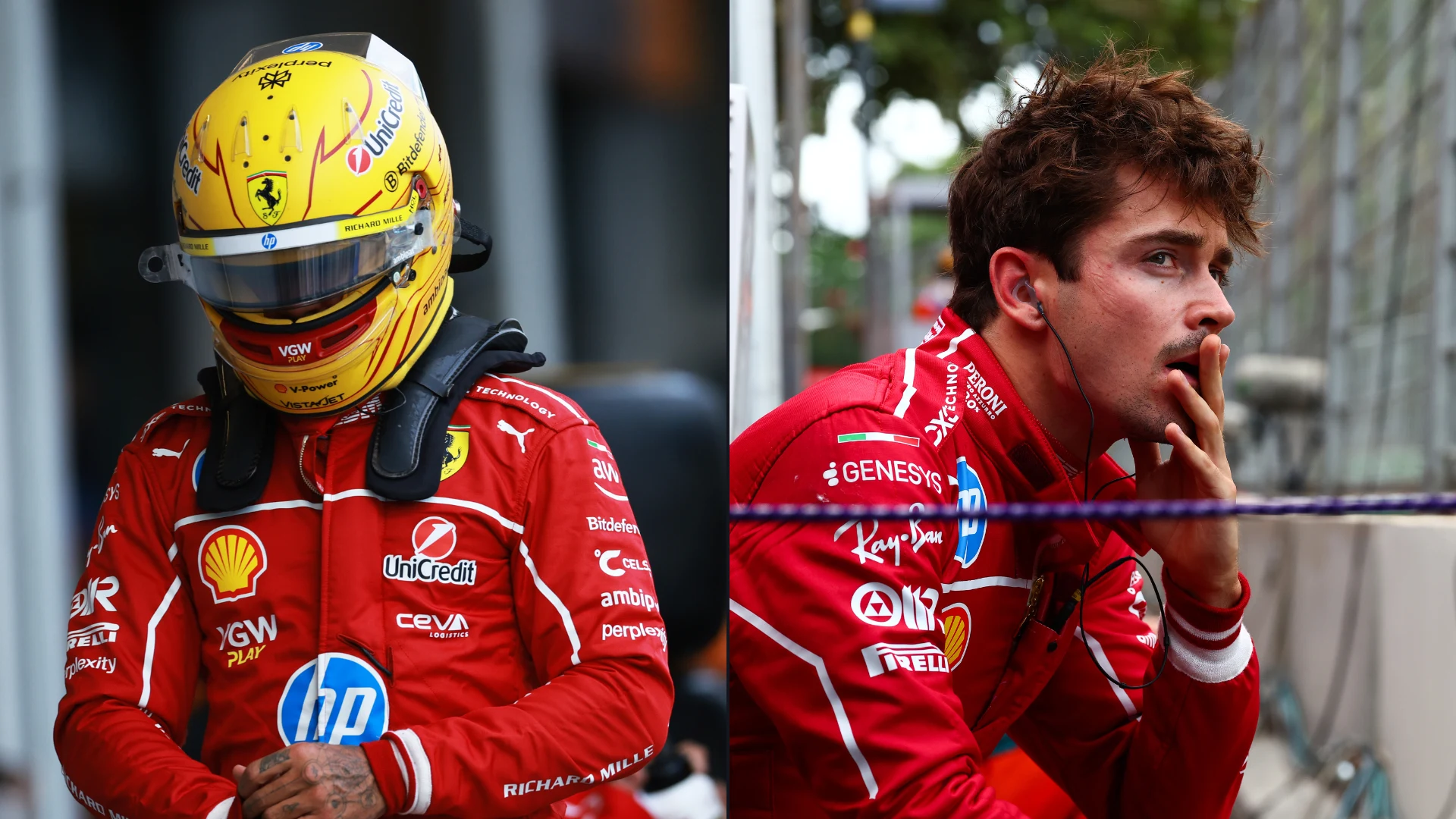
What makes Hamilton’s struggles so compelling is his response to it. He refused to react emotionally. Instead of public outbursts or dramatic resignations, he did something far more potent: he documented.
In professional, measured postseason interviews, Hamilton acknowledged the struggles, talking about the need to “reposition people to optimize teamwork.” This was not frustration; it was calculated documentation. Throughout the entire season, he had been systematically analyzing decisions, tracking communication breakdowns, and quietly preparing a devastatingly comprehensive, driven case for structural change. He wasn’t just complaining; he was building a blueprint for his own success, proving his unparalleled value not just as a driver, but as a systems analyst.
Ferrari, to their credit, listened. They heard him loud and clear. They understood that the solution to unlocking their marquee signing wasn’t a small tweak to the current structure, but a full, necessary reset.
The SF25 Mule: A Window to a Red Future
This systematic analysis led directly to the pivotal moment in Abu Dhabi. What was listed as a “routine tire evaluation” quickly morphed into a secret test of Ferrari’s future philosophical shift.
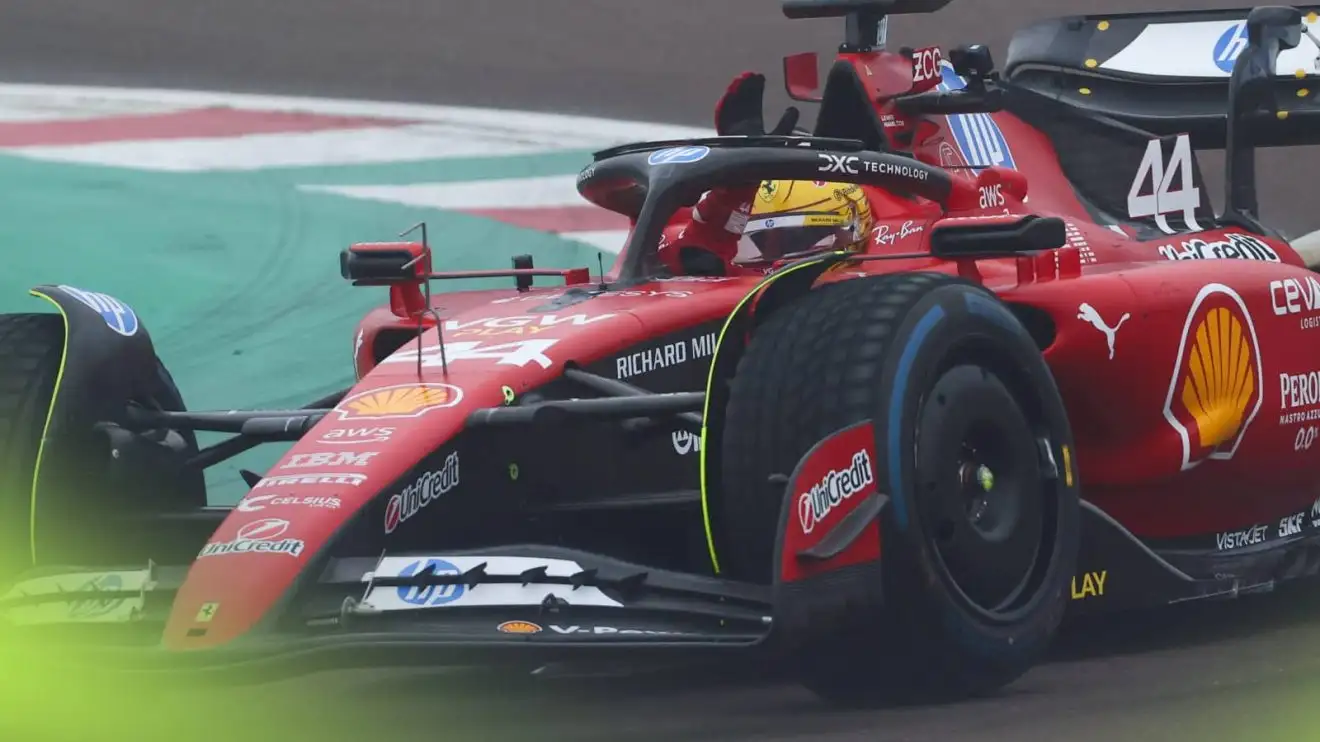
The SF25 mule car Hamilton drove was radically different from the one that had plagued him all season. It featured ultra-low downforce wings, modified load distribution, and crucially, an active front wing actuator system. Even more telling was the prototype steering wheel, engineered with simplified control logic and ergonomics that deliberately mirrored the systems Hamilton had relied upon during his most successful years.
Hamilton called the experience “eye-opening.” For the first time, he wasn’t driving the compromised current-generation concept; he was test-driving Ferrari’s next-generation philosophy. The car was engineered to provide engineers with real-time, critical data on airflow transitions under the looming new aerodynamic regulations—the very heart of the forthcoming rules overhaul. Hamilton’s feedback on load variation and how the chassis responded through medium-speed corners gave him direct, unfiltered insight into a concept fundamentally different from the one he had battled for months.
This was a structural reset, not an incremental improvement. The test was an implicit acknowledgement from Maranello that Brundle and Hamilton were right: the problem was never the driver’s ability to adapt, but the organization’s ability to give him the optimal environment to perform. The clarity Hamilton felt was the moment he realized the system was finally being rebuilt to match his world-class demands.
The Stakes of Synchronization
The ramifications of this secret test are monumental.
First, Ferrari now knows that the combination of a new car, dramatic new regulations, and the weight of seven-time World Champion expectations cannot be loaded onto an operational model plagued by inconsistent communication.
Second, Hamilton has gained irrefutable leverage. He is no longer just a driver adapting to a new team; he is now actively shaping Ferrari’s core technical and operational direction. When a champion of his caliber uses an entire season to document system failures and recommend personnel or structural changes, the team is forced to listen.
Third, the upcoming regulations represent a “hard reset” for the entire sport: reduced downforce, complex active aerodynamics, and integrated energy deployment strategies. Entering this new era with the same communication weaknesses that defined the recent past would be an act of competitive sabotage.
The standard for success in modern F1 is predictive communication. Max Verstappen and his engineer, Gianpiero Lambiase, operate with an anticipatory synchronization. Lambiase doesn’t just relay data; he anticipates Verstappen’s next move based on reaction patterns. Hamilton and Bono possessed this same synergy. Hamilton and Adami are still, by comparison, explaining, interpreting, and realigning. In the crucible of the next racing season, this competitive gap is simply too large to ignore.
The scenario is now clear: Ferrari must restructure around Hamilton, providing a new race engineer and a system calibrated to his needs. The car designed under the new rules, with its active aero and innovative design, must become the platform that finally unlocks the precision he temporarily lost. Failure to do so means the Ferrari team risks winning despite a structural flaw, and wasting the greatest opportunity they’ve had in a generation to build a championship dynasty.
The next season will not merely be a fight over who built the fastest car. It will be an unforgiving battle over who built the smartest, most synchronized system around their star driver. Lewis Hamilton’s struggle was never about him losing his edge; it was about Ferrari learning, the hard way, what it truly takes to unlock it. The question remains: will the next season be Hamilton’s redemption, or Ferrari’s final, costly lesson? The stage has been set for one of the most consequential seasons in modern racing history, determined not by engine horsepower, but by the power of two minds working as one.