The most dangerous problems in Formula 1 rarely happen in plain sight. They don’t occur when a car spins into a gravel trap or when two drivers collide at 200 miles per hour. Instead, the controversies that truly threaten to destabilize the sport often begin in silence—in the cold, fluorescent-lit rooms of engineering departments, buried deep within lines of code and simulation data.
Right now, long before a single 2026 car has turned a wheel in anger, a storm is gathering that could define the next era of the sport. It isn’t about aerodynamics or driver contracts; it is about the very heart of the machine: the engine.
And if the rumors swirling around the paddock are true, the 2026 World Championship might already be tilting in favor of a select few, leaving the rest of the grid scrambling to catch up before the starting lights even fade.
The “Boring” Number That Could Decide Everything
At the center of this brewing storm is a technical term that sounds deceptively boring: the compression ratio. For the 2026 regulations, the FIA (Fédération Internationale de l’Automobile) set out to simplify the engines, lower costs, and attract new manufacturers like Audi. To do this, they implemented a strict rule: the internal combustion engine must have a maximum compression ratio of 16:1.
On the surface, it seems remarkably simple. It’s a hard limit. A red line that cannot be crossed. But in Formula 1, simplicity is often just an illusion, and a rule is only as strong as its specific wording.
The controversy stems from how this rule is measured. The regulations reportedly state that the geometric compression ratio must not exceed 16.0 under “static conditions”—essentially, when the engine is being measured in a garage or a lab, at normal ambient temperatures. It’s a static test for a dynamic beast.
Here lies the loophole that has set alarms ringing at Maranello and Hinwil. According to growing suspicions and whispered reports from inside the paddock, some manufacturers—with fingers pointed most heavily at Mercedes and potentially Red Bull Powertrains—may have found a way to pass the static test while completely bypassing the spirit of the rule on the track.
The theory is that while their engines are perfectly legal when measured cold and stationary, the effective compression ratio spikes significantly once the engine is running at full load and racing temperatures. Through clever engineering and thermal management, these teams might be achieving a compression ratio far higher than 16:1 in reality, unlocking a massive performance gain that their rivals haven’t accessed.
The 15-Horsepower Divide
You might ask, “Does a slightly higher compression ratio really matter?” In the world of Formula 1, where gaps are measured in thousandths of a second, the answer is a resounding yes.
Initial estimates suggest that exploiting this loophole could yield a power advantage of roughly 15 horsepower. To the casual observer, that number might seem small. But in a sport as tightly regulated as modern F1, 15 horsepower is an ocean. It is the difference between securing pole position and struggling to make it out of Q2. It is the difference between being able to overtake on a straight and being a sitting duck. Over the course of a 24-race season, a baked-in advantage of that magnitude can decide the destination of the championship trophies before the season reaches its halfway point.
This is not just about a minor gain; it’s about a fundamental distortion of the competitive order. If one or two manufacturers start the new era with a distinct, “legal” power advantage that others cannot easily replicate without redesigning their entire engine architecture, we could be looking at years of dominance similar to the early Mercedes hybrid era.
The War of Words: “Interpretation” vs. “Compliance”
The paddock is now fracturing into two distinct camps. On one side, you have the innovators—presumably Mercedes and Red Bull—who are likely arguing that they have followed the letter of the law. Their stance is simple and legally sound: If the rule says the limit is measured statically, and they pass the static test, then their car is legal. In F1, if it isn’t explicitly forbidden, it is allowed. That is the ruthless nature of the sport.
On the other side, you have a furious coalition including Ferrari, Audi, and Honda. Their argument relies on a broader clause in the rulebook which states that cars must comply with regulations “at all times” during competition. They argue that the 16:1 limit was clearly intended to be a hard ceiling for engine performance, not just a box-ticking exercise in a parking lot. For them, complying with the rule only when the car is parked is a mockery of the regulation itself.
This isn’t just a technical disagreement; it’s a philosophical battle. Audi, entering the sport for the first time, is particularly vulnerable. They joined under the promise of a level playing field and simplified rules. To arrive and find that established players have already outmaneuvered the rulebook via a loophole would be a bitter pill to swallow for the German giant.
The FIA’s Impossible Dilemma
Caught in the crossfire is the FIA. A high-stakes meeting is scheduled for January 22nd, where experts from all engine manufacturers will sit down with the governing body. While the official line is that this is a routine discussion, unofficially, everyone knows this issue will dominate the room.
The FIA is in an unenviable position. If they step in now and close the loophole by clarifying that the limit applies dynamically, they punish the teams that were arguably smarter and read the rules better. They risk accusations of interference and “balancing” the sport artificially.
However, if they do nothing, they risk 2026 becoming a one-horse race. The terrifying reality for the FIA is that it may already be too late to fix this for the start of the season. Engine architectures for 2026 are largely frozen; these are complex systems that take years to develop. You cannot simply “tweak” the compression ratio overnight. It is baked into the fundamental design of the combustion chambers and piston heads.
Reports suggest that no short-term changes are expected. Any tightening of the rules would likely only come into effect in the second half of 2026 or even 2027. By then, the damage will have been done. The team with the 15-horsepower head start will have banked the points, built the momentum, and likely secured the title.
Ferrari: Calm on the Surface, Anxious Underneath
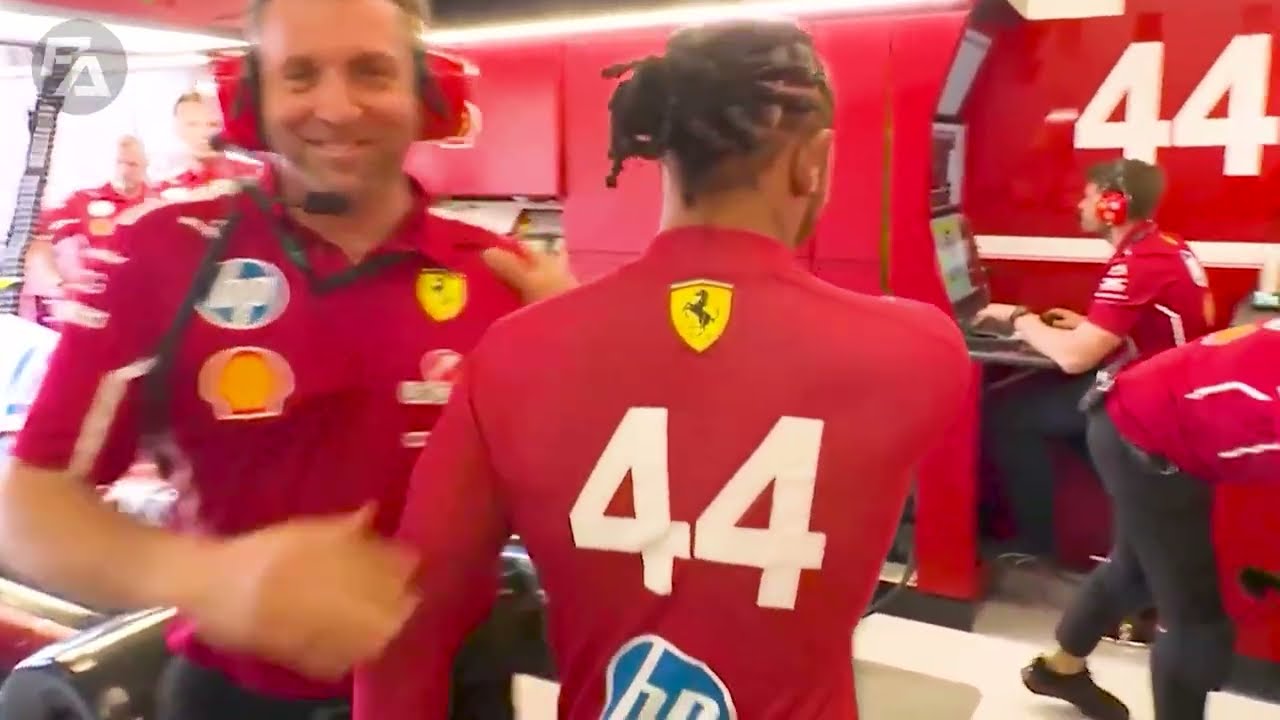
Amidst this political chaos, Ferrari is trying to project an image of absolute focus and calm. Maranello reports that there are no delays with their challenger, the SF26. The fire-up of the new power unit is imminent, and seat fittings for Lewis Hamilton and Charles Leclerc have already been completed.
Ferrari knows the pain of starting a new era on the back foot better than anyone. They are desperate to avoid a repeat of past failures. Their development is on schedule, their endurance tests are running, and their focus is on reliability (“survival”) for the upcoming Barcelona tests.
But beneath this professional exterior, the anxiety is palpable. Ferrari has historically been a guardian of the sport’s “spirit,” often clashing with teams that push the boundaries of “interpretation.” They know that no matter how good the chassis is, and no matter how talented Hamilton and Leclerc are, a 15-horsepower deficit on the straights is nearly impossible to overcome with driving skill alone.
The Ticking Clock to Barcelona
As the countdown to the Barcelona winter testing ticks away, the pressure is immense. The teams are racing against time, not just to build their cars, but to decipher the true pecking order.
We are told that simulations can whisper, but the track tells the truth. When the engines finally fire up in Spain, there will be no place to hide. The speed traps, the GPS traces, and the acoustic analysis will reveal who has found the extra power and who hasn’t.
The fear is that by the time we see the cars on track, the die will already be cast. The “AoP” (Adjustment of Performance) system, designed as a safety net to help lagging manufacturers, is slow and bureaucratic. It requires a manufacturer to be significantly behind for an extended period before they are allowed extra development time. It is a band-aid, not a cure.
This story is a stark reminder of what Formula 1 truly is: a relentless pursuit of unfair advantage. It is a sport where engineers are paid millions to find the cracks in the rulebook and pry them open. As we approach 2026, the question isn’t just who has built the fastest engine—it’s who has read the rules the most creatively. And for the fans, the hope is simply that this “creative reading” hasn’t destroyed the championship battle before it has even begun.