The Japanese Grand Prix at Suzuka gave Formula 1 fans one of those rare, heart-stopping moments that forces you to pause and completely rethink everything you thought you knew about the current grid. When a seven-time world champion like Lewis Hamilton gets on the team radio and outright states that his Ferrari is producing less power than his teammate Charles Leclerc’s car, it is not a passing comment.
It is not the kind of fleeting grievance you can brush aside as heat-of-the-moment frustration. This is a legendary driver feeling something deeply, fundamentally wrong underneath him. And when you combine those glaring words with the brutal reality of what unfolded on the tarmac during the final fifteen laps, you realize we are looking at a story that could define the entire 2026 season.
The collapse was staggering. Hamilton went from a comfortable third place to a distant sixth in the blink of an eye. George Russell came flying through, Lando Norris arrived with devastating pace, and Hamilton was left defenseless.
What made this descent so striking was not just the track positions he relinquished, but the terrifying speed at which his performance simply vanished. This was not the slow, predictable fade of degraded Pirelli tires; this was an absolute collapse in straight-line speed that left the entire paddock asking the exact same question: what on earth just changed?

Hamilton’s post-race demeanor confirmed the gravity of the situation. He spoke like a driver who firmly believed his machinery was refusing to deliver what the sister car was effortlessly producing. In the hyper-competitive world of Formula 1, if one Ferrari is mysteriously stronger than the other on the identical day, on the identical circuit, housing the identical power unit, you are no longer discussing a simple strategic misstep. You are unearthing a deep-rooted issue.
When Ferrari Team Principal Frederic Vasseur finally addressed the media, the official explanation he provided bypassed simple engine failures and plunged straight into the incredibly complex reality of the new 2026 regulations. Vasseur pointed directly at the brand-new energy management system, specifically the “overtake mode” that has controversially replaced the traditional Drag Reduction System (DRS).
To comprehend Hamilton’s Suzuka nightmare, you have to understand that power in this new era of Formula 1 is no longer just about the internal combustion engine screaming behind the driver’s head. It is entirely about how you manipulate the electrical energy flowing through the car. With a near 50/50 split between combustion and electric power, energy deployment is everything. If you misjudge it even slightly, you instantly transform from an apex predator to sitting prey.
The golden rule of 2026 is the one-second window. If a driver is within one second of the car ahead, they unlock a massive extra electrical boost. If they drop out of that microscopic window, they lose it entirely. According to Vasseur, this is precisely the trap that snapped shut on Hamilton. Once Lewis lost that critical gap to the car in front of him, his vital overtake mode vanished. He was suddenly relying on baseline power alone, which triggered a devastating “negative feedback loop.” Without the boost, he couldn’t close the gap. Because he couldn’t close the gap, the system remained locked out. Lap after excruciating lap, the deficit compounded. From the cockpit, it must have felt like quicksand—the harder he pushed, the deeper he sank.
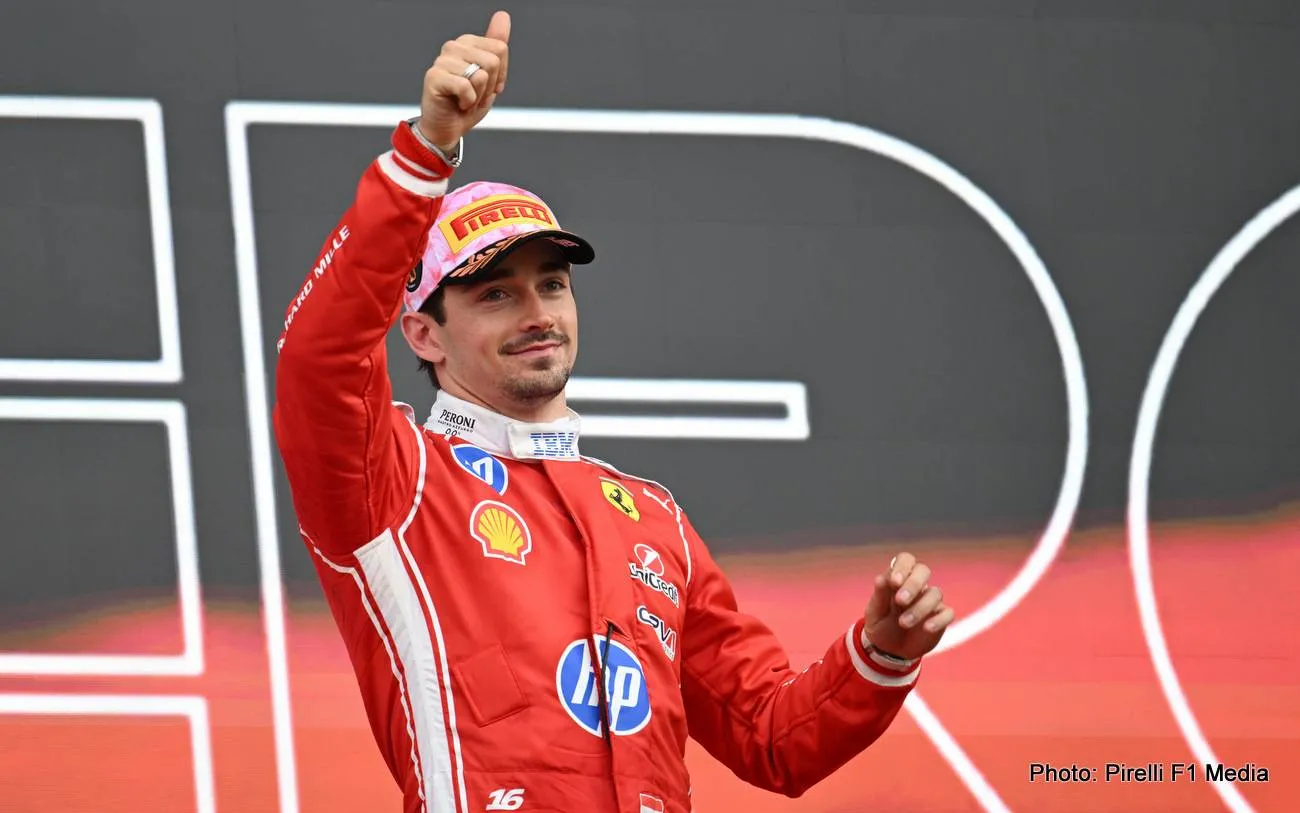
However, the plot thickens drastically when you look across the Ferrari garage at Charles Leclerc. While Hamilton was spiraling into this energy trap, Leclerc was putting on a tactical masterclass. Leclerc was not just driving fast; he was weaponizing the one-second window. At certain points, Leclerc would actually lift slightly, willingly allowing a car ahead to gain just a fraction of distance through the final chicane, strictly to ensure he remained inside the activation zone. Heading onto the main straight, he had the maximum electrical boost primed and ready. Leclerc was playing 300 kilometer-per-hour chess, perfectly adapting to the brutal demands of the new hybrid era.
Yet, even Vasseur’s logical explanation leaves lingering doubts. Does it fully confirm that both Ferraris possessed identical power output? This is where a tiny, almost imperceptible detail from the onboard footage blows the official narrative wide open.
If you closely observe the rear rain lights on the 2026 cars, you will notice they serve a new, critical purpose. They are no longer just for wet weather visibility; they rapidly flash when the car is “harvesting” energy—meaning the system is sucking power back into the battery rather than deploying it to the wheels. Simply put, if that light is flashing, the driver is not getting maximum horsepower.
When analyzing the onboard footage from those decisive laps at Suzuka, a glaring discrepancy emerges. Hamilton’s rear light was flashing significantly longer down the straights compared to Leclerc’s. While Lewis was desperately trying to defend his track position, his car was prioritizing recharging. Leclerc, on the exact same stretches of asphalt, had switched his system to full deployment far earlier. They had the exact same machinery, but completely different power outputs dictated purely by timing.
This revelation highlights the immense psychological and physical burden the 2026 regulations have placed directly onto the drivers’ shoulders. Energy management is no longer an automated process cleanly dictated by engineers on the pit wall. Drivers are now forced to make split-second decisions via steering wheel inputs and manual overrides, constantly gambling between harvesting for the future or attacking in the present. In that specific, high-pressure moment at Suzuka, Charles Leclerc simply executed the energy game better than Lewis Hamilton.
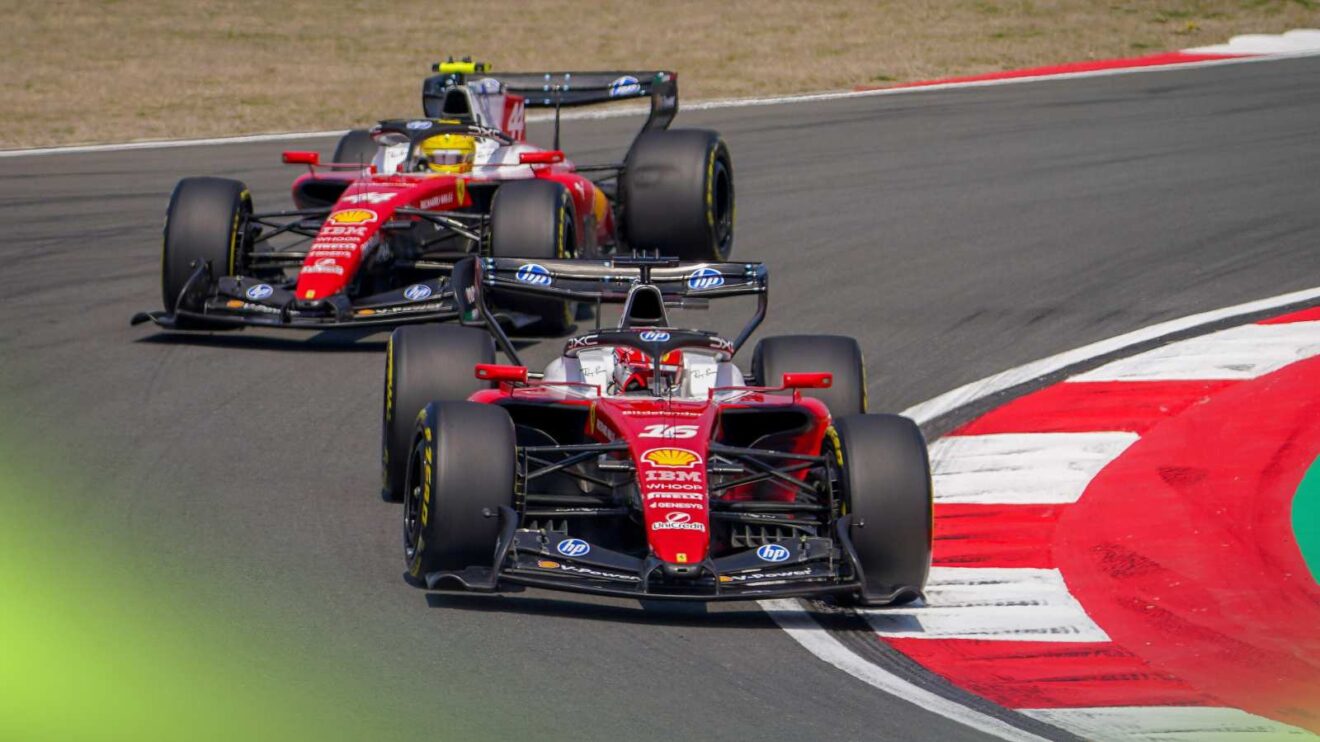
But even this driver-centric explanation does not absolve Ferrari of a much larger, overarching crisis. Why was Hamilton forced into such a vulnerable, defensive posture to begin with? The uncomfortable truth that Ferrari is desperately trying to hide is that their underlying baseline pace is nowhere near Mercedes.
Over the opening three races of the season, a disturbing pattern has emerged. Mercedes possesses a definitive edge in qualifying, and their straight-line efficiency is unmatched during the race. Ferrari, conversely, is suffering heavily from a phenomenon engineers call “early clipping.” Their electrical energy reserves are aggressively depleting long before the end of the straights. The Ferrari stops accelerating while the Mercedes simply disappears into the horizon.
When you combine Ferrari’s inherent straight-line deficit with the catastrophic loss of the one-second overtake mode, Hamilton never stood a chance. He wasn’t just defending without his electrical boost; he was defending in a car that was fundamentally inferior in a straight line.
Ferrari is acutely aware of the ticking clock. Rumors are already swirling that emergency power unit upgrades are being rushed through production to fix this deployment crisis. Furthermore, there is a massive internal shake-up happening on Hamilton’s side of the garage, with a brand-new race engineer being drafted in to radically improve real-time communication and energy strategy. This single personnel change proves that Ferrari knows there is vast, untapped potential in how Hamilton is currently operating the complex 2026 system.
The pressure mounting ahead of the Miami Grand Prix is astronomical. Will the new engine upgrades and the change in garage leadership be enough for Hamilton to crack the 2026 code? Or is Charles Leclerc destined to become the undisputed master of this new era of racing? If Ferrari cannot solve their power deficit and help their seven-time champion adapt to the brutal new reality of energy harvesting, the collapse at Suzuka won’t just be remembered as a bad race—it will be remembered as the exact moment the championship slipped through their fingers.
