The 2026 Formula 1 season was widely predicted to follow a very specific, almost inevitable script. With the introduction of the brand-new regulatory cycle, the mighty Mercedes-AMG Petronas team emerged from the winter break having clearly out-developed the rest of the grid. Armed with a terrifyingly fast chassis and a dominant power unit, the stage was perfectly set for George Russell.
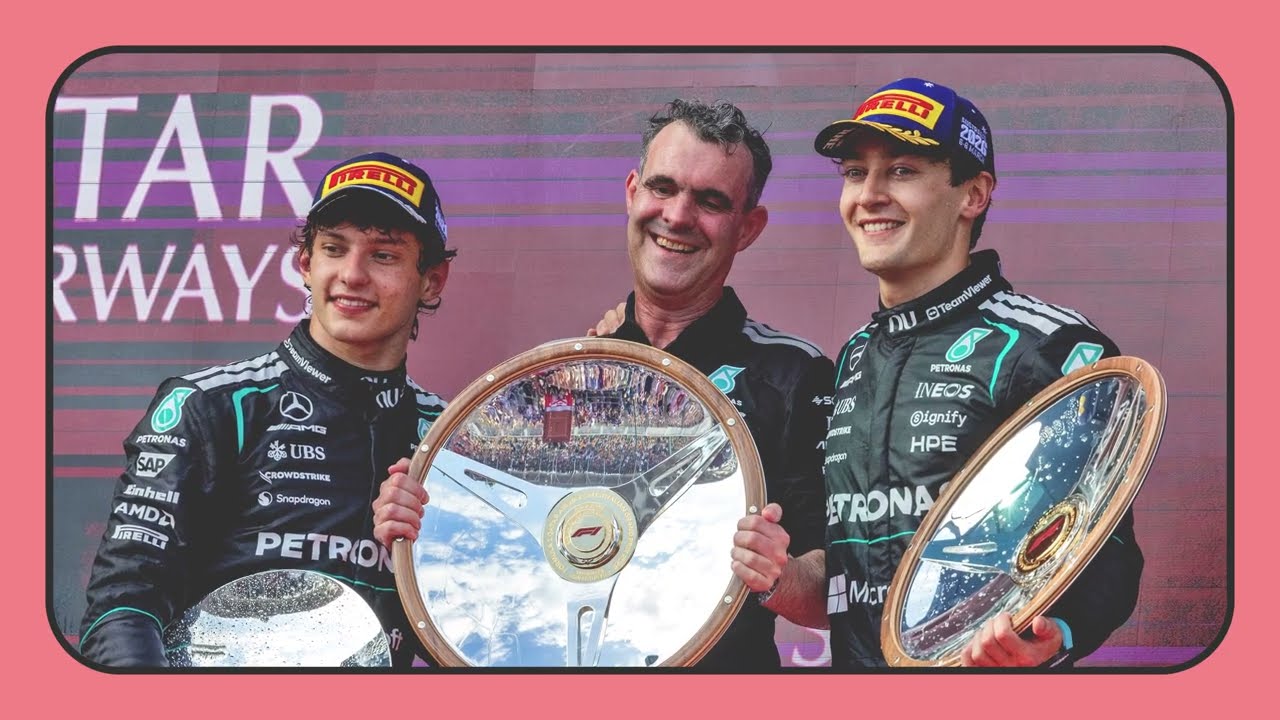
Now in his eighth season in the sport, the seasoned British driver was finally supposed to step out of the shadows, seize control of the team, and march unchallenged toward his maiden World Drivers’ Championship. But the high-speed world of Formula 1 rarely adheres to a predictable script. During the Chinese Grand Prix, a monumental plot twist arrived in the form of nineteen-year-old prodigy Kimi Antonelli. By securing a dominant, emotional maiden victory and becoming the second-youngest race winner in the sport’s rich history, Antonelli did far more than just announce his arrival on the global stage. He inadvertently threw a massive, unexpected lifeline to the entire Scuderia Ferrari organization.
To fully understand why Antonelli’s sudden success is the absolute best-case scenario for the team in Maranello, we must first confront the harsh realities of the current competitive landscape. Let’s be perfectly honest: right now, Ferrari simply does not possess the raw pace required to consistently fight Mercedes on equal footing. The data from the opening rounds paints a clear, undeniable picture. In Australia, the scarlet cars were approximately two-tenths of a second off the race pace of the Silver Arrows.
By the time the circus arrived in China, that gap had widened to a concerning six-tenths of a second per lap. While this deficit is significantly smaller than the chasm separating Mercedes from the likes of McLaren and Red Bull, it is still a substantial hurdle. At this current moment, any realistic chance of a Ferrari driver standing on the top step of the podium relies heavily on Mercedes suffering a catastrophic failure, a botched pit stop, or an uncharacteristic strategic blunder. We witnessed this stark reality in Shanghai; once George Russell navigated his way past the Ferraris, he effortlessly drove off into the distance, fully utilizing his superior race pace.
However, Formula 1 is a sport defined by relentless, aggressive evolution. The cars currently dominating the track will not remain static. Because we are in the earliest months of a brand-new regulation cycle, the potential for massive aerodynamic performance gains is higher right now than it will be at any other point in the coming years. Teams are furiously analyzing their rivals’ designs, discovering hidden aerodynamic philosophies, and rapidly manufacturing new parts. Ferrari’s charismatic team principal, Frederic Vasseur, is acutely aware of the challenge ahead. He recently acknowledged that while there is no magic wand to instantly cure their deficit, the team is aggressively working on chassis dynamics, suspension kinematics, and tire management. Crucially, a significant upgrade package originally planned for Bahrain is now being fast-tracked for the upcoming round in Miami, with rumors swirling that an extra “half-package” of developments might also be bolted onto the car.
There is, of course, the ever-present elephant in the room: engine performance. With power unit development officially frozen, manufacturers are only permitted to introduce strictly monitored reliability fixes. While it is an open secret that engineers constantly try to sneak microscopic performance enhancements into these reliability updates, the fundamental pecking order of the engines is largely set. The regulations do include a fail-safe known as the ADU—Additional Design and Upgrade Opportunities—which allows an engine manufacturer to upgrade their power unit if they fall more than two percent behind the benchmark. However, the exact methodology the FIA uses to calculate this deficit is wrapped in absolute secrecy. Realistically, Ferrari cannot sit around hoping for regulatory handouts. Their best, most viable path to catching Mercedes is through aggressive, relentless aerodynamic development.
But while the engineers in Maranello frantically work long nights in the wind tunnel to close that crucial two-tenths of a second gap, they desperately need someone to buy them time. They need a chaotic variable to disrupt the Mercedes point-scoring machine. This is exactly where Kimi Antonelli becomes Ferrari’s ultimate, unintentional secret weapon.
Consider the terrifying mathematics of a one-sided championship fight. If George Russell establishes absolute dominance and consistently sweeps the opening sequence of races, the points gap will rapidly become mathematically insurmountable. For example, over the course of six rounds, if Russell comfortably takes first place while Antonelli finishes a compliant second, Russell walks away with a massive 150 points. Meanwhile, the Ferrari drivers, consistently finishing in third and fourth, would only accumulate 108 points. That 42-point differential is massive; it equates to more than a full race victory and a second-place finish. It is the kind of early-season deficit that utterly demoralizes a chasing team and practically ends a championship campaign before the summer break.
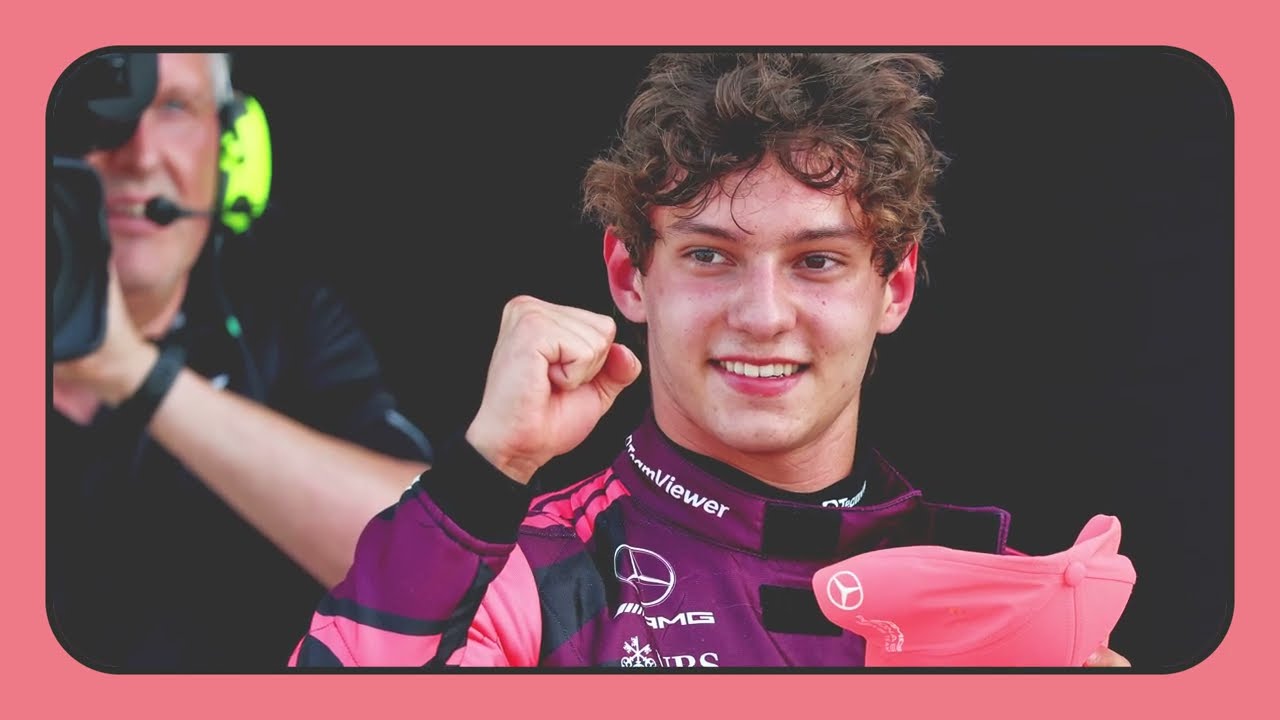
But here is the fascinating twist that Antonelli provides. By fighting fiercely and alternating victories with his senior teammate, the young Italian dramatically alters the arithmetic of the championship. If Antonelli and Russell trade the top two steps of the podium evenly over those same six rounds, they both end up with roughly 129 points. Suddenly, the Ferrari drivers, who have a current stranglehold on the remaining podium positions, are sitting right behind them in the standings. The points differential between finishing first and second is a painful seven points, whereas the difference between third and fourth is only three points. By aggressively taking maximum points away from Russell, Antonelli ensures that the lead Mercedes driver cannot execute a devastating early-season breakaway. He is artificially keeping the championship battle tightly bunched together, actively keeping Ferrari within striking distance while they desperately wait for their Miami upgrade package to arrive.
For the Formula 1 purists and the passionate Tifosi, there is an incredibly compelling historical parallel unfolding before our eyes. The sheer, undeniable speed of Kimi Antonelli is drawing heavy, justified comparisons to Lewis Hamilton’s legendary debut season in 2007. Just as a fresh-faced Hamilton arrived at McLaren and immediately challenged the reigning two-time World Champion Fernando Alonso, Antonelli is showing zero respect for the established hierarchy. But do not just take the media’s word for it; listen to the experts inside the garage. Peter Bonnington, universally known as “Bono,” is arguably the most famous race engineer in the modern era, having guided both Michael Schumacher and Lewis Hamilton. When Bono looks at the telemetry data, he sees the same raw, terrifying potential. He openly notes that Antonelli possesses that elusive “extra tenth or two” of natural pace, a magical quality that simply cannot be taught.
Of course, the nineteen-year-old is not a flawless racing machine just yet. Antonelli is undeniably rough around the edges, occasionally demonstrating the arrogance and ignorance of youth. Throughout his short career, he has been involved in numerous aggressive wheel-to-wheel incidents, tangling with veterans like Charles Leclerc and Max Verstappen, and finding the barriers during critical practice sessions. He is currently navigating the inevitable “crashy phase” that almost all generational talents, including Verstappen and Leclerc, must endure. However, this aggressive, elbows-out approach is precisely what makes him such a massive headache for Toto Wolff and George Russell.
Antonelli is not a compliant, submissive number two driver like Valtteri Bottas. He does not possess the mentality of a wingman. He is a fiercely ambitious racer who genuinely believes he deserves to fight for the World Championship right now. On the other side of the garage, George Russell is an abrasive, highly determined competitor who has waited his entire career for a car capable of dominating the field. He will not easily surrender his perceived status as the team leader. When you place two immensely talented, unyielding drivers into the fastest car on the grid, a spectacular flashpoint is not just possible; it is entirely inevitable.
As the 2026 season hurtles toward the critical European leg, the narrative is perfectly set. George Russell is desperately trying to assert his dominance and execute a flawless championship campaign. Meanwhile, a teenage phenom is actively rewriting the script, refusing to back down, and proving he has the raw pace to dethrone his veteran teammate. For the fans watching around the globe, this internal civil war promises unparalleled entertainment. But for the engineers and strategists pacing the floors in Maranello, Kimi Antonelli’s success is far more than just good television. It is the tactical disruption they desperately prayed for, the ultimate gift that is keeping their championship dreams alive while they hunt for the speed to catch the Silver Arrows.
