The world of Formula 1 was set ablaze when Lewis Hamilton announced his move to Ferrari. It was the ultimate “fairytale” narrative: the most successful driver in the sport’s history joining forces with its most iconic team to restore a faded legacy.
Fans envisioned a new renaissance in Maranello, fueled by Hamilton’s unparalleled experience and the Prancing Horse’s legendary resources. However, as the initial euphoria settles, a much darker reality is beginning to emerge from behind the garage doors.
This isn’t a story of slow lap times; it is a story of a deep-seated, institutional dysfunction that threatens to swallow Lewis Hamilton whole—just as it did Sebastian Vettel.
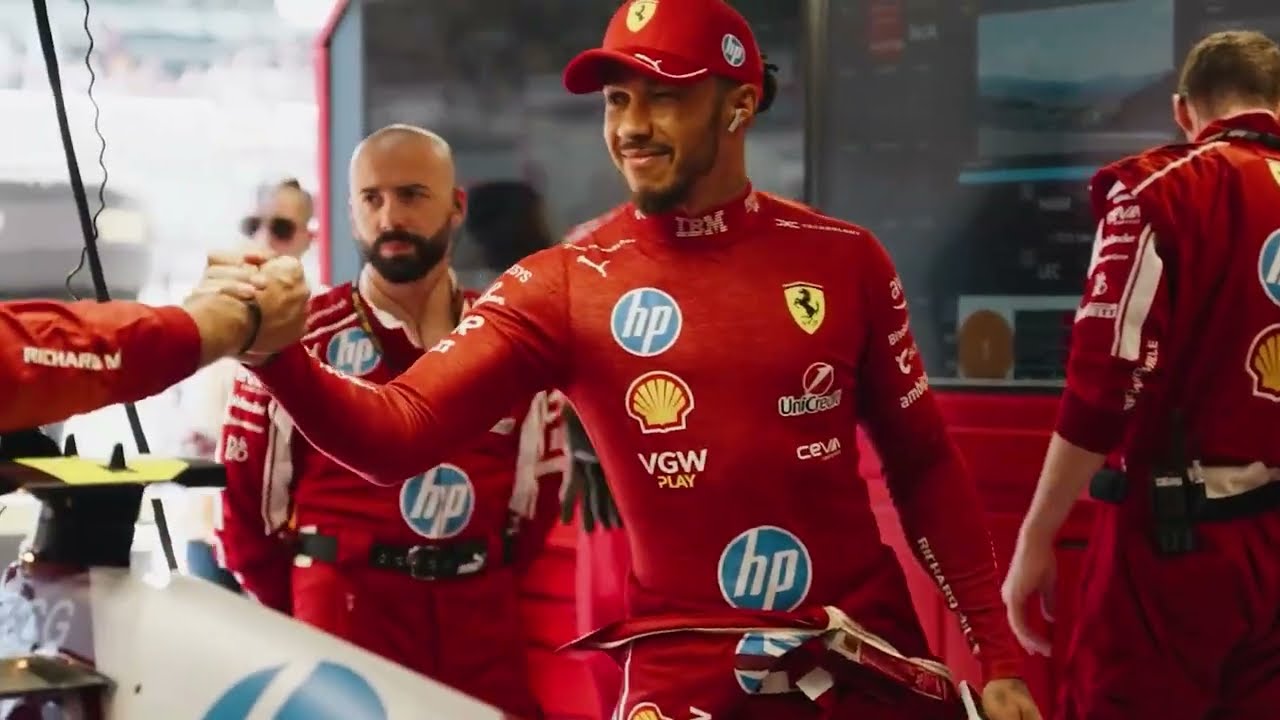
Recent revelations and comments from former Ferrari team principal Maurizio Arrivabene have pulled back the curtain on a troubling philosophy at Maranello. Arrivabene’s blunt dismissal of technical feedback from world champions has sent shockwaves through the paddock. He famously compared Hamilton’s current technical contributions to the extensive reports once provided by Sebastian Vettel, essentially labeling both as “useless.” The message from the top was chillingly clear: “Drivers do not have to be engineers.” In the high-stakes, driven world of modern F1, this mindset is nothing short of prehistoric.
To understand why this is a catastrophe for Hamilton, one must look at his success at Mercedes. In the Silver Arrows’ ecosystem, Hamilton was more than just the man behind the wheel; he was a central pillar of the technical development team. His feedback influenced aerodynamic design, suspension geometry, and the overall evolution of the car. It was a horizontal collaboration where the driver and engineer worked as one. At Ferrari, however, the structure remains stubbornly vertical. There is a rigid hierarchy where the “experts” design the car in the wind tunnel, and the driver is expected to simply execute on track. When Hamilton brings the sophisticated, collaborative work ethic that won him six titles at Mercedes to Italy, he is met with a wall of institutional pride.
This pattern is a haunting “déjà vu” for anyone who followed Sebastian Vettel’s tenure at Ferrari. Vettel, known for his obsessive attention to detail and deep technical understanding, arrived at Maranello with the same hunger to build a winning machine. He wrote meticulously long reports and spent countless hours in meetings, attempting to steer the car’s development based on his real-world feel. Yet, as history shows, his recommendations were frequently shelved. The car continued to evolve according to a pre-determined schedule set by factory engineers who, at times, seemed disconnected from the driver’s struggles on the track. Vettel’s frustration eventually turned into a cycle of errors and a loss of confidence, leading to a bitter exit.
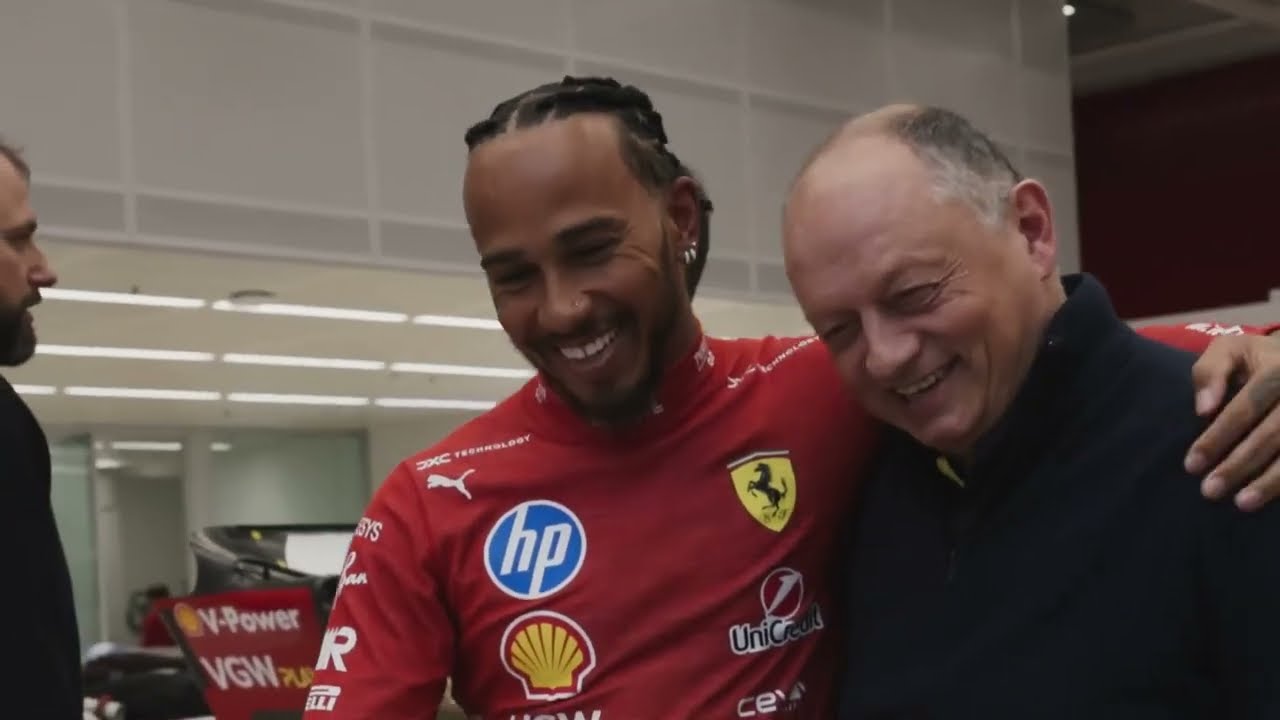
Now, Lewis Hamilton finds himself in the same bureaucratic limbo. He is driving the SF25, a car that has been described not just as slow, but as conceptually compromised. The vehicle suffers from extreme “ride height hypersensitivity,” meaning the slightest change in the chassis causes a massive loss in downforce. It is a car that can be fast for a single qualifying lap but falls apart the moment it enters a race stint. Hamilton, with his vast experience, knows exactly what is wrong. He provides the data, he offers the solutions, and he waits for change. But at Ferrari, listening is not the same as hearing. They may receive his reports with courtesy, but the internal culture remains impermeable to external influence.
The tragedy of this situation is that it highlights a chronic inability to evolve. While teams like McLaren and Red Bull thrive on “agility”—the ability to listen to drivers like Lando Norris or Max Verstappen and pivot development in real-time—Ferrari remains anchored to the past. They have become a team where the brand is bigger than the performance, and the hierarchy is more important than the result. It is a structure that has failed Fernando Alonso, failed Sebastian Vettel, and is now on the verge of failing Lewis Hamilton.
If Ferrari does not break this cycle of rigidity, even a talent as immense as Hamilton’s will be wasted. A driver cannot win alone; they need a machine that responds to their touch and a team that values their intellect. As the season progresses, the question is no longer whether Hamilton can win an eighth title with Ferrari, but whether he can survive the weight of their history without losing his spark. For the sake of the sport and the legacy of its greatest champion, one can only hope that Maranello finally learns that a driver is not just an executive—they are the heartbeat of the car. Without their voice, the Prancing Horse is simply running in circles.